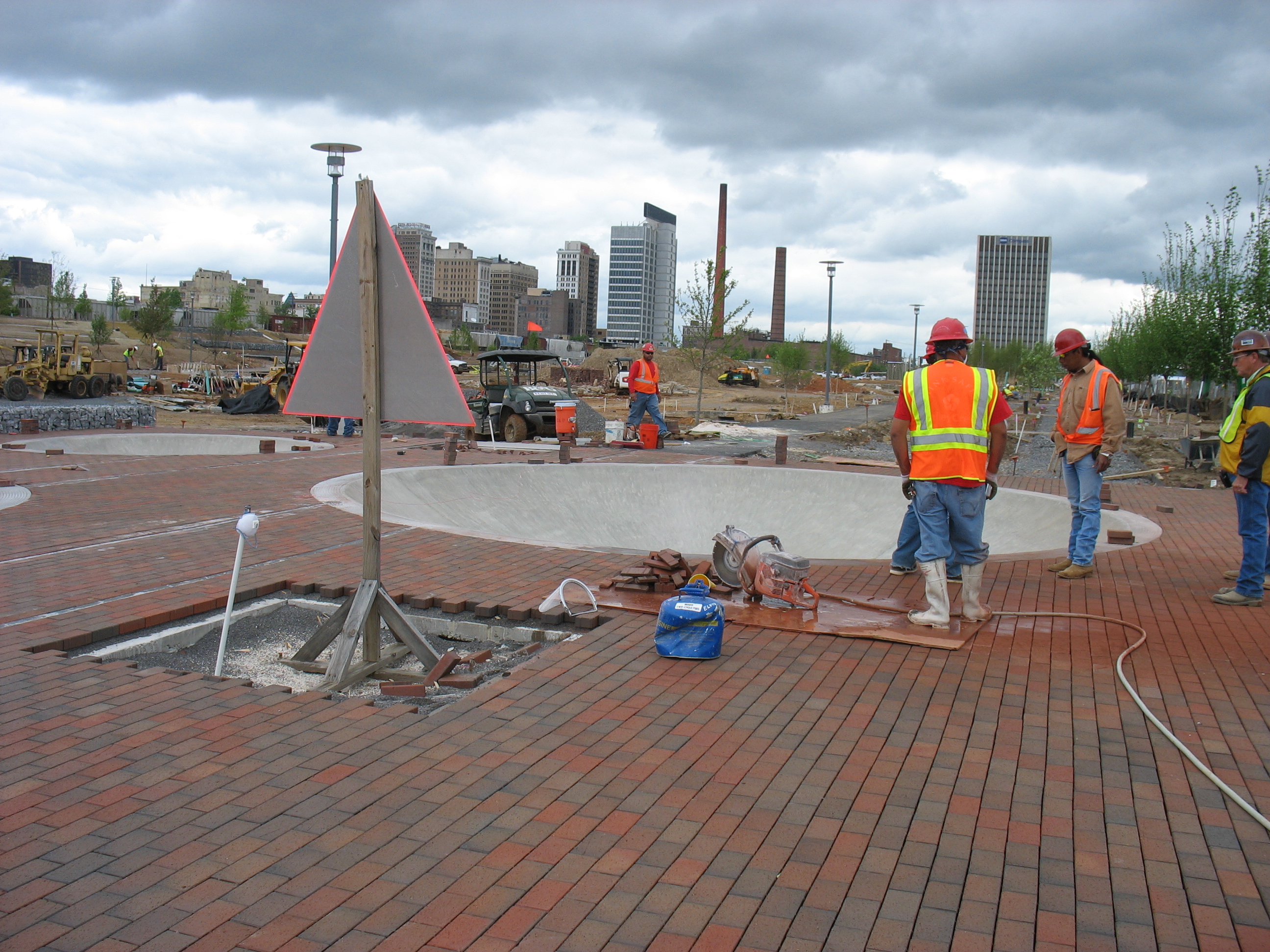
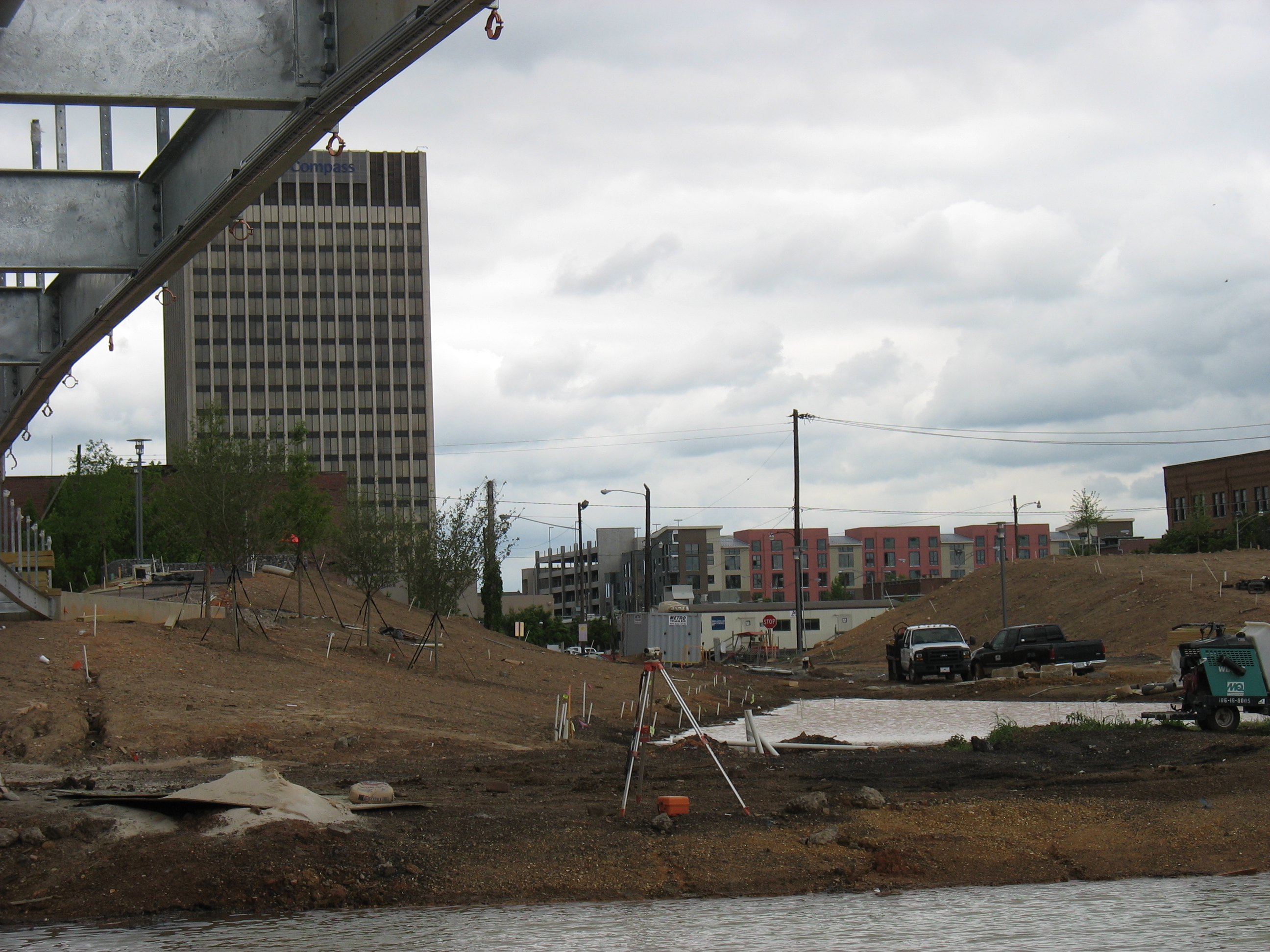
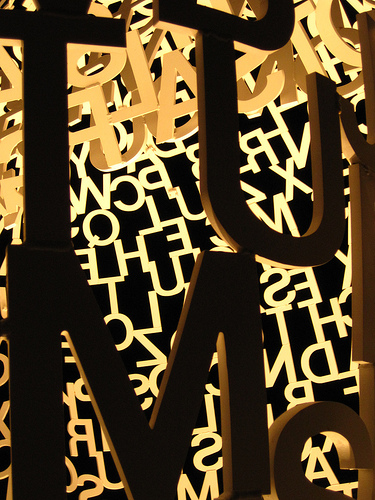
Tag Archives: Railroad Park

Small scale big change

Small step = big step

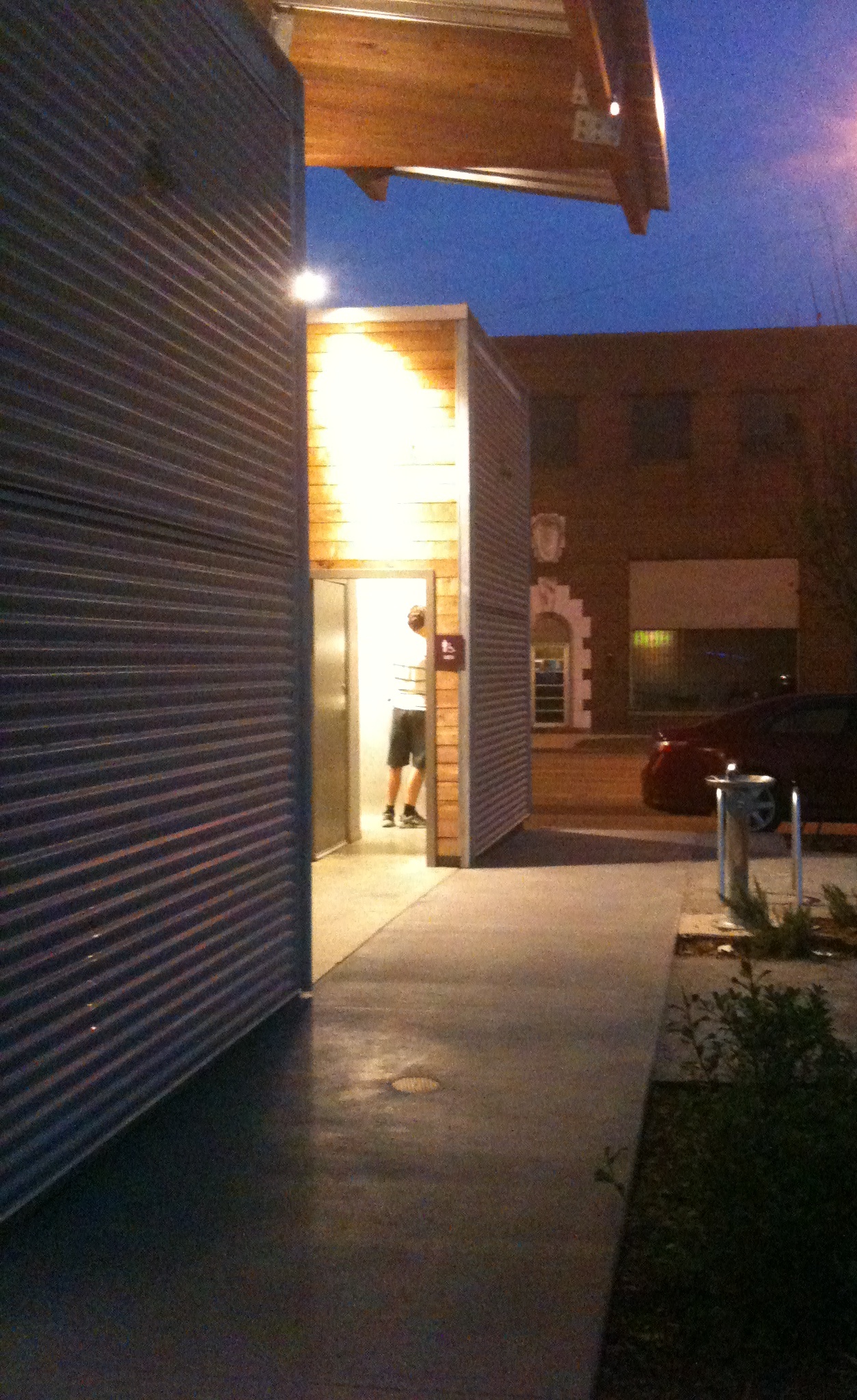
Sometimes small things make a big difference. Above we see a snapshot of some mundane public amenities at Railroad Park–to the right a drinking fountain and some bike racks; to the left some public restrooms. But look again and you realize something pretty unusual is going on here. Yep, it’s the restrooms–typical of many American cities, Birmingham is pretty much devoid of any public facilities for public relief if one is out on the streets or in a park. So this small gesture to human comfort is actually a big leap forward in our accommodation for people in public spaces.

Form follows function

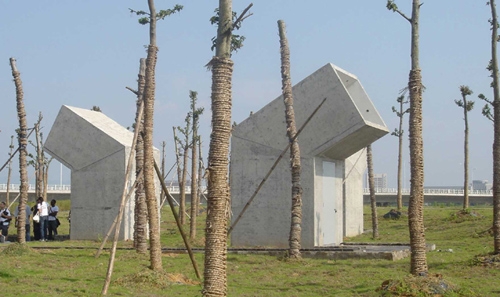
Other countries are much better about providing this basic human necessity to the urban public. Above is a recent installation of new restrooms in a park in Jinha, China. It’s found on an interesting blog post on public restroom architecture here.

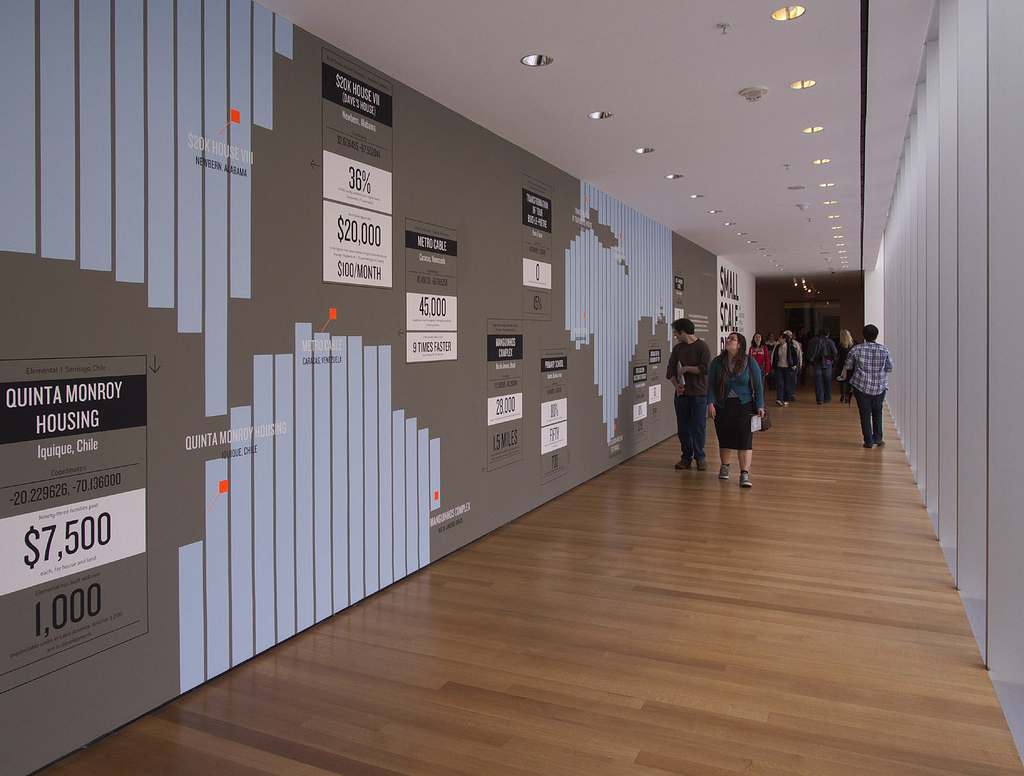
The thought of architects harnessing their talents to affect social good has lost some currency in recent decades, as the academy has become immersed in aesthetics and theory, beaten down by earlier generations’ aspirations to change the world (i.e. vast, inhuman urban “renewal” plans; housing “projects”, and the like). A show up at MOMA in New York City presents a refreshing set of new design projects that reject “high aesthetics”, and instead service real needs, typically of very poor populations around the world. It sounds like it’s worth a trip if anyone’s in New York soon. It runs through Jan. 9 and you can find a great review of it in the New York Times here. It’s called “Small scale, big change”. In a way, those 2 restrooms at Railroad Park, with their humble boxcar design, make the same point about form following function right here at home. For those who can’t travel up to the show, below is a pic of visitors enjoying the exhibit.

Nothing quite like an architecture show at MOMA

[Thanks to Brute Force Collaborative for the Chinese restrooms, and to archidose for the MOMA exhibit].

The fraying fabric of Five Points (2)

Really?

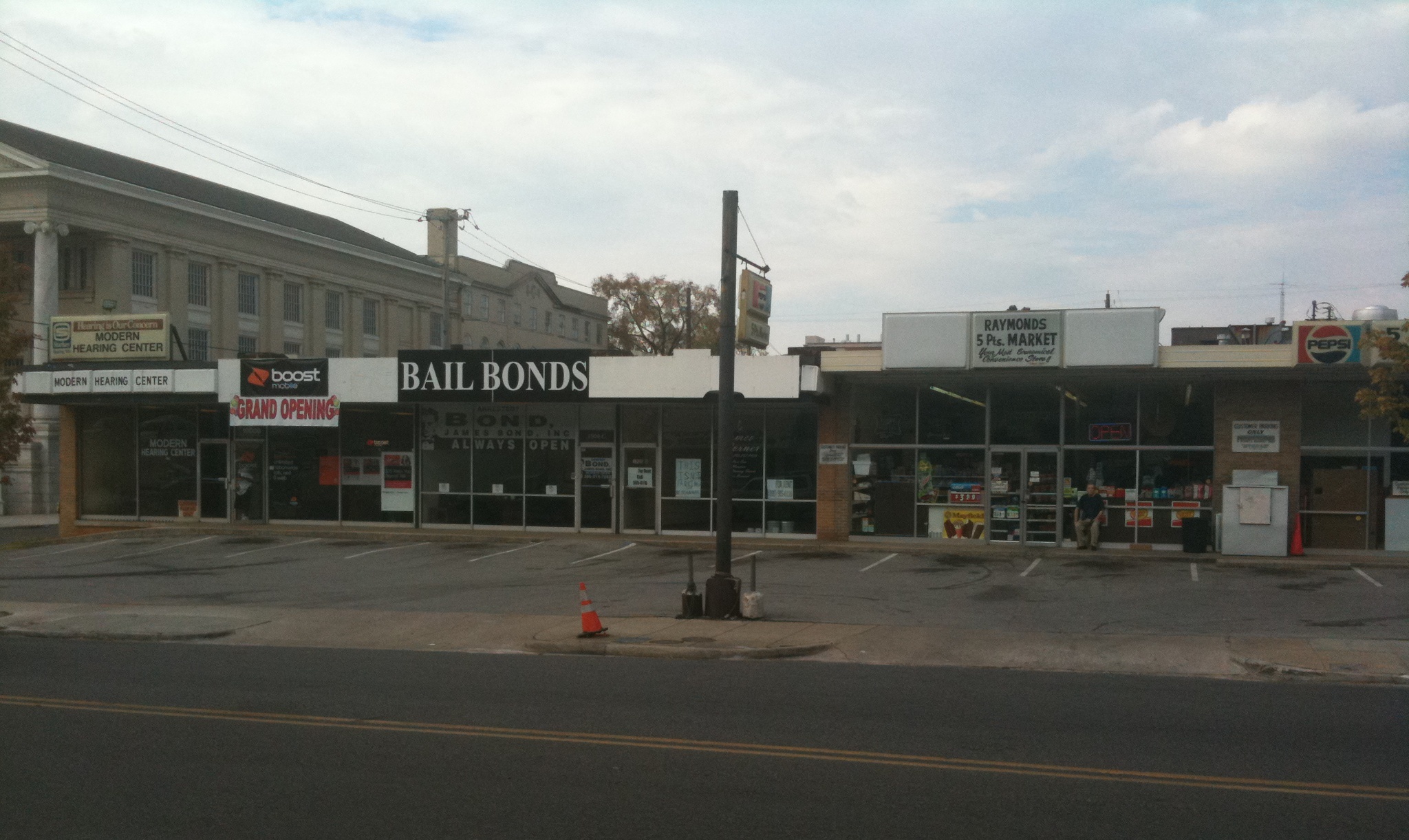
In the second article about the critical period Five Points South is going through right now, the above image should give everyone pause. It seems not too long ago, this little strip mall on the 1900 block of 11th Avenue South was home to a longtime hairdresser, hot dog stand, and convenience store, as well as an H and R Block. The convenience store remains, but the hot dog stand is closed and cardboard boxes and rear ends of display cases block the plate glass. A vacant storefront has a “This is not parking for restaurants” sign menacingly scrawled, amidst other cheaply done, temporary signage. In fact, the cacophony of old and new signage, “temporary” banners and posters, and the overall complete lack of street presence makes this surely one of the most shameful urban presentations in Five Points.

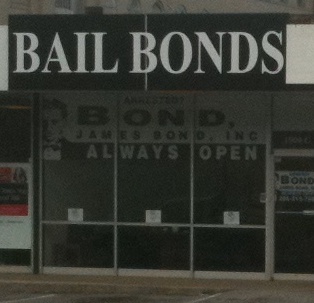
Worst of all is the new “Bail Bonds” sign, in horrific black and white, with an incredible graphic pasted across the storefront stating “Arrested? Bond, James Bond, Inc. ALWAYS OPEN”. Is this for real? Did it really get approved by Design Review? Here’s a detail of this storefront below:

...and again, really?

If ever there was an example of the need for a redevelopment authority, which years ago could have acquired this property and solicited for redevelopment more appropriate for the neighborhood, this is it. As it is, the property and its tenants have really sunk to a new low, and it’s depressing. I mean, Bail Bonds? In the middle of Five Points? Not exactly the image we’d like to convey in the metro’s center for dining and nightlife.

On a more positive note, the local merchants (and there are many wonderful merchants who keep us optimistic about the place) have formed a committee to address “immediate tasks and long term goals” for the area. There’s a piece in the Birmingham Business Journal on this announcement here.

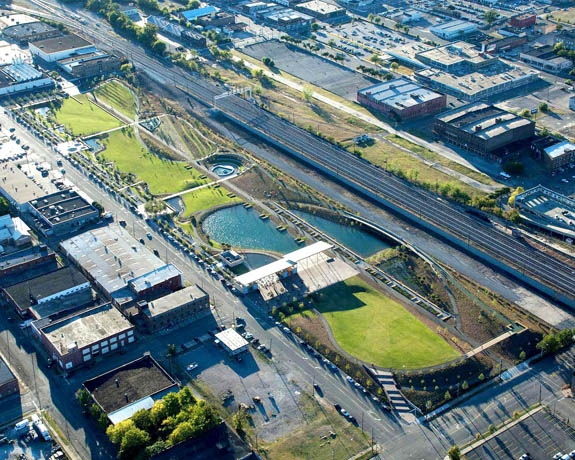
And on another positive note, unrelated to Five Points but a few blocks south–a friend alerted me to the fact that Tom Leader, the Berkeley, CA-based landscape architect responsible for the design of Railroad Park, now features that park on the front page of his website. Here’s one of the aerial pics you can find on his project page, showing the elegantly layered design of the park from above:

let's densify the edge and connect it with bike paths!

So far the main complaint I have about the park is the lack of sidewalks bordering it on 1st Avenue South (hopefully they are coming soon!?!). Oh, and one more complaint–that greenways/bike lanes aren’t already in place making it easy to reach this incredible space from across the city by bike. Regardless, I’ve been there almost every day or night enjoying it (walking or biking from home), and it looks like the rest of the City is too. That gives me hope after a grim meet-up with “James Bond” up the street.

[Thanks to Tom Leader Studio for the aerial pic]

Play ball

Building community pride

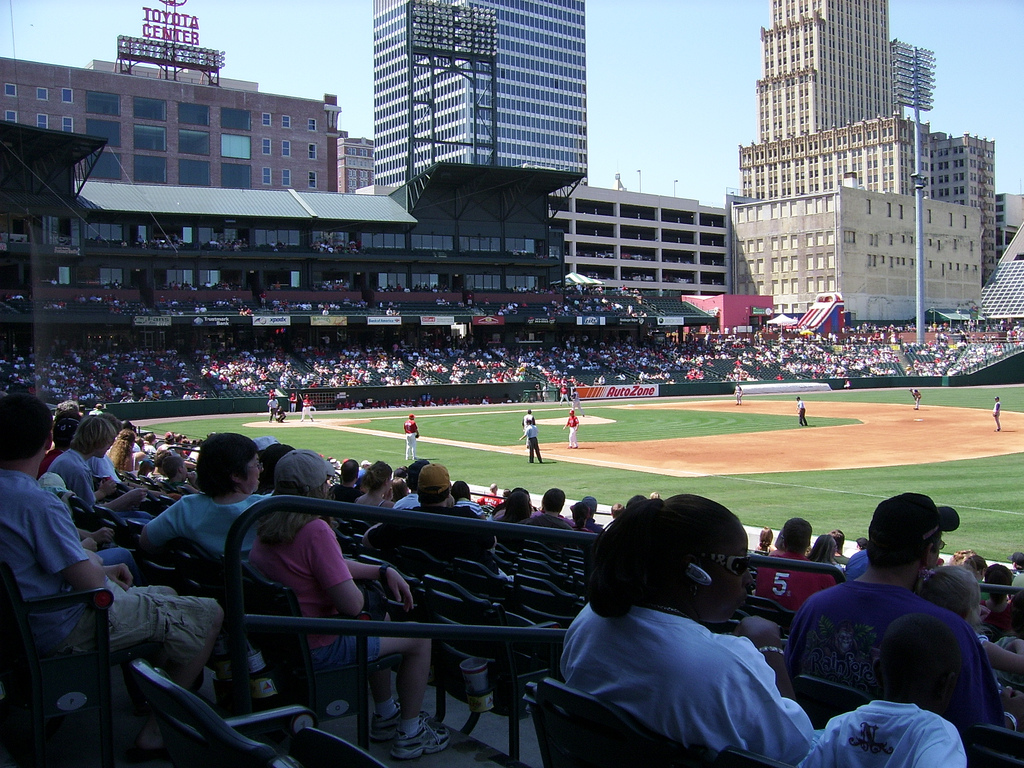
About 10 years ago Memphis opened a new downtown baseball park and the minor league Redbirds moved in. Since then, over $80 million of development has occurred around the site, and Memphis has a great, family-friendly downtown activity set against the backdrop of the city skyline (seen in photo above).

Could the Birmingham Barons be poised to move to a new park downtown across from Railroad Park? While other locations across the city center could be possible, Railroad Park makes a lot of sense for many reasons, among them:

1. The huge community interest and momentum behind the Railroad Park itself;

2. The proximity to UAB and the ability to easily walk/bike from campus;

3. A large, mainly underdeveloped fabric of one and two-story warehouse type structures between the Park and UAB that could easily be renovated/rebuilt as housing, restaurants, and other amenities;

4. Ease of access from all points northside and southside .

The Birmingham News printed an editorial praising Mayor Bell for leading the effort to bring the Barons back to the City after a long spell out in Hoover at an outdated, isolated, suburban location. Mayor Petelos of Hoover recently stated that if the Barons did indeed move back to Birmingham, he would see it as a win for the region, not a loss for Hoover. This kind of regional thinking has been too infrequent in metro Birmingham; kudos to both mayors for meeting and talking like partners, rather than like competitors.

Field of dreams

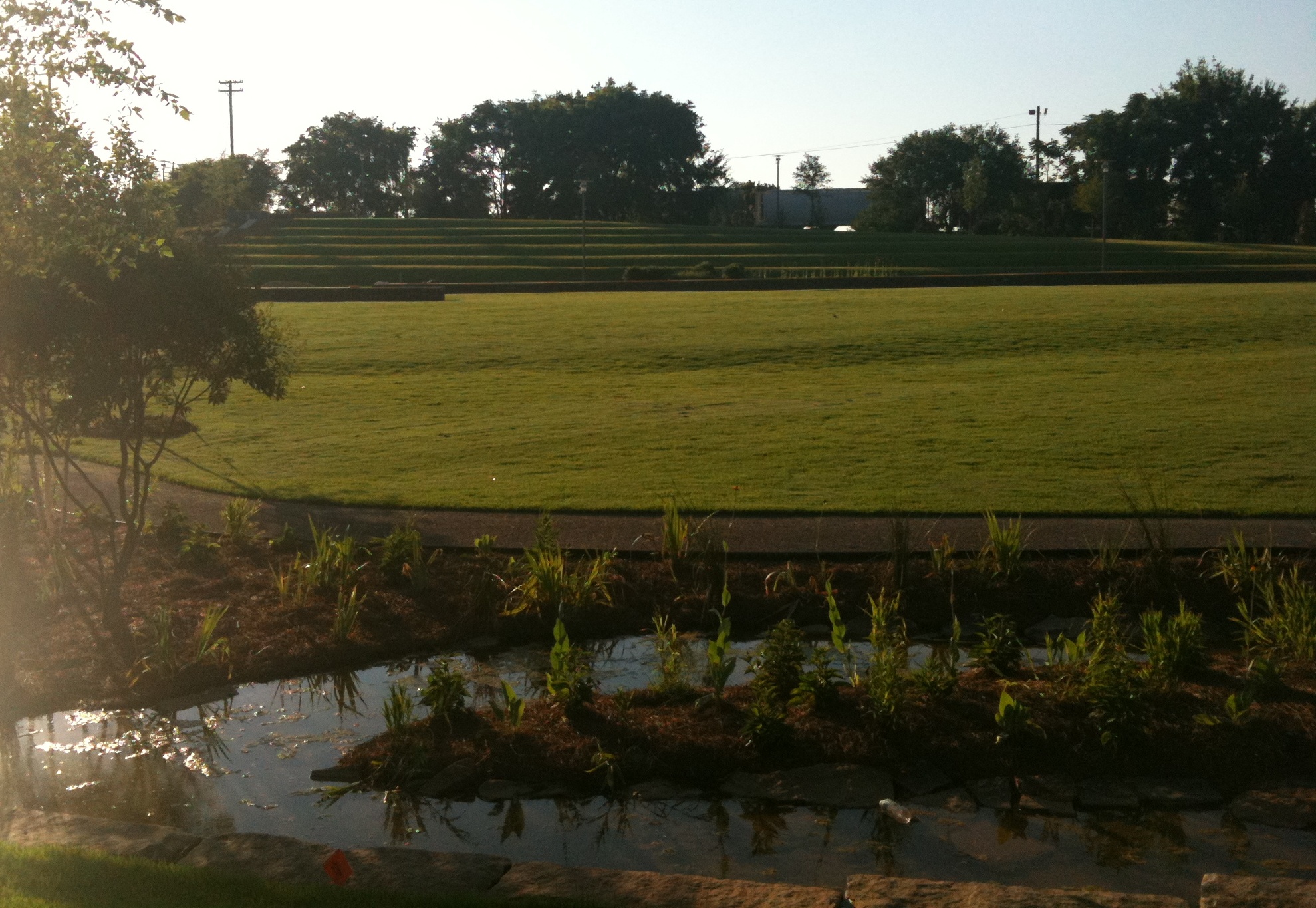
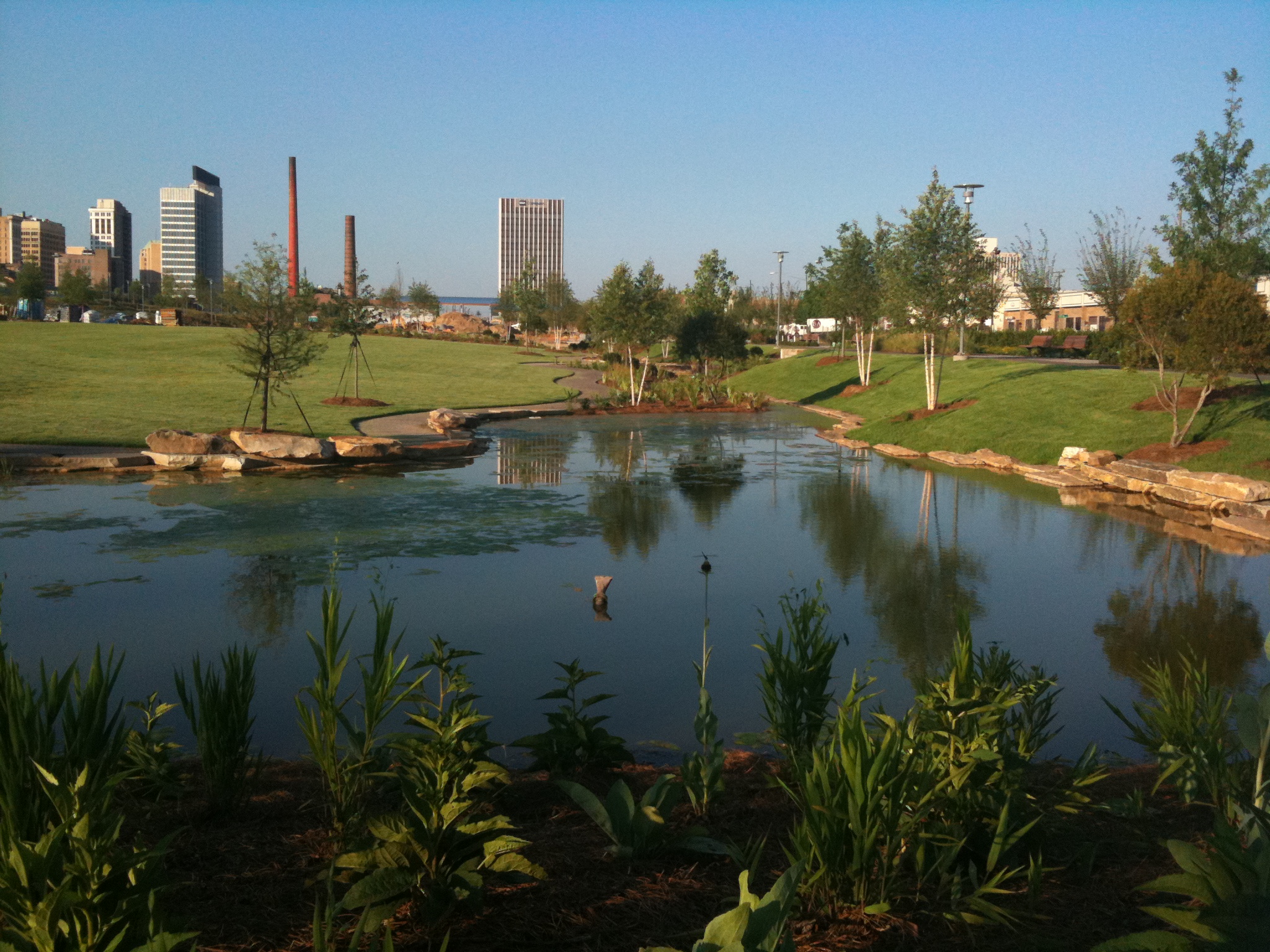
The skyline of our own city (above) sure looks great from the new Railroad Park. It would look even better if a new ball park for the Barons was built adjacent, and the crack of the bat and roar of the crowd became as common as a picnic on the new lawns. Fingers crossed.

UPDATE: one of my favorite local blogs, Heaviest Corner, just posted a very detailed piece critical of publicly funded sports projects, which is well worth a read. While on balance, I believe that Birmingham could attain a net benefit from a new downtown ballpark, economically and psychically, there are indeed many variables and potential pitfalls to be mindful of. And it goes without saying that given the choice between a well-funded, well-organized transit system or a ball park—I’d have to take the transit system.

[thanks to theogeo for the Memphis pic and Terry McComb for the Birmingham pic]

Skate park! (2)

It's a start

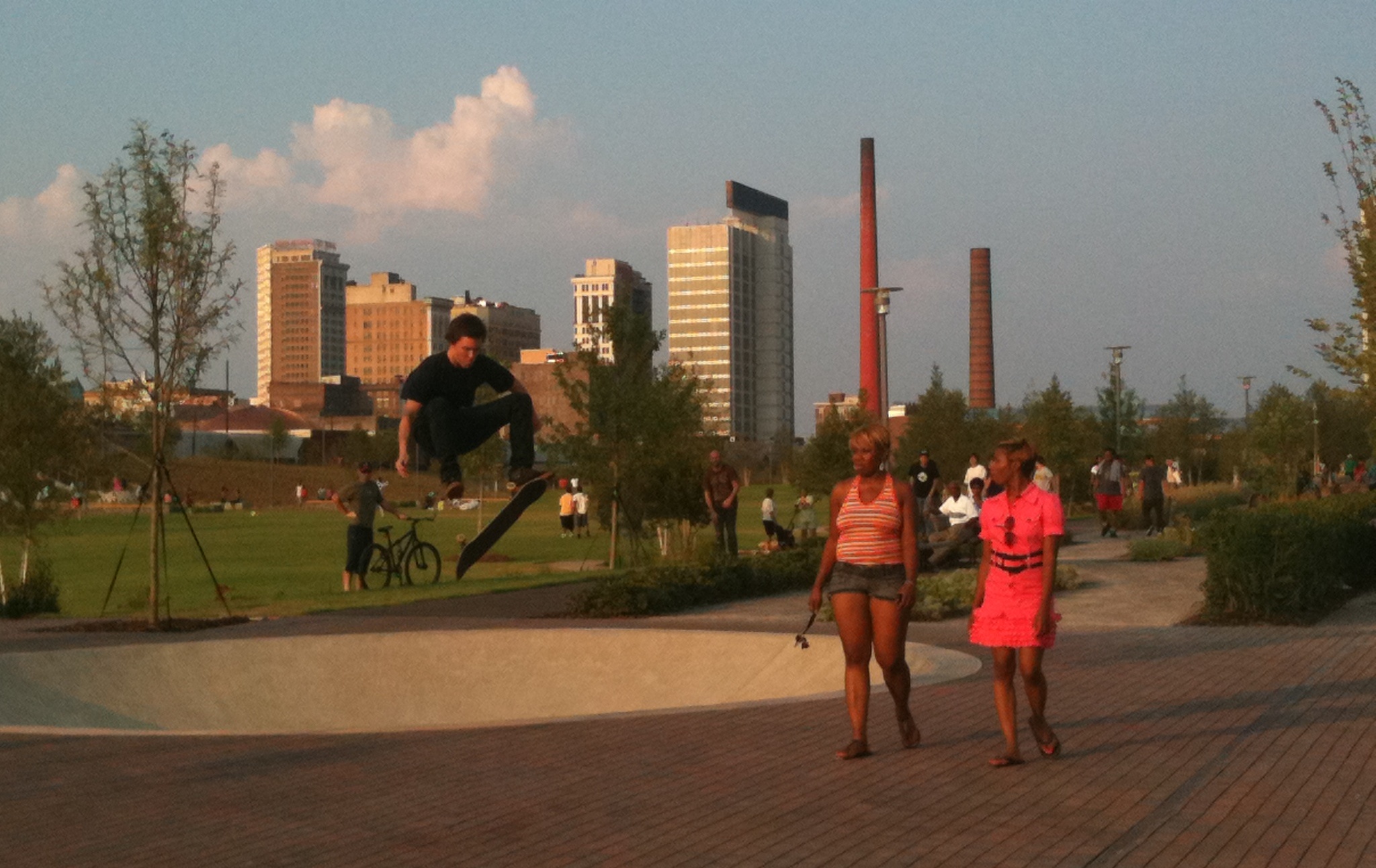
While it’s far from the full-blown skate park this city needs, the skate plaza at the newly opened Railroad Park at least demonstrates that skateboarding can be successfully integrated into a multi-use public area. Today everyone from small kids to elderly ladies were enjoying the balletic acts of skaters in the plaza.

Hopefully there will be more exciting skate news to post about soon. In the meantime, check out the skate plaza next time you’re at the park!

Sign of things to come

Urban signage–so important to our physical and psychic understanding in a city. We have two new additions to the downtown core:

It's here!

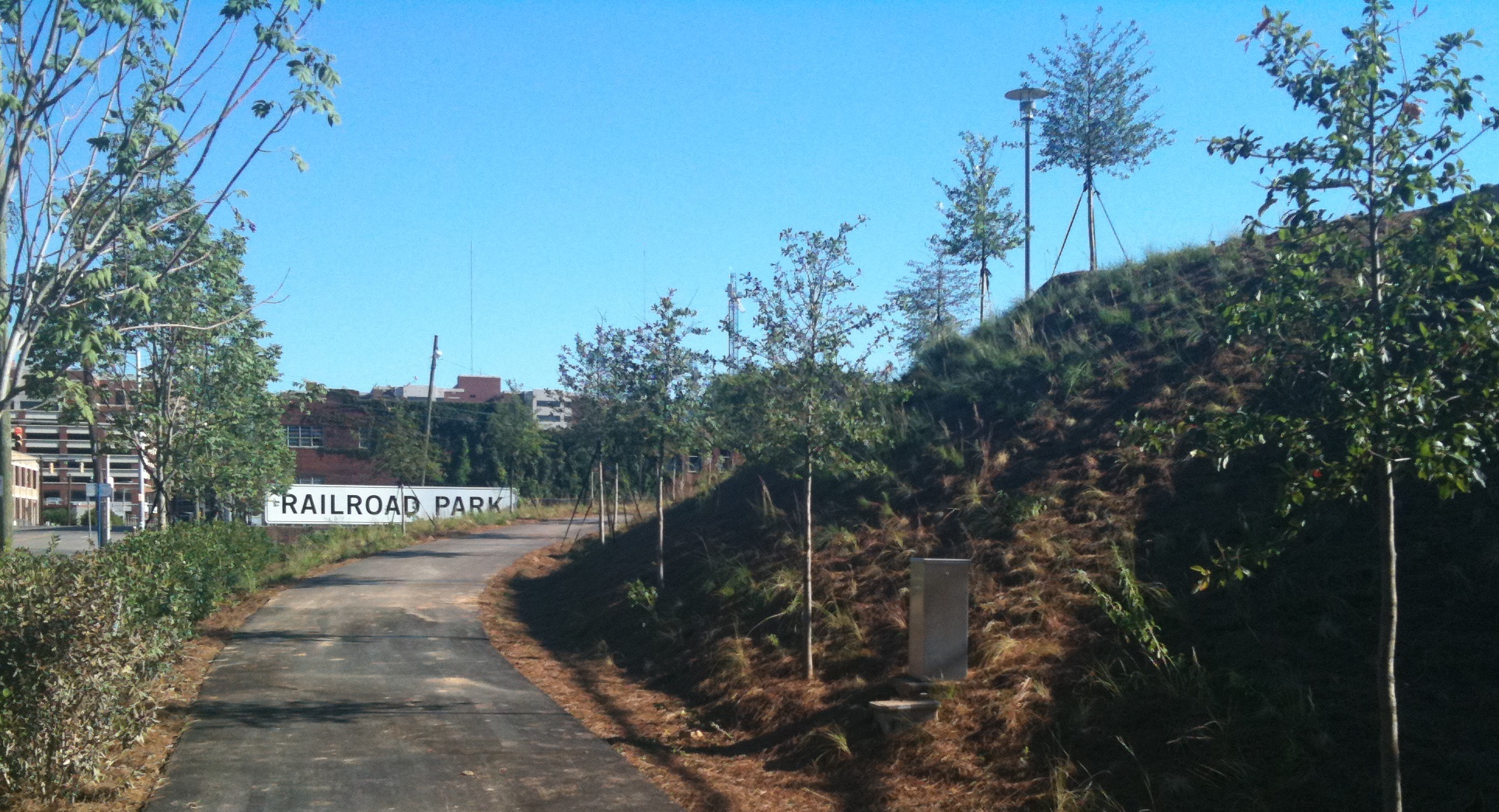
First the 18th Street entrance to Railroad Park (opening officially next weekend), showing a simple white sign with black lettering recalling traditional railroad crossing and station signs. Excellent choice.

Big time

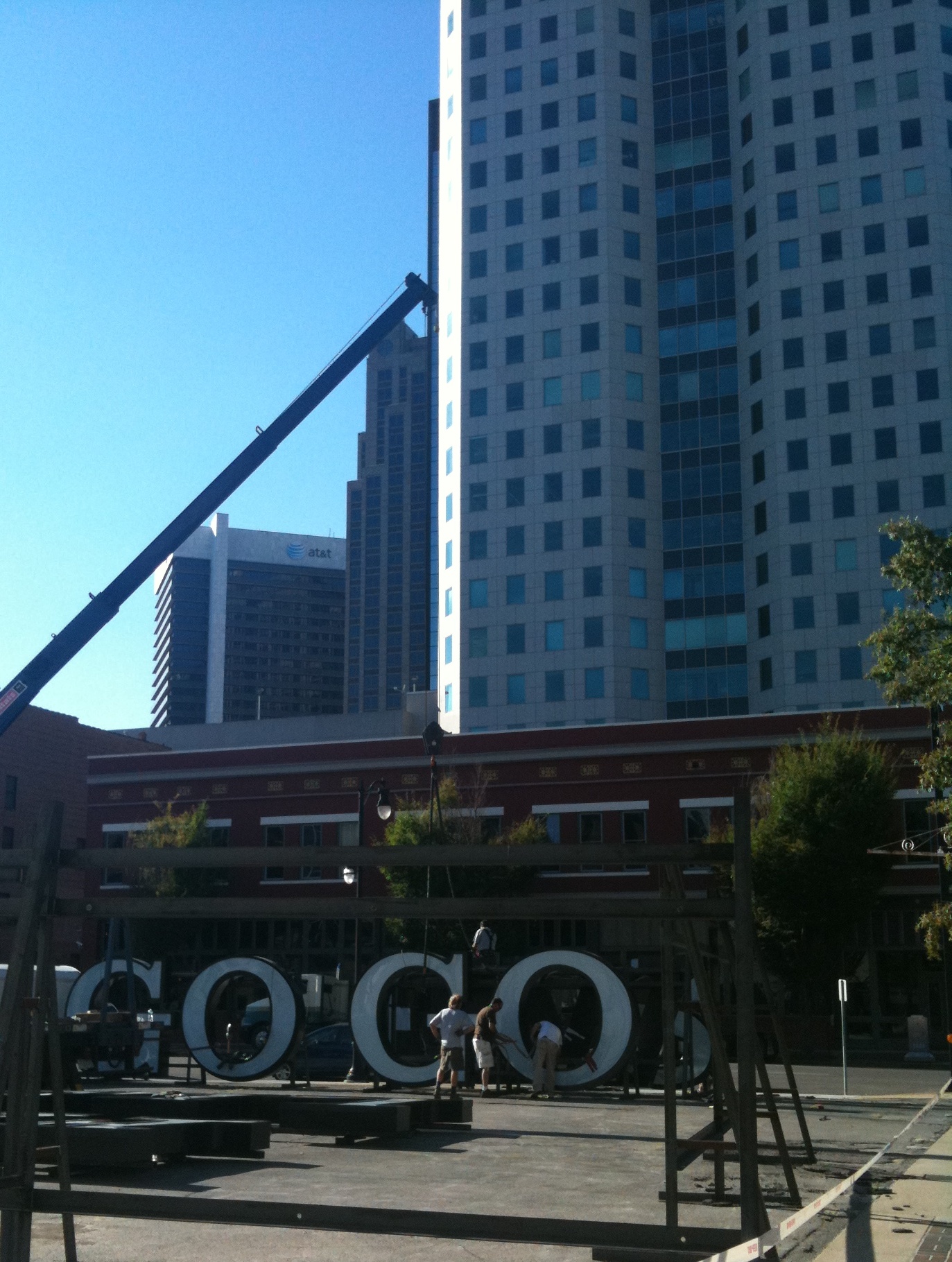
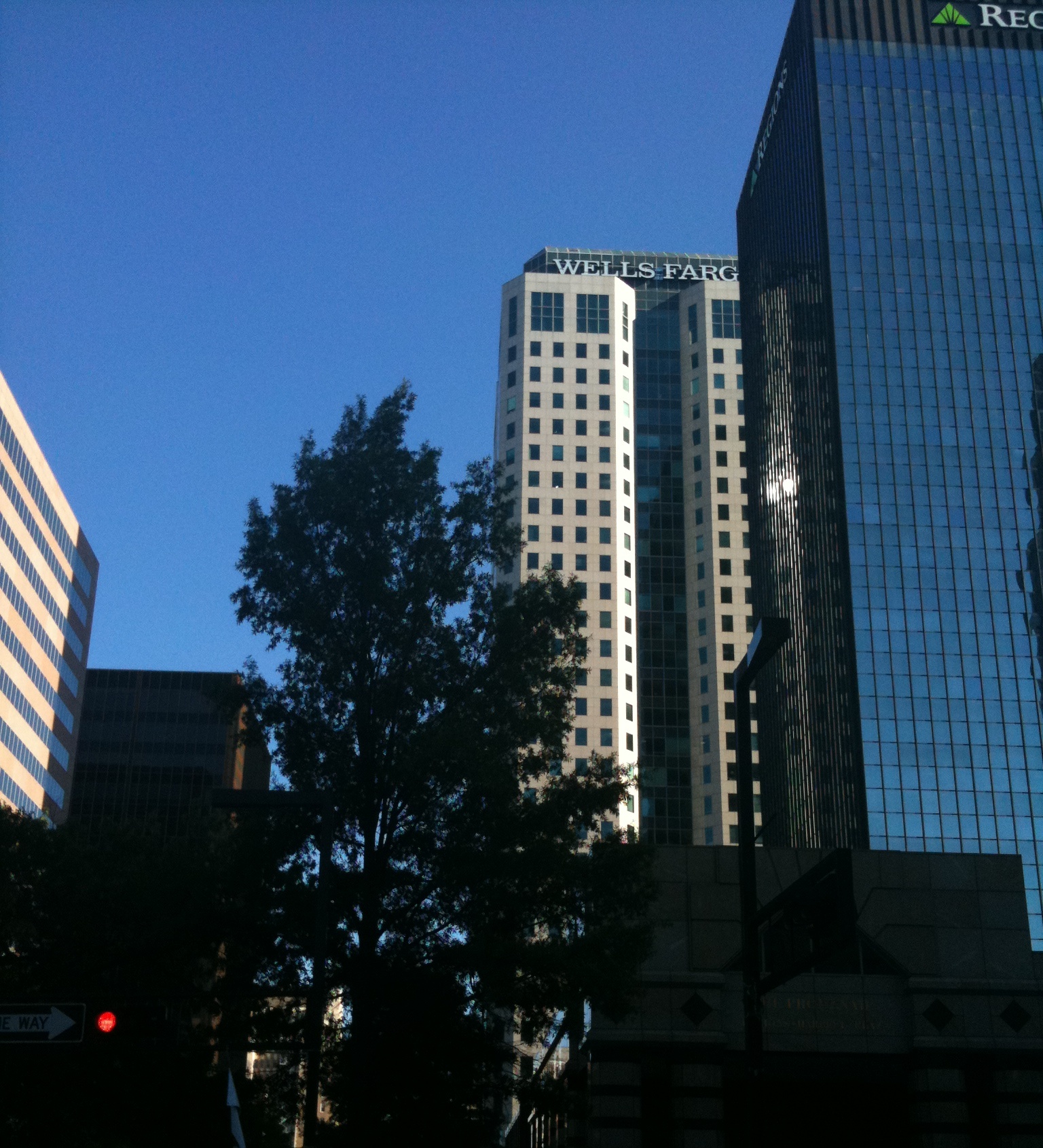
Next is the new “Wells Fargo” lettering being prepared to illuminate the top of the former SouthTrust (now Wells Fargo) Tower on 20th Street North. While the loss of hometown banks is not necessarily something to celebrate, a well-proportioned, highly-visible sign like this helps “make” a skyline. The north and west faces are already complete:

Corporate image making

Much, much more on signage to come.

Anticipation (2)

Is this really downtown Birmingham?

Yesterday evening Katherine Billemeier (Executive Director of the Railroad Park Foundation) took me and a few others on another tour of the Railroad Park, which is now slated to be open Labor Day weekend. Once again, I was dazzled by the promise that this great open space holds.

The transformation continues

As it gets closer to completion, there are two things I’m thinking about:

1. The entire community must embrace this place as its own, using its walking paths, picnic grounds, plazas, play areas, lakes, skate bowls, and flower gardens as often as possible.

2. The City must quickly focus on a short and long-term development plan for the surrounding area, so that this massive investment is leveraged as best as possible.

We can’t wait!

Kudos to Tom Leader

From the cobbled bowl above, with central pond to be planted with water reeds and dotted with misting pipes perfect for summer frolicking, to the smartly designed recycling bins, the details continue to be top-notch. The designer Tom Leader (based in California but with an international practice) has managed to create something at once unique and contextual. As I’ve said before, a rare example of the City embracing high standards of modern design–and implementing it.

New Urbanism (1)

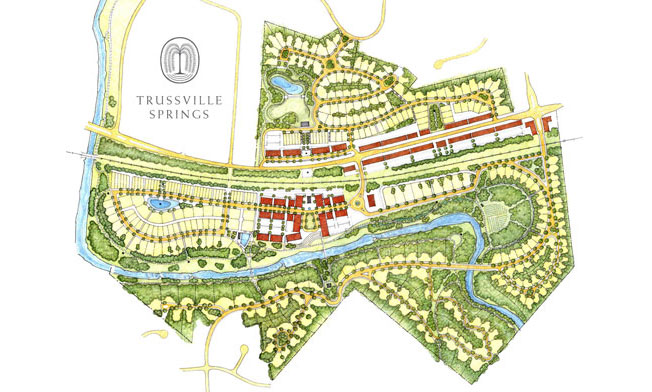
Yesterday I traveled out to Trussville Springs for the first time. This is a planned, mixed-use development about 15 miles northeast of downtown Birmingham, and was designed by the internationally recognized planning firm Duany Plater-Zyberk (DPZ). DPZ–which has also designed the Mt. Laurel and Blount Springs developments in the metro area–is known as the preeminent proponent of New Urbanism worldwide. New Urbanism draws on time-tested urban principles, and argues that communities should be compact, mixed-use, and friendly to alternative transport. It is an antidote to sprawl.

A vision for Trussville

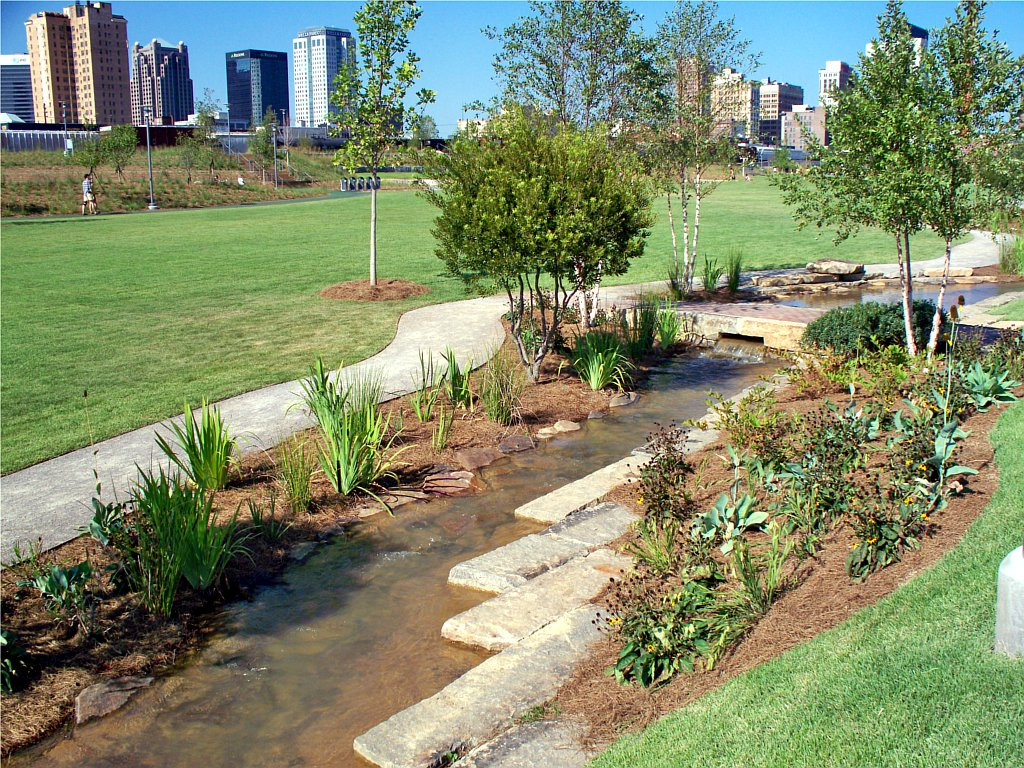
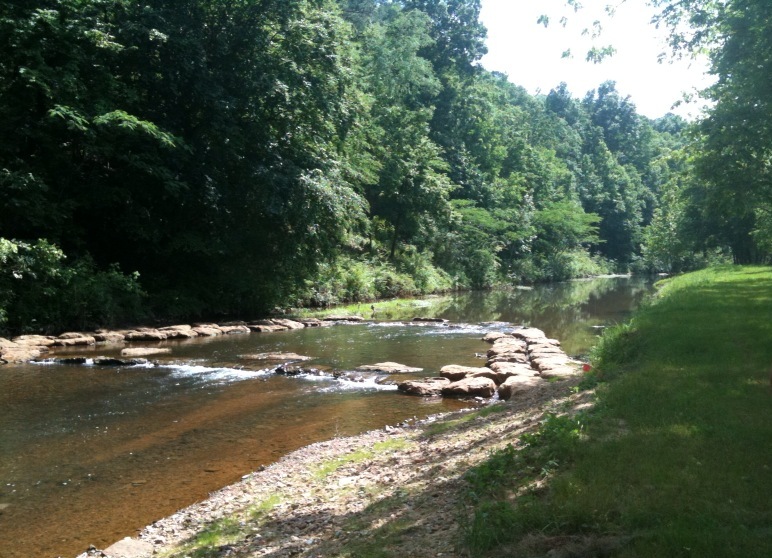
Trussville Springs’ master plan is certainly typical of DPZ work: lots of preserved open space and public amenities instead of private lawns; garages fronting alleys, rather than driveways on the main streets; a commercial center designed within walking distance of all residents; and a distinctly old-fashioned marketing package that draws heavily on nostalgia for an earlier time. The Cahaba river runs through here, and is beautifully framed by old trees and rolling hills. Yes, the developer skillfully inserted some stones into the river to create both a “rushing river” sound, and to allow a path across. But still, it is a stunning natural feature.

A truly public amenity

However, something strikes me about this–and many other new towns designed by DPZ and their many imitators. While certainly preferable in many ways to typical, sprawl development, whose gated communities and feeder roads encourage car use, social isolation, and single-use development, I can’t get over the feeling that Trussville Springs isn’t dense enough to qualify as a real antithesis to sprawl. It’s hard to say due to the current economy (only a few houses have actually been built), but with all the empty housing stock in the metro area, much of which is already in compact, urban neighborhoods, and without larger influxes of new people moving into the metro, the overall need for a place like Trussville Springs seems questionable.

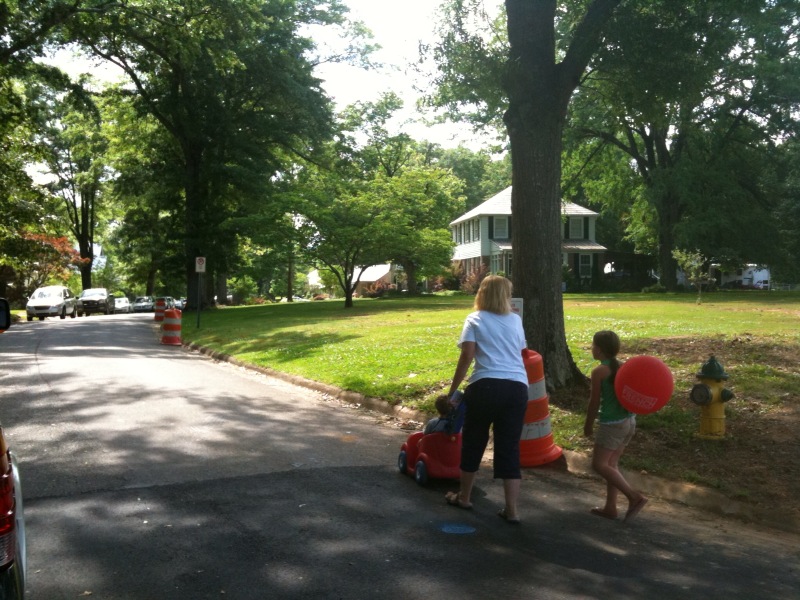
In fact, right across Main Street is downtown Trussville: a fairly compact, urban, walkable neighborhood, with big trees, narrow streets, and sidewalks filled on Saturday with families strolling to the school for a festival, to the library or just chatting with neighbors on front porches. As an authentic, organic neighborhood, that actually seems to thrive with a lot of the New Urbanist principles, it made me wish all that energy spent across the street in Trussville Springs was instead being spent elsewhere. It was sort of like an “Old” Urbanist neighborhood already existed across the road.

Compact, walkable, and populated: downtown Trussville

If you talk to Andres Duany, he will tell you that the final rendition of the developments he planned is often disappointing. The original intent for affordable housing? Gone, due to market forces. Transit connections? The municipality isn’t interested. That quaint commercial center filled with corner grocers, ice-cream shops, and quirky live-work spaces for artisans? The developer just didn’t see the demand, and filled the space with more houses instead. So residents end up having to get in their cars, head onto the highway, and go the the strip malls like everyone else. Instead of truly transforming how people live and interact, these places become just prettier, slightly denser versions of homogeneous suburban developments.

Here’s an idea: let’s hire DPZ (or some like-minded company) to design a master plan for an existing urban neighborhood in need of revitalizing and repopulating. We’re not creating new roads, or extending the power grid, or tearing up more virgin land on the outskirt of the urban core. It could be Woodlawn. Or Rosedale-downtown Homewood. Or the Railroad Park neighborhood. Places that could benefit from more density, more alternative modes of transportation, more shops and services. DPZ did a master plan for an area of downtown Providence, RI that examined many smaller sites, suggesting new densities, retail opportunities, transit improvements, etc. To me, this type of planning is what is going to save Birmingham from soulless sprawl and urban neglect, not far-flung suburban communities like Trussville Springs, as well-intended as they may be.

Providence had the vision

Of course, Providence didn’t just hire DPZ to make pretty renderings like the above. They have been methodically implementing the plan over the last decade. Birmingham has a terrible history, as I’ve noted before, of commissioning plans which, due to lack of community buy-in and leadership, sit gathering dust on the shelf. Wouldn’t it be great if we had excellent urban plans, prepared by experts with lots of community participation, and the will/mechanisms to actually implement? I see a city where New Urbansim and plain-old Urbanism could weave together in a brilliant web of vitality. There’s a lot more to say about this topic, coming soon.

This neighborhood deserves a plan as good as the park itself

[Thanks to DPZ for the master plan of Trussville Springs, and the Providence rendering; and to Tom Leader Studio for the aerial of Railroad Park.]

Anticipation (on a positive note)

Nature comes into the city

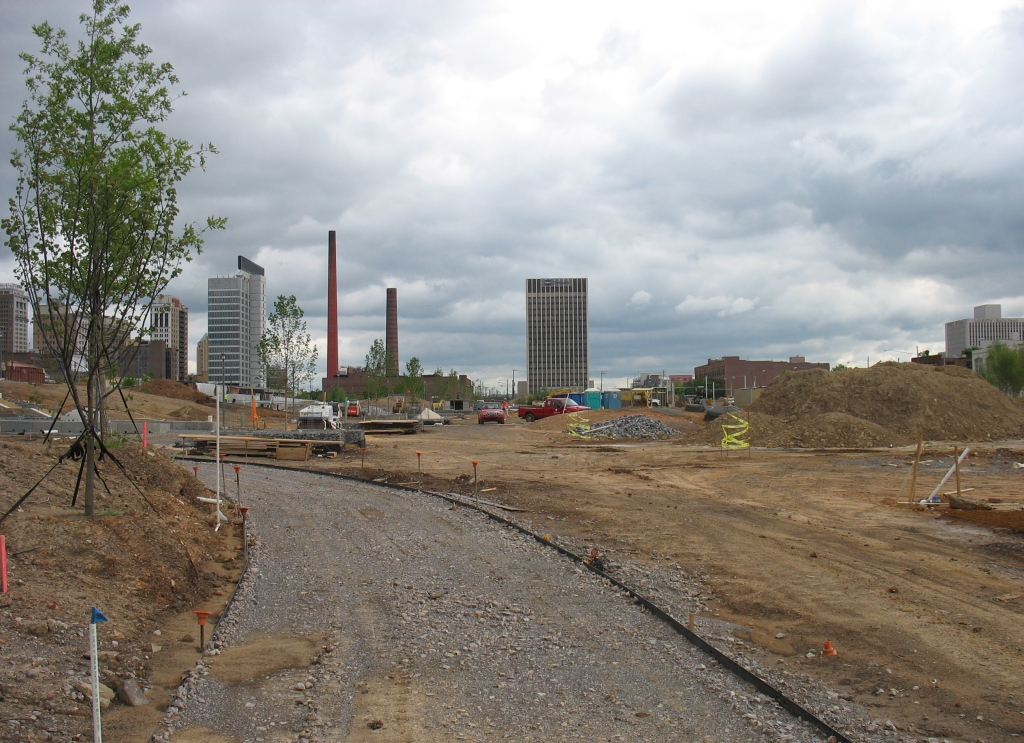
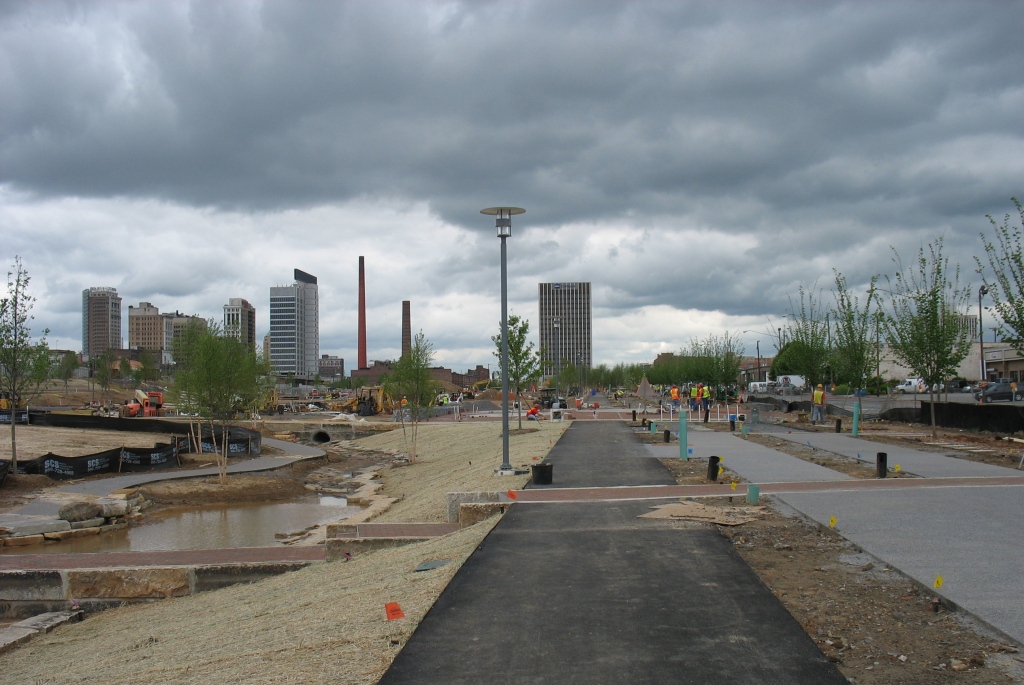
On a cool, cloudy Monday, Katherine Billmeier of the Railroad Park Foundation gave me a tour of the soon-to-be-completed park (Katherine says July). As many times as I’ve seen the plans, and biked past the park to view progress from the street, entering the park itself was an entirely different experience. It felt bigger than I had thought, and more diverse. The details, whether salvaged cobbles and train tracks from the site transformed into paths and ledges, or the light standards and bridges—it all felt first class. It’s all too rare in this city to see a major public project done right. This feels like that sort of project.

The quality shows

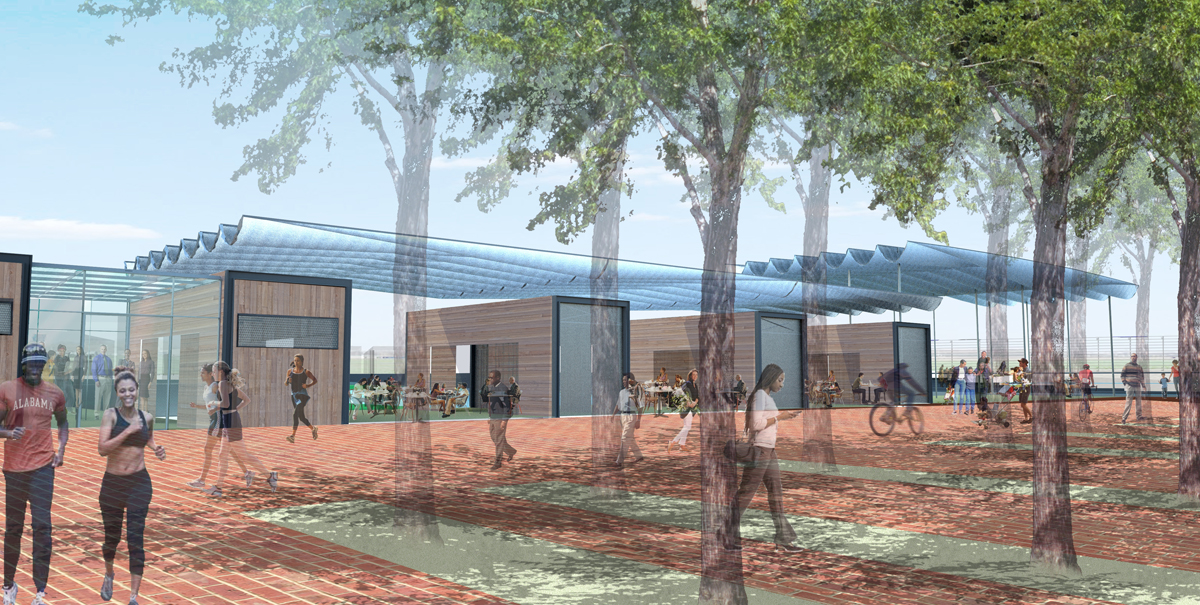
Katherine explained the concessions service: it will be contracted out (they don’t know to whom yet); it will be “upscale” sandwiches and snacks, but at an affordable price point so students can comfortably eat here. There will also be beer and wine on sale–the very idea seems so New Orleans and so not Birmingham, it seems too good to be true. The concessions and other amenities will be housed in boxy pavillions designed to recall old-fashioned box cars, as seen in the below rendering:

Superior design

One item that may interest readers: a small area is being designed for skate boarding (you can read our earlier post on this subject here). I was told that not only this area, but any paved area of the park would be open to skaters–as long as they share the space responsibly. Peter Karvonen, our friend at Faith Skate Supply, is cautiously optimistic that the park’s embrace of skaters will endure. He also realizes that it will be up to the skaters to coexist peacefully with joggers, pick-nickers, walkers, bikers, and all the others we hope use this park. We really think that this mini-skate area could demonstrate to area leaders that a full-size skate park is vital to this metro area.

Preparing for skaters

Finally, this last shot I think starts to capture how this new public space can transform how we see the City: we are all familiar with the Daniel Building, and some of us with Cityville housing whose construction is finishing in the next months. Both are a couple blocks away from the park, but just seeing an office building and apartments glimpsed from across undulating hills and trees helps us imagine the new projects that could line the park. There is really no other place in Birmingham that has this sort of potential private-public synergy. This could be the big win we all really need right now.

Seeing the city in a whole new way

PS–Katherine is already looking ahead, beyond the park just connecting UAB to the northside; it will also connect with new bike trails and green space from Sloss to I-65, and from there on to the new Red Mountain Park and beyond. Now that’s thinking big, and then thinking even bigger. After the recent gut-punches of Chick-Fil-A and Walgreens, I hope this post let’s us all hang in there and realize we do have some things to be proud of here. Keep it coming!

All together, now.

This past week the News confirmed an open secret: IMS, a company specializing in surgical instrument management and consulting, is relocating from suburban Homewood to downtown Birmingham. 100 employees will populate the former Noland building and warehouse (2nd Avenue North and 33rd Street), with additional space to be built on adjacent property. The “Sloss Business Park” would involve an (initial?) investment of $7.4 million.  ONB, the BBA, and the City are all mentioned as having helped make this possible. It is a too rare example of a corporate headquarters moving into the city. Here’s hoping others will follow.
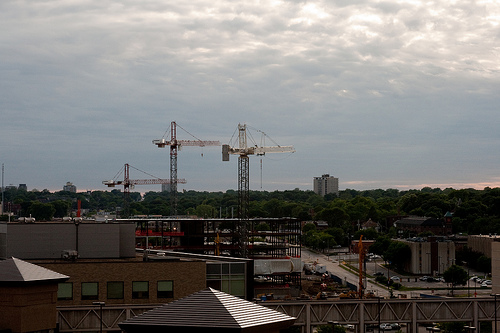
Wellmark anchors a downtown district in Des Moines

In the meantime, Wellmark Blue Cross and Blue Shield is building a new headquarters in downtown Des Moines (thanks to jeremye2477 for the construction pic). It will house close to 2000 employees and represents a $250 million investment. Now, don’t get me wrong. I’m excited as anyone about IMS (and hopeful that the architecture and planning of their new campus will be urban, forward-thinking, and inspirational). But, this comparison illustrates how far behind Birmingham is when compared to recruitment and retaining efforts in other cities, and the impact those efforts have in creating urban place.

As the New York Times pointed out in an article Feb. 17, Des Moines in recent years has thrived on cooperative efforts to improve and expand downtown. There are about 75,000 jobs downtown today, up 20,000 since the mid-1990’s. Birmingham has roughly 80,000 jobs downtown, but this number has been rising much more slowly in the same period. While we tend to have good plans for growth that sit gathering dust on shelves while factions squabble, there is a sense of common purpose in Des Moines–that a healthy downtown does not have to exist at the expense of a healthy metro. Instead, area leaders there see the health of the entire region depending on the health of downtown. They have cooperation. We, with some notable exceptions, do not.

Businesses want to invest in a downtown that’s embraced by the wider community. Instead of feeling like a pioneer, you feel like part of a plan for success. The plan in Des Moines includes a Regional Account, paid into by both city and suburbs, that helps provide stable funding to civic amenities like the art museum, symphony, botanical garden, etc. Here, these institutions often struggle year to year, depending on the whim or largesse of politicians and donors. The stability of Des Moines is part of what influences businesses like the Gateway Market to open downtown with confidence.
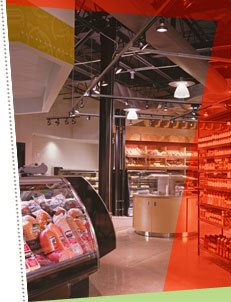
Gateway Market in downtown Des Moines
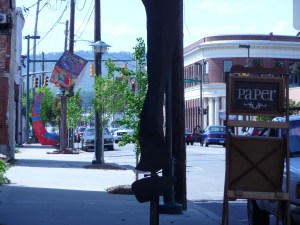
Main Street art in Chattaooga

Interestingly, Des Moines spends a set amount ($250,000) per year on public art. In Birmingham this would generally be frowned upon as frivolous. But just look a couple hours north to Chattanooga, where their public art fund has helped to revitalize the entire Main Street Area. In Birmingham, public art is the first aspect of a project to be chopped or deferred. In Chattanooga, it’s the opposite: art is used on the front end to attract attention and development. In this photo, you can see large, public art that was installed on an almost abandoned Main Street. 2 years later (when I snapped this pic), the neighborhood is thriving with shops, restaurants, and lofts. Oh, and a grocery just announced it’s arriving soon.
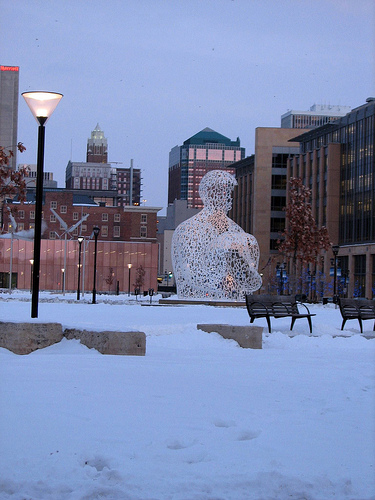
Western Gateway Park with sculpture
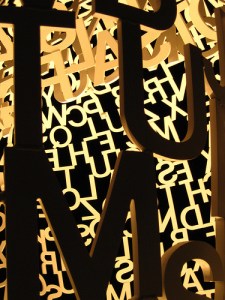
I love the idea of a human head/torso created with large, interconnected letters. Uplighting at night is beautiful.

One project in Birmingham that offers a contrast with Des Moines is the Railroad Park. In Des Moines, the new Western Gateway park was opened with unusual speed–2 1/2 years. Not only is it filled with large public sculpture, but it has already attracted new development such as the Des Moines Social Club, a multi-use art center with big ambitions. Thanks to Lukeh and regan76 for the full and detail pics of the Jaume Plensa sculpture in the park.

Back in Birmingham, the Railroad Park is indeed one of those rare examples of cooperation among many parties. In contrast to Western Gateway, it’s taken about 15 years since first conceived.

The public art component has been on again, off again, illustrating this community’s ambivalence to the real power of public art.  There have also been other cutbacks that some worry will dampen the final product.  But there remains a sense of optimism that, when this park opens later this year, it will become a catalyst for development. Let’s hope that our community doesn’t just sit back and nervously hope for the best, but instead focuses serious effort to making sure the park and its surrounding blocks are seen as a regional amenity that can help bring new corporate headquarters to Birmingham, inspire our own multi-use art spaces to crop up, and generate the interest of small business (and grocers) to the center city.

And maybe, just maybe,  even help reset our “cooperation” button. We need to unite to get things done. Hey, if they can do it in Des Moines…

Railroad Park Development

As most of us concerned with Birmingham’s urban fabric know, the long-awaited Railroad Park should be open to the public in later this year. It is one of the few major elements of the downtown Master Plan that has come to fruition. Which is why we need a Redevelopment Authority–but that’s a subject for another post.

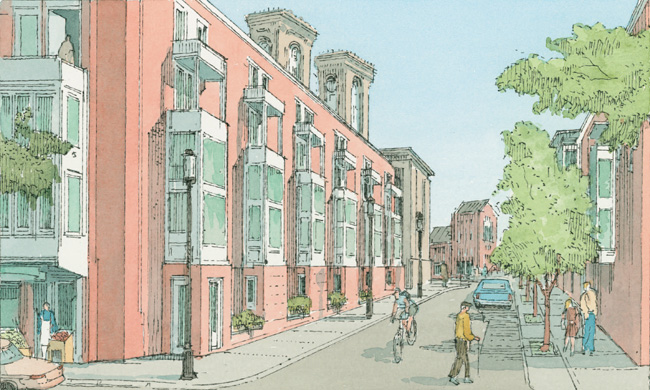
We, and several other architects, provided Operation New Birmingham with some concept sketches of a hypothetical development bordering the new park. The Birmingham News published the various drawings in an article today and has an online poll asking people to vote for their favorite.

Our sketch was very open-ended and more abstract than the others (and perhaps less accessible to the general public?). I wanted to take the artificial “nature” of the park and contrast it with the artificial “structure” of the architecture, a large concrete frame where solid and transparent surfaces move in and out of the frame.

If nothing else, it’s so rare in this city to have varied design proposals for anything, that I’m pleased to be part of this effort. It will be interesting to see what actually gets developed at the park. Baseball stadium, anyone?