Category Archives: Uncategorized

The elephant in the corner

Ahhh, Miss Fancy can once again quench her very large thirst

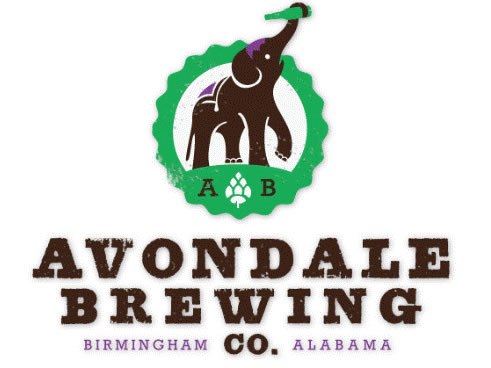
Thanks to our friends blogging over at Birmingham Terminal, we are sharing this great new logo that’s just been announced for Avondale Brewing Company, the new business opening soon on 41st Street South a few blocks north of Avondale Park.

Avondale Park used to be the site of the original Birmingham Zoo, whose most famous occupant was Miss Fancy, an elephant who appreciated bootleg whiskey during Prohibition (and why not?). So this logo, an homage to the swilling former neighbor up the street, seems very a propos.

Miss Fancy says "more beer please!"

Kudos to the owners for this exciting new development in Avondale!

[thanks to bhamwiki for the 1915 pic of Miss Fancy, and to Avondale Brewing for the logo]

Demolition dilemma

A more sylvan past

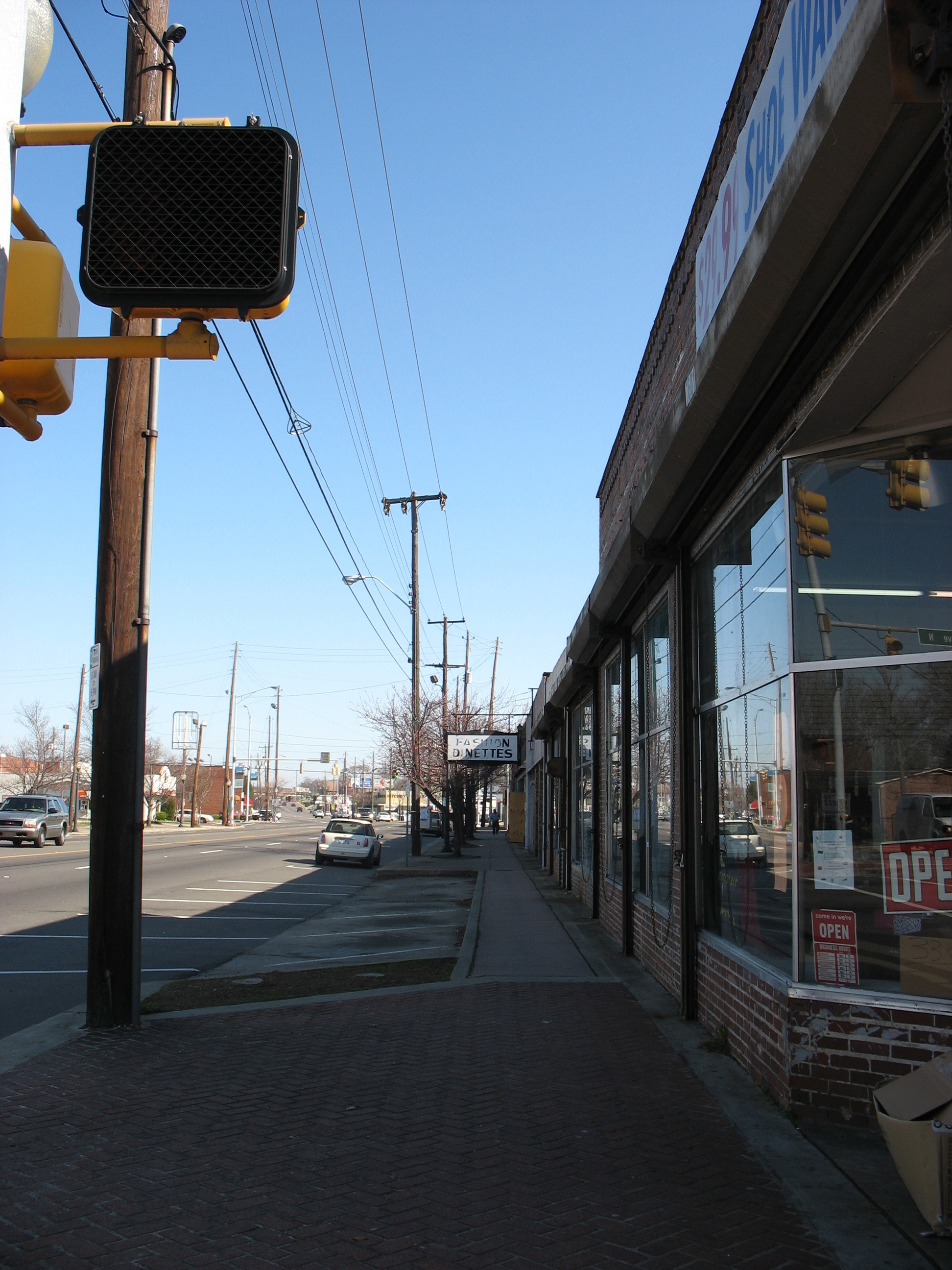
The Birmingham neighborhood of East Lake,  once home to a “suburban” pleasure resort and tidy Arts-and-Crafts bungalows, has seen its share of hard knocks in recent decades. Shifting demographics, disappearing business bases, and car culture have all taken their toll. Architecturally, while quite frayed and beleaguered,  downtown East Lake has maintained a fairly consistent streetscape, with most of its storefronts intact, if vacant. Or occupied by marginal businesses. Or even businesses that appear to be anything but marginal, judging by their heavy traffic:

Judge not lest ye be judged

Above is the row of “adult” establishments on the north side of the 7600 block of First Avenue North. The neighborhood, with many typical “inner city” woes, has seen recent bright spots with artists and others moving in to take advantage of the cheaper housing stock. An East Lake Arts District is a relatively new concept promoted to induce more artists to move to the neighborhood.

On the south side of this same block is a continuous wall of historic storefronts. Almost all the buildings are owned by Vince Amaro, of Amaro Development and Construction (no website available). At Design Review Committee today, it was revealed that Mr. Amaro was granted a demolition permit for one of these buildings, to tear it down for replacement by a surface parking lot. Through no fault of Mr. Amaro’s, this permit was granted erroneously, meaning the City is supposed to send an applicant first to Design Review for approval before demolition within an historic or commercial revitalization district. Mr. Amaro started demolition recently; most of the building is now gone except for the four exterior walls.

Another case for a redevelopment authority--and smartcode

Above is the building in question. Mr. Amaro’s intent is to create a parking lot to serve the other buildings, into which he hopes to bring new businesses (he has an appliance store and a gym already slated for an adjacent building, which he is renovating–to a design approved by the normal Design Review process). To those of us who understand the value of the building line, and the anti-urban nature of surface parking lots, it’s sad. What could have helped avoid this situation (besides the obvious improvement in communication between the Planning Department granting demolition permits and Design Review)?

1. If the City had a redevelopment authority in place, these buildings could have been purchased long ago, with the vacant land across the street redeveloped as parking accessed to the rear and new structures at the sidewalk, with incentives offered to developers chosen to implement specific goals;

2. If the City had SmartCode in place, this block could require certain attributes such as building facades brought up to the sidewalk, and could prohibit surface parking visible from the street;

3. Mr. Amaro, barring the above, would be courted by local neighborhood organisations and a compromise could be worked out where the front facade was retained, and the parking was built.

Easy street

Easy street

As it is, with none of the above occurring, Mr. Amaro is left more or less to his own devices. In his opinion–and there is much to sympathize with this–he is investing time, money, and faith into a block that few others want to touch–and that the demolition of one building to provide parking for others he wants to renovate seems reasonable. One wishes him well in his efforts to revitalize the block. One also wishes that there were a better framework in place to prevent the ad hoc nature of this demolition permit.

Most of all, one wishes there were a really good strategic plan for this block that could be implemented by a redevelopment authority, or at least SmartCode that would let developers know what to expect up front.

This author personally tried to convince Mr. Amaro this morning to at least consider saving the facade, I’m afraid to no avail. He plans to continue demolition and complete the process by week’s end.

Dining downtown

Another dining option coming to a corner near you

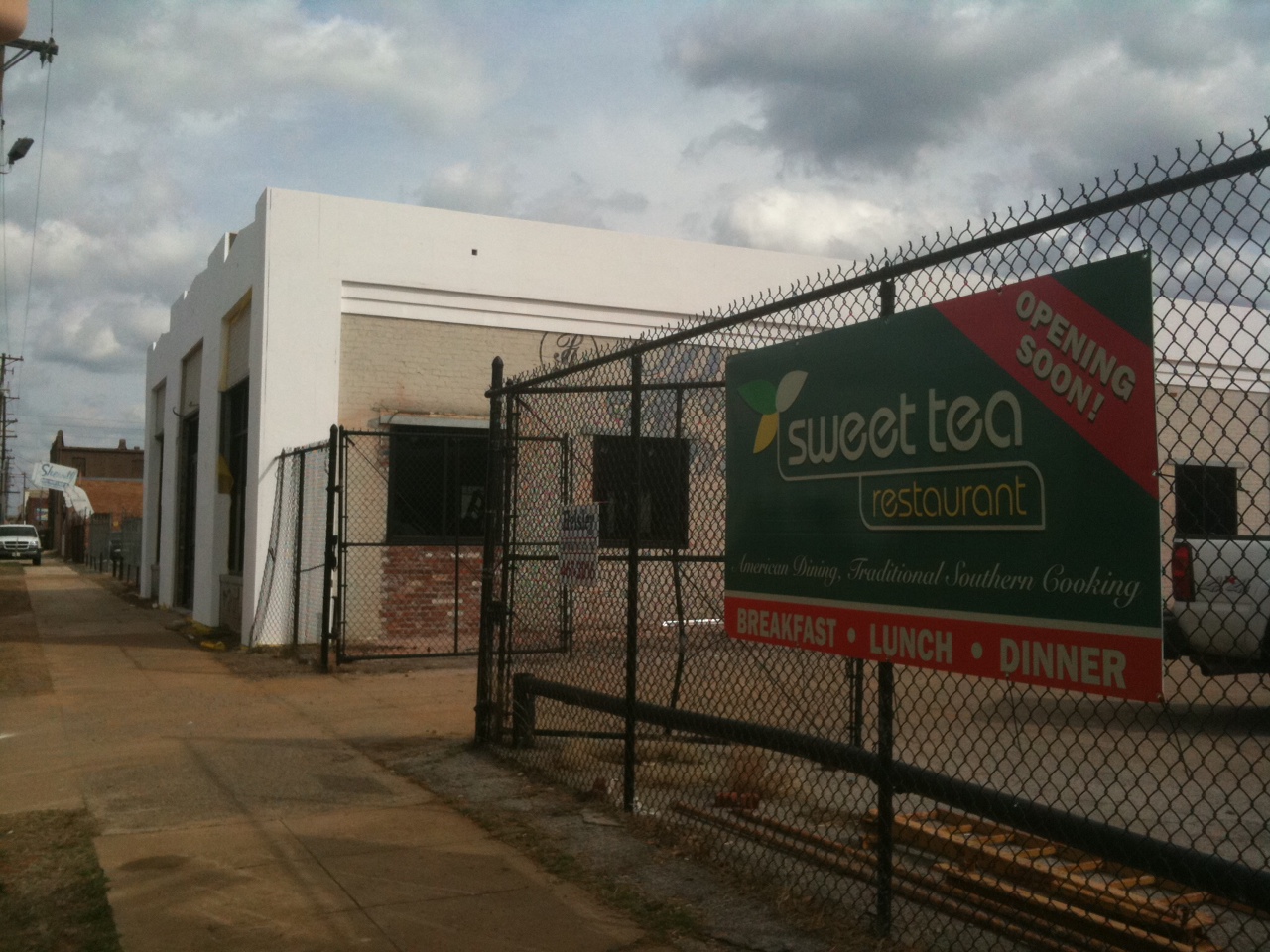
Renovations are underway in an old, warehouse-type structure at the edge of the historic Automotive District, at the SE corner of 3rd Avenue South and 22nd Street (car repair businesses still dominate the neighborhood). Signs announce a new restaurant called Sweet Tea, specializing in “American Dining” and “Traditional Southern Cooking”. It is hard to guess, but the space looks like it could seat a pretty large crowd.

There’s no website that I could find or any additional information–if anyone knows anything, please comment. Regardless, we’re all pleasantly intrigued by a new eating option in the central city. It’s about 2 blocks north of the Fish Market and WorkPlay and 2 blocks east of the Hyatt Place hotel. Go Midtown!

UPDATE: we now know that Cohen Carnaggio Reynolds did the design work, and that the restaurant will be a “meat-and-three” cafeteria–of all things.

A little history

A remnant of Avondale's past

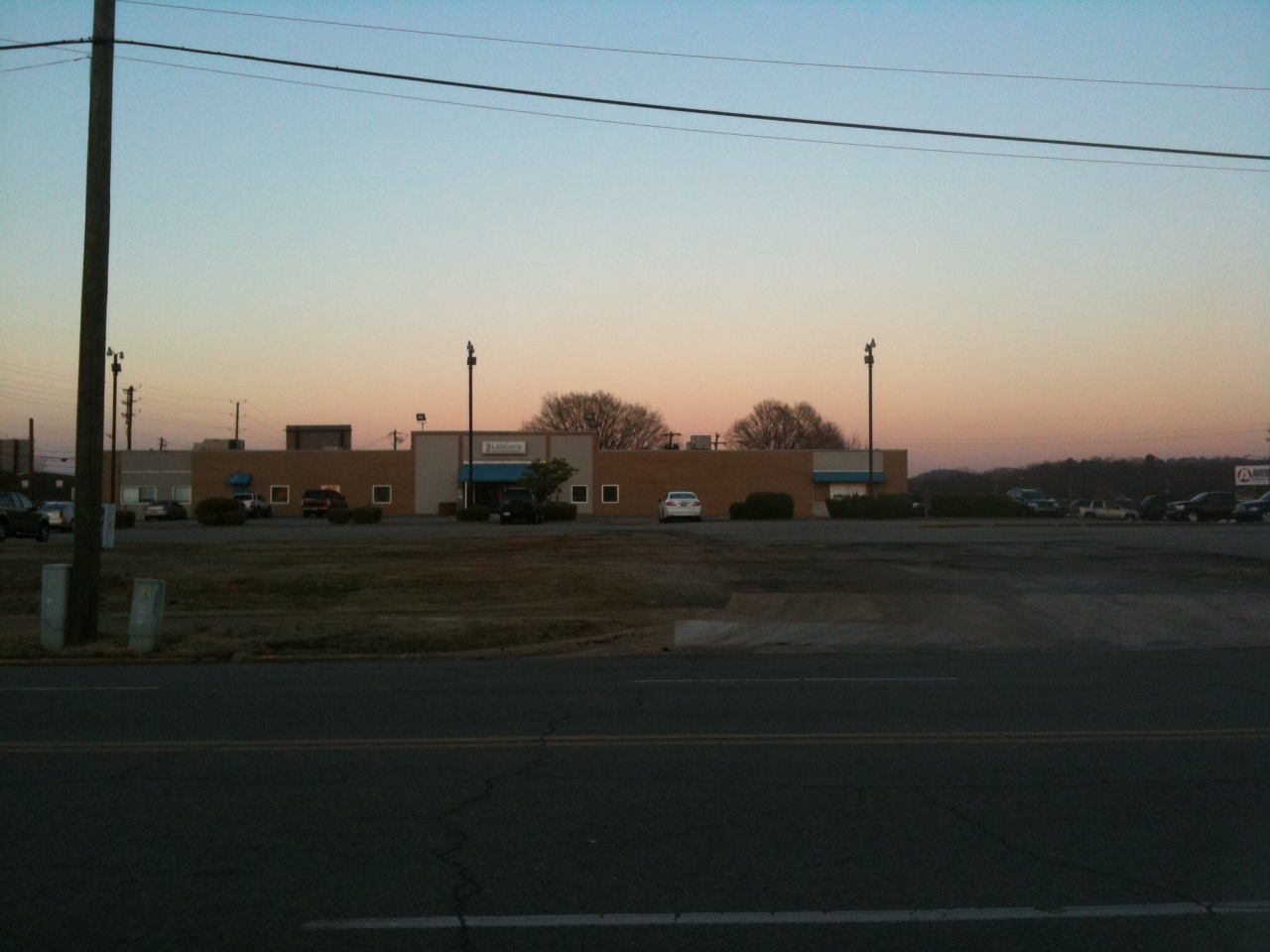
This shot from 32nd Street South, looking east between 3rd and 4th Avenues towards the unremarkable LabCorp building, reveals little of the interesting history of this  block, now completely empty except for LabCorp. My attention was drawn to it last week at Design Review Committee, as the Barber Companies which owns the lot requested a permit for surface parking work.

Bowling alone

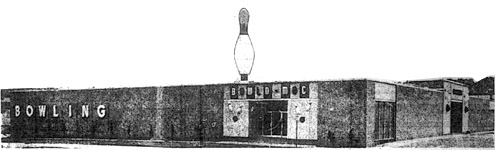
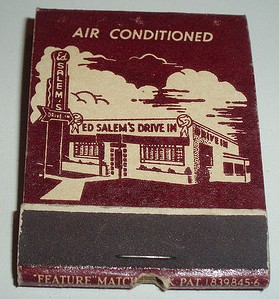
Above is the LabCorp building in 1960, when it was the fabulous Bowl-Lo-Mac, complete with illuminated bowling pin sign on the roof. A putt-putt golf course occupied a portion of the remaining block, as did Ed Salem’s Drive In #2, a well-known local burger joint. This restaurant later became Eunice Crabtree’s Cut Rate Delicatessen & Bait Shop, a gay bar that closed in the early ’90s. The building, uncared for and forlorn, sat vacant for years until Barber razed it a few years ago, completing the erasure of the formerly vibrant elements in this area.

Smoking encouraged at Ed Salem's

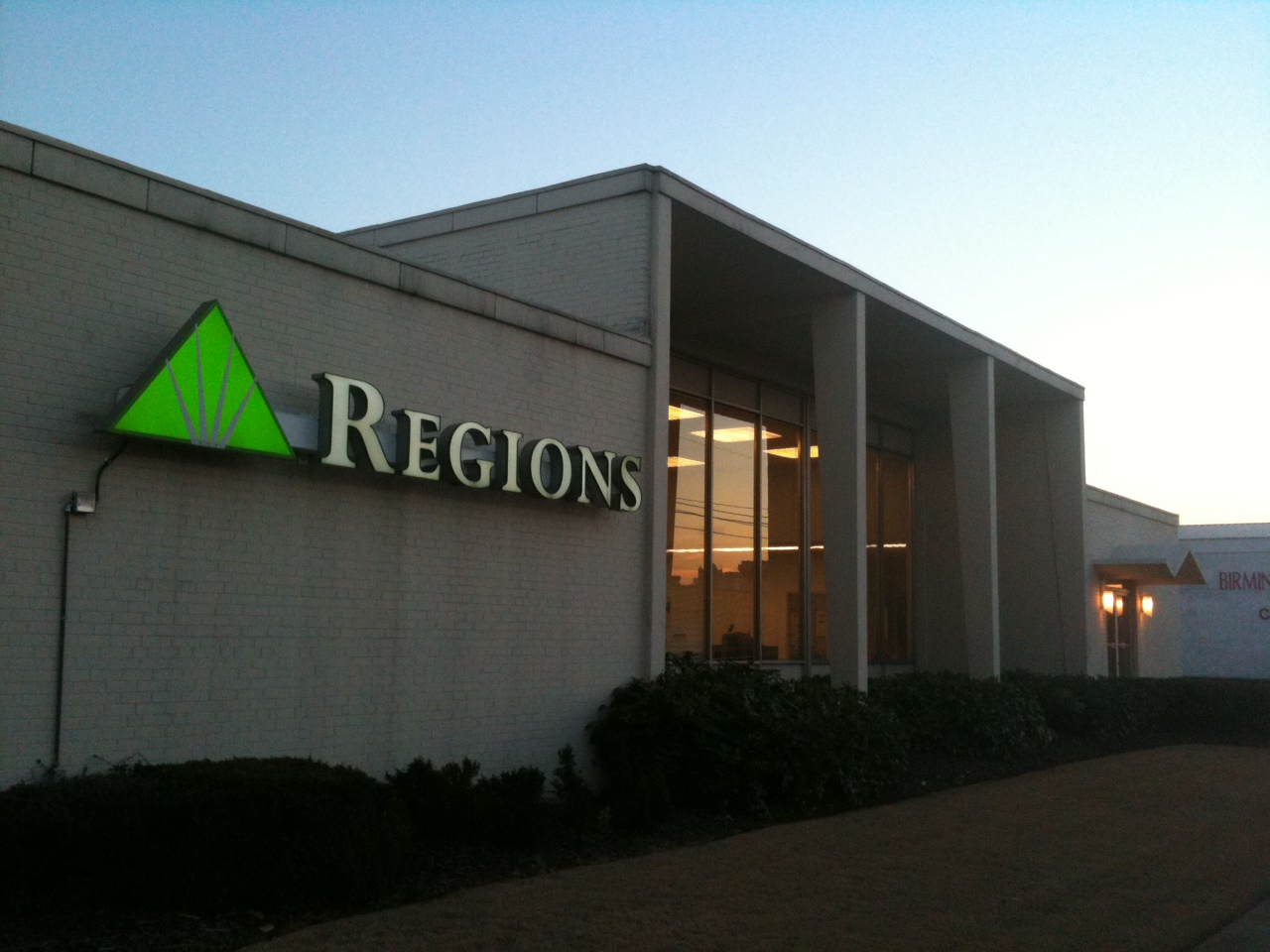
The busy recreational activity of this block in the 1960’s helps explain the Regions Bank directly across 32nd Street to the west, whose deliberate, almost “Miami-Modern”-Jetson’s profile is so at odds with the more prosaic warehouses in this neighborhood. Apparently, the building was originally Godwin’s, a favorite local store for purchasing and repairing televisions–although perhaps someone else could confirm or correct this assumption [Assumption corrected: Godwin’s was one block further south!]:

A period piece that's lost its context

It seems that the Bowl-Lo-Mac quickly lost business to larger, more glamorous lanes out in Eastwood, Greensprings and beyond, and of course TV purchases and hamburgers all moved out to more suburban pastures too. If nothing else, I’m grateful to Barber for giving me a reason to learn about this area’s past. Talk about looking on the bright side of a surface parking permit; I tried, I really tried…

[thanks to Birmingham Rewound for the Bowl-Lo-Mac pic, and to ussiwojima for the matchbook]

Finally 4 stars

230 count cotton is coming

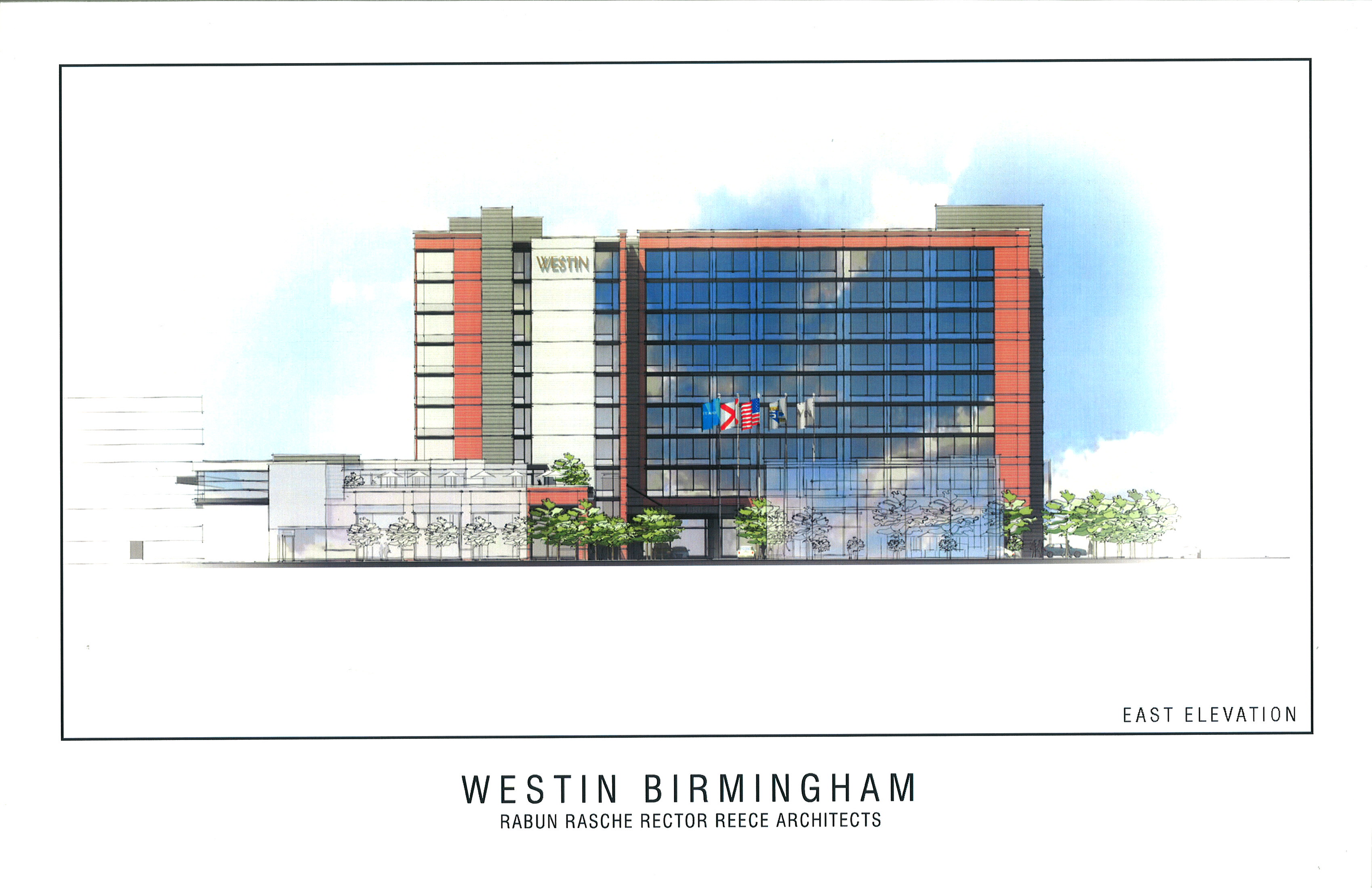
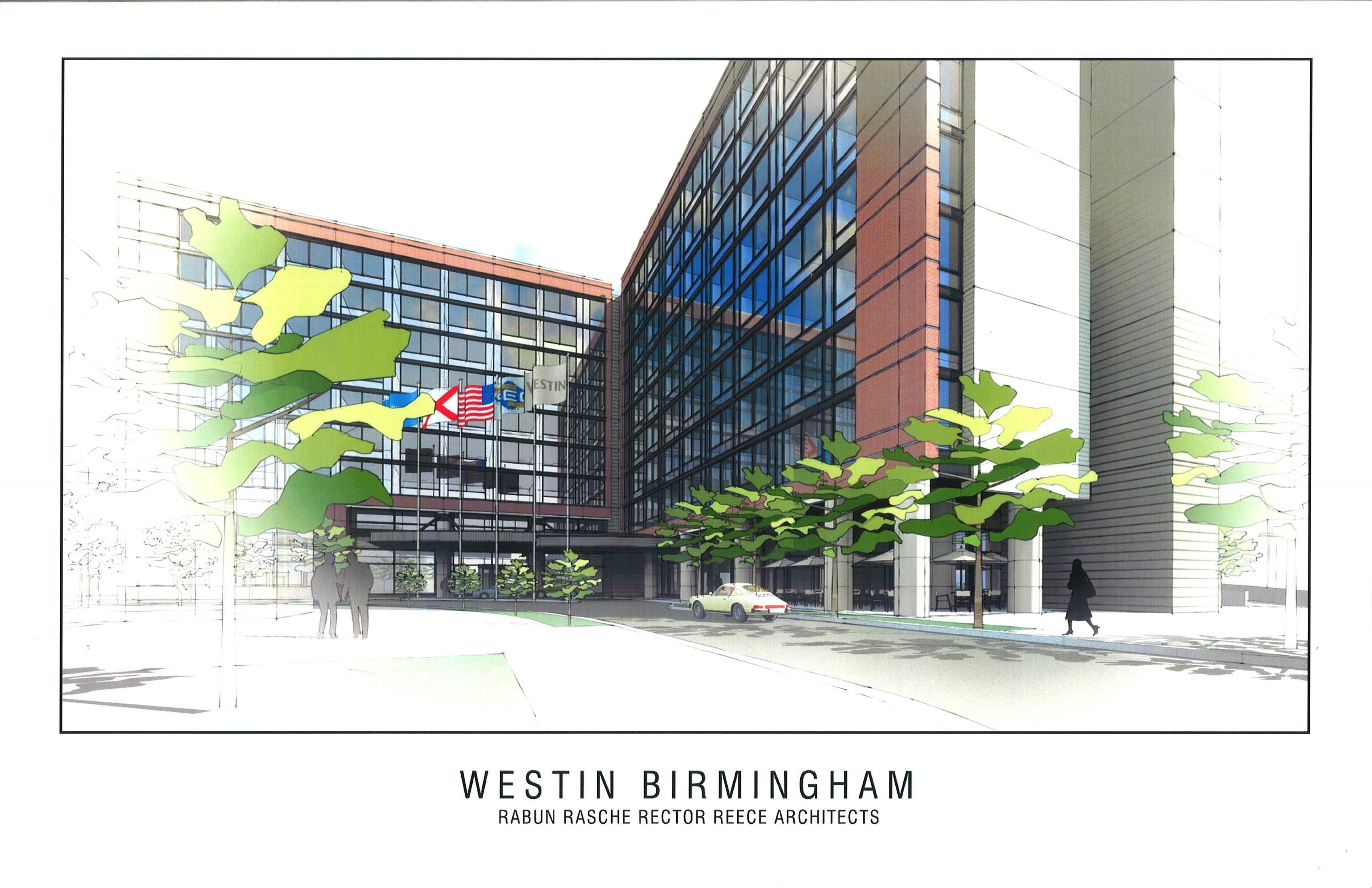
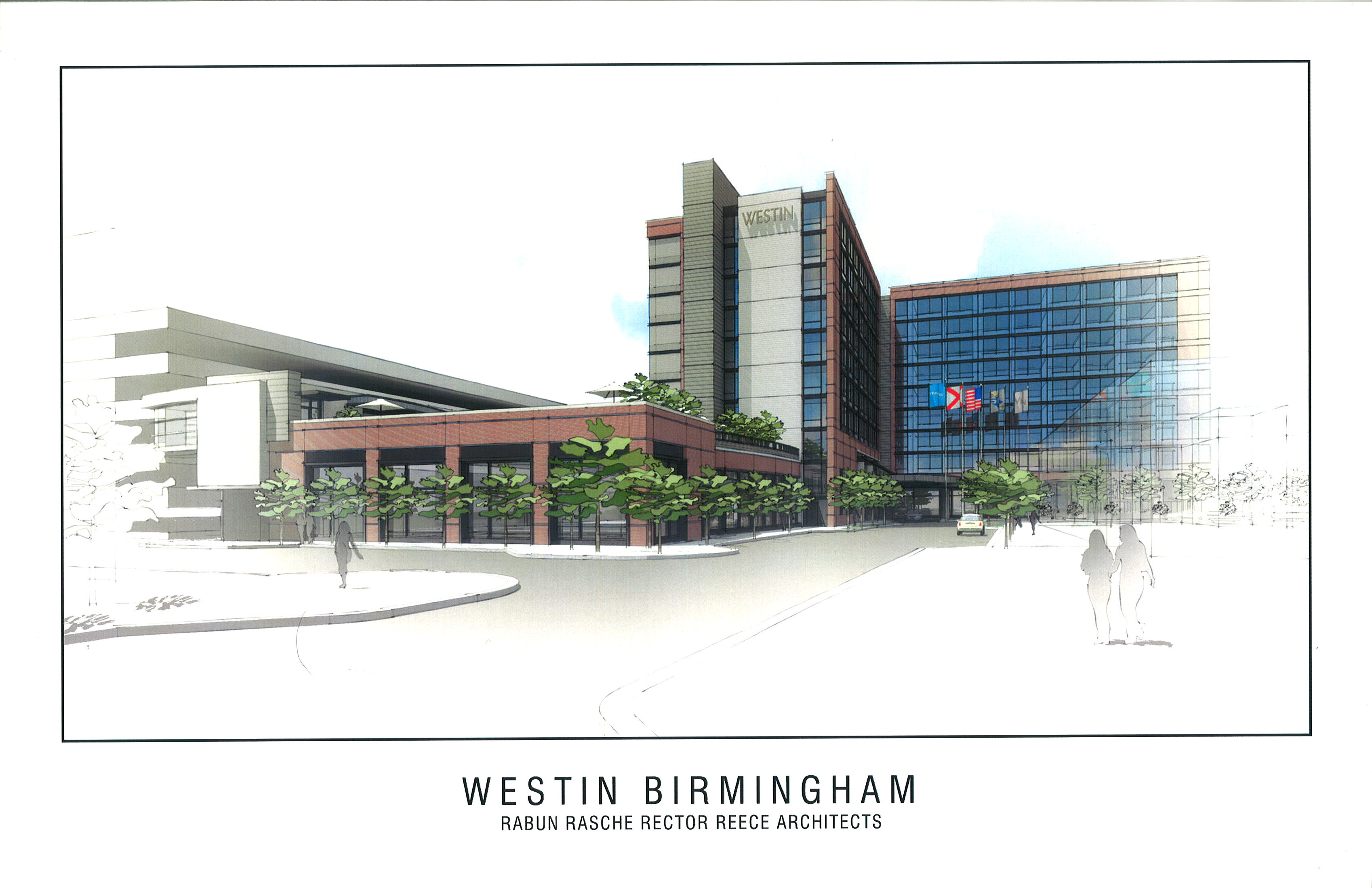
Today the Design Review Committee gave the go ahead for foundation work to start for the new downtown Westin at the BJCC. Courtesy of Joseph Rabun of Rabun, Rasche, Rector, Reece Architects, we show you the design of the hotel exterior (note: these renderings will continue to change as the design develops).

Do we spy Chris Hastings to the right?

The exterior is planned as a mix of brick and Centria metal panels, a high quality architectural panel system. Above you see the planned covered terrace and seating for the “signature restaurant” to the right of the image–Chris Hastings of Hot and Hot Fish Club has announced he’s negotiating to run it.

Storefront-ish

As noted in this blog previously, the design has been revised so that not just the restaurant, but conference areas to the other end of the hotel open onto the street. Above you see the “storefront” articulation in the wing which houses the swimming pool on the roof. I’d prefer real stores to conference rooms/corridor space, but at least the scale of the wing is human.

Almost vegas

Last but not least, the second floor pool, surrounded by terraces, health club, and cabana bar. OK, it’s not exactly the Tower Suites pool at the Wynn Las Vegas, but it looks nicer than most other downtown hotel pools I can think of in town.

More on this project and the surrounding entertainment district as we get more info.

[by clicking on the images you can enlarge them]

[Thanks to Rabun Rasche for the renderings]

High design

It's in the details

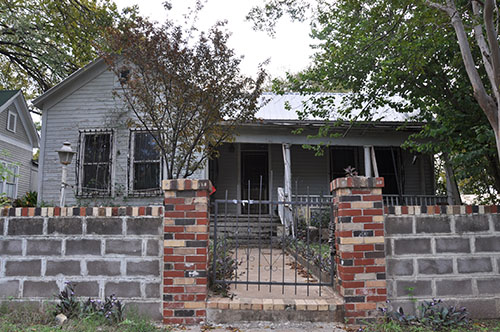
Back in Austin, I was stopped in my tracks by this new lounge that’s opened in a frayed, formerly residential fringe of downtown that’s undergoing a surge of redevelopment (think maybe Norwood or North Avondale for a comparison). It’s called Icenhauer’s, and it’s in an old house that looks very similar to Birmingham housing stock of the same vintage. At first glance it looks like someone just “fixed it up” with a new coat of paint and some yard work. But look closer, and the sophistication of the renovation startles.

First, the green trim is both subtle and very contemporary as a foil to the white clapboard siding. The porch has a crisp concrete base matching the (new) base of the house; horizontal boards are used to one side, a modern version of a privacy screen. Simple, unobstructed glass is used in original window openings. While deferring to the 1895 original, the renovation (by Michael Hsu Office of Architecture) manages to produce something completely fresh and new.

A family home for 110 years

Above is the “before” picture, which brings us to the next revelation–the landscape work. Gone is the concrete block wall, lawn, and concrete path. In its place we find a precise geometry of steel edging, pea gravel, stone pavers, and a fantastic sign, a clean, streamlined version of a neon sign from 60 years ago. Throw in some stylish chairs and tables, and you’ve got a very sharp yet relaxed design.

The new Austin nightlife

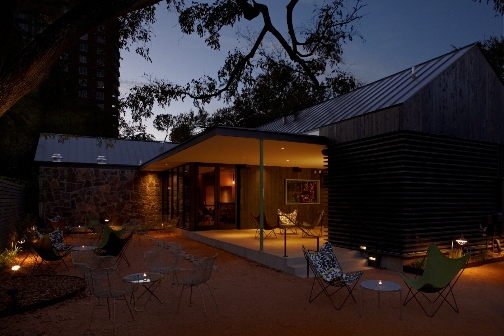
Additions to the rear, including a new porch, more gravel/hip butterfly chairs for seating, and a combination of stone and wood create a cool environment for outdoor chilling.

Pour it on

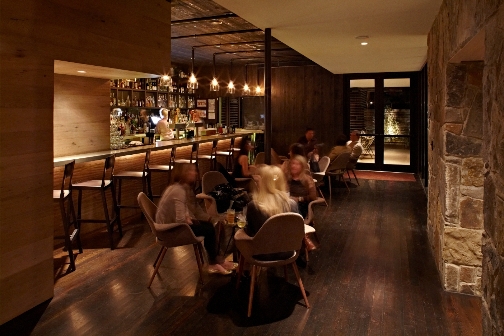
While I didn’t get the opportunity to try this place out at night, it’s clear that the unified design outside flows inside as well. Stone and wood create warmth and texture; a palette of browns and grays keep things calm; carefully chosen lighting keeps the mood soft and sexy. Birmingham has some great bars, but I can’t think of one that combines all these elements in quite the same way, or where the owner was clearly committed to following through with holistic design to this level. Inspirational, though. Cheers to that!

[thanks to Icenhauer’s for the before and evening images]

Call for creativity

ENsley-637, please

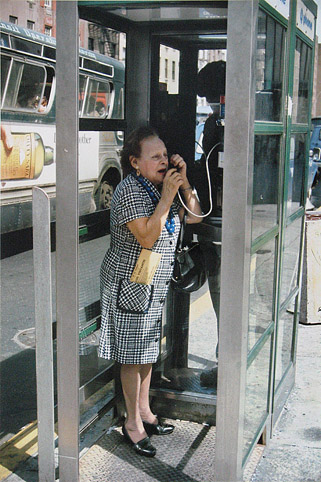
Ah, the public telephone. Seemingly not too long ago, an essential part of the urban fabric. An absolute necessity for staying in touch while on the go. Any urban area of substance had plenty of phone booths within easy walking distance. Searching for a free phone booth was an essential part of urban existence.

Forlorn, and yet...

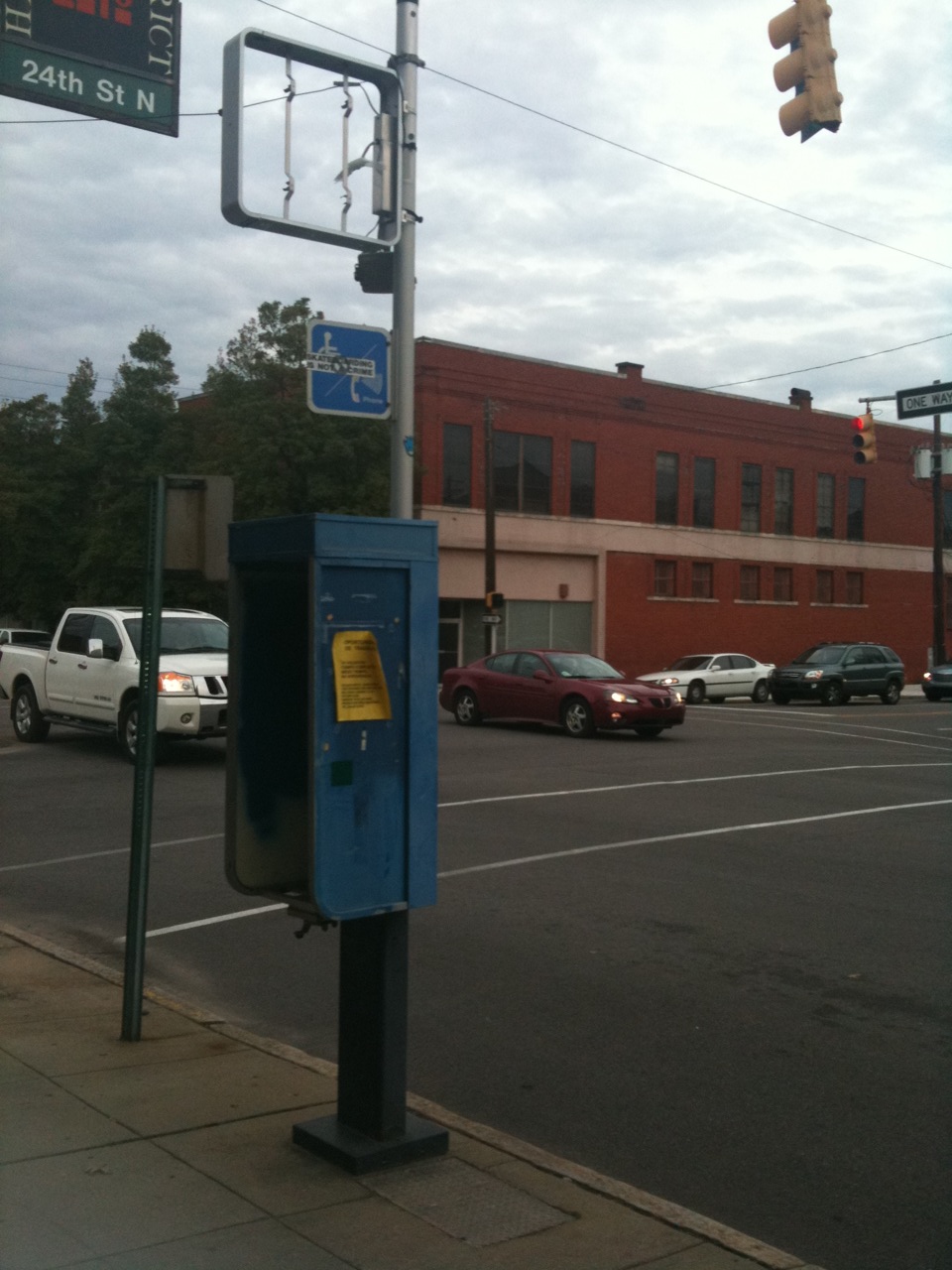
Now, with the ubiquity of mobile phones, in many US cities it’s hard to find a phone booth anymore, or at least one that still functions. Birmingham is littered with obsolete booths, a testament to antiquated technology. Above is the phone booth directly outside our downtown office, which used to carry an illuminated “South Central Bell” flag sign up top, and a phone (and phone book!) below. Now the sign has been yanked out, along with the phone; the shell is all that remains. An eyesore, right?

But, interestingly we’ve developed a perverse fondness for this phone booth, in its antiquarian-relic state. It still serves as a great landmark for visitors to our place, as well as a memory of a time gone by. What if the empty phone booths around town became public art pieces? Light boxes? Color-coded district markers?

Call for artists

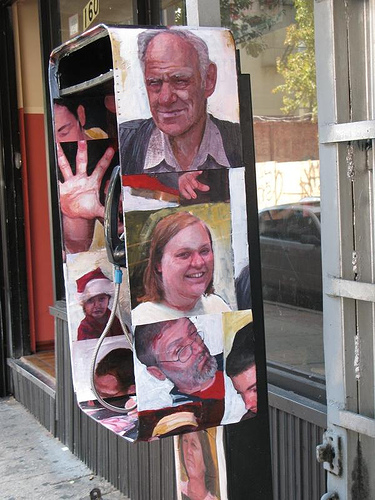
Above is just one example of the creative use of (mainly) defunct phone booths. Even as an ephemeral program, it could be a fun way to get color and art woven into the streetscape.

[Thanks to payphone project for the vintage pic, and to julie fishkin for the art piece]

A tale of two lots

It has been over a year since the Barber Companies (the successor to the Elyton Land Company which platted and developed the initial city of Birmingham, and a significant landowner across the City) offered “free land” downtown to the most qualified applicant. Why is this land still on offer? And how does this offer compare to the Community Foundation‘s recently announced “Next Big Thing“, an idea competition for the vacant lot due east of the Railroad Park?

A loss

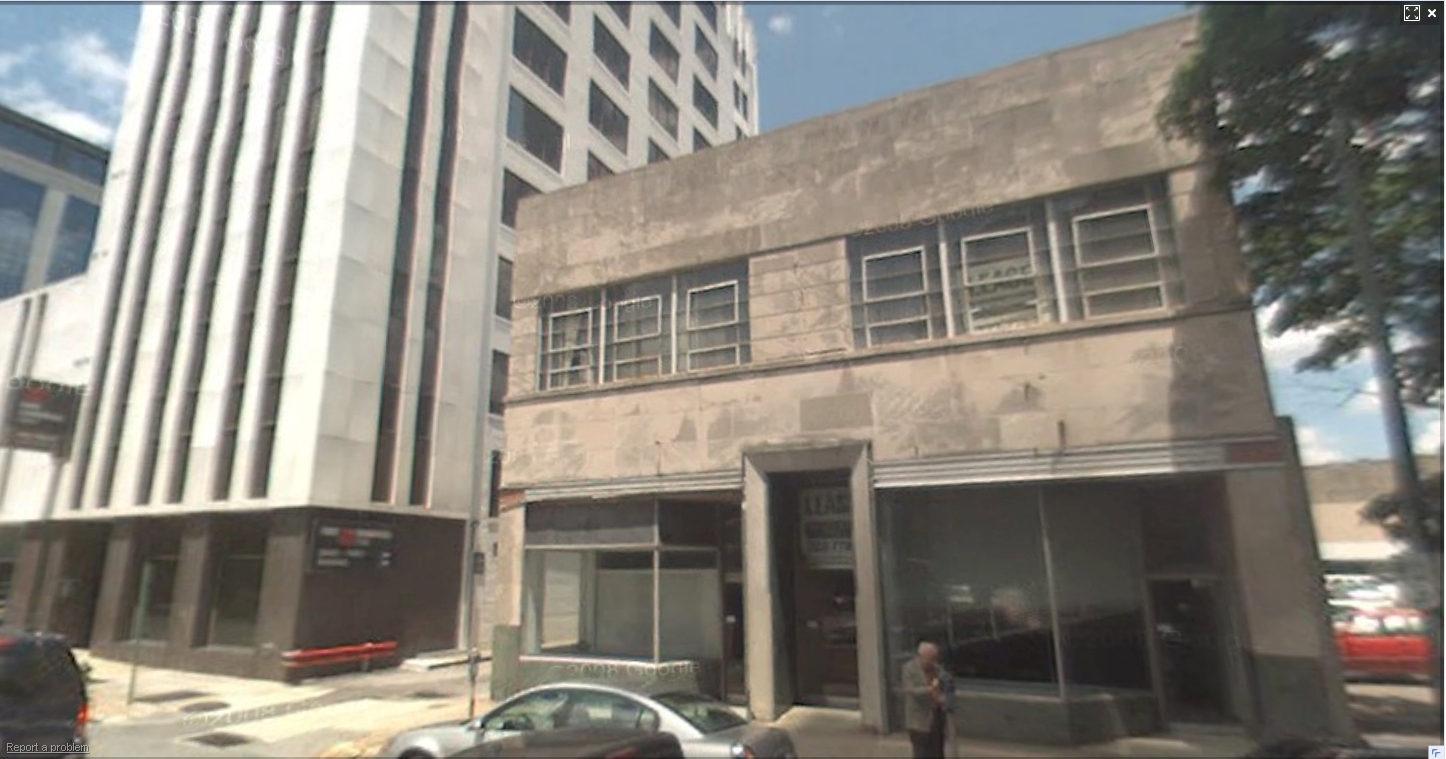
When the Barber Companies offered their 40′ x 100′ lot in the 200 block of Richard Arrington Blvd. North for “free” to the user of their choice (you can see their selection rules here), what was seldom mentioned was that just months before their announcement, Barber quietly tore down a lovely, Moderne-style building (itself a successor to the old Lunsford Hotel and Birmingham Medical College, the predecessor to UAB) pictured above in a Google Map screenshot from 2008. In my opinion, this handsome structure, clad in stone with storefront windows, had no reason to come down except Barber wasn’t interested in maintaining the older building (note: Barber’s historic downtown headquarters was vacated earlier last decade and moved out to Inverness, in an office park past I-459).

The now empty lot is engulfed by a surface parking lot–hardly an attractive neighbor, even less so since the parking does not come with the lot. The cost of building a new structure on a very small plot like this downtown is considerable, no matter how you structure it; I would imagine more viable businesses would be considering this “free” offer if the building were still there. Starting from scratch can be fresh and exciting–but harder to visualize and to pay for. Was this really an act of altruism, or a public relations stunt to detract attention from the loss of another historic building (Barber is not exactly known for historic preservation interests–beleaguered or demolished structures are common across Barber’s vast Birmingham holdings).

Any ideas?

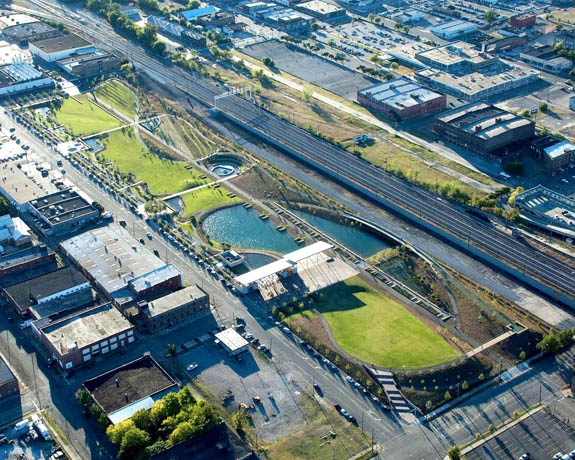
In contrast, the parking lot across from Railroad Park is a very different situation (a portion of the property is visible on the lower right of the photo above). The City owns this lot; the Community Foundation and City have organized an international idea competition (The Next Big Thing) to determine its use. No historic building was torn down here, at least not recently; and rather than expecting the winner to also develop/finance the winning proposal, the $50,000 prize money is awarded for the idea, only. Then, the Foundation’s new Catalyst Funds will commit at least $1 million of seed money towards implementing the plan (presumably by others, whether private or public, depending on the idea). Here’s a thoughtfully laid out contest, with lots of energy and excitement, that feels natural coming so soon after the great success of Railroad Park’s opening. It feels well-considered and thoroughly planned, in stark contrast to the somewhat bizarre Barber offer a few blocks north.

If only I felt less cynical about the Barber offer. Now that the beautiful old building is torn down, our hope should be that someone can overcome the challenges of the small site and constrained location, and construct a great piece of infill architecture with an engaging street presence. Because there’s little worse than a vacant lot sitting next to a big, unlandscaped parking lot. Which can feel worse than vacant sometimes…

P.S. Spread the word about Birmingham’s Next Big Thing contest–and enter an idea yourself!


Checking in (2)

Variation on a theme

The News has written an article about the design refinement of the new Westin Hotel at the BJCC, noting the Mayor insisted the architects (Rabun Architects out of Atlanta) take the earlier design and improve it with “wow factor”. On this blog we’d noted earlier our disappointment with the bland, middle-of-the-road architecture first presented, and hoped for something more innovative, special, and welcoming to visitor and local alike. So we’re happy the Mayor insisted on refinement. But what about the result?

More red brick?

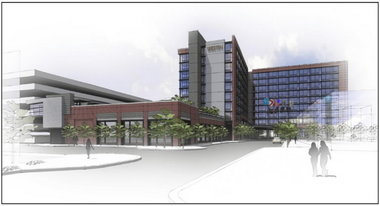
Above is the latest rendering the News posted from the architects, which looks extremely similar to the original shown some months ago, except the facade is now shown rendered in what appears to be red brick. The rendering angle itself is more flattering, emphasizing street-level glass and pedestrians on sidewalks. To answer the Mayor’s wish for a blend of “traditional and contemporary styles”, it also appears the low one story wing in the foreground (with swimming pool on its roof) has been configured as a traditional commercial storefront facade, while the main hotel itself is more “contemporary”.

Without seeing the design for the adjacent entertainment district (designed by local architect Fred Keith of Keith Architecture) it’s impossible to say, but my guess is those traditional storefronts are designed to complement Keith’s district across the street. Rabun is not known for edgy, high-design work. Their corporate hotel clients demand clean, safe, often predictable design. It’s easier to look at this project as a necessary addition of crucially needed rooms near the BJCC, rather than our only chance to have a truly “signature” hotel downtown. I’m confident that chance will come soon, but for now it looks like this project will be an unremarkable 4-star hotel design. Let’s hope the restaurant, public spaces–and the surrounding district of shops, restaurants, and bars–will be as thoughtfully laid out as possible. Perhaps the design won’t win national awards. But with the right mix of tenants it could still prove a solid success for the BJCC, downtown, and the adjacent northern neighborhoods. What’s key is trying to integrate the new construction into the existing downtown and Norwood. If this becomes more than just a BJCC-centric project, and reaches out to surrounding neighborhoods, then we’ve accomplished something.

Better near the park

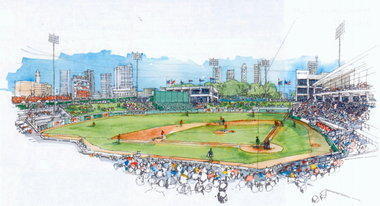
Which brings us to a final note on the proposed new downtown baseball park for the Barons (concept rendering above). The Birmingham Business Journal showed results of an online poll where the majority of all respondents wanted a new ballpark near Railroad Park. Coming a very distant second was the BJCC area. In my opinion, there is much more opportunity for leveraged redevelopment and mixed-use in the Railroad Park area, than near the BJCC. The proximity of the new park, UAB, downtown residences, and the blocks of old warehouses are more promising than the emptied out land by the BJCC, not to mention the freeway connector which for so long has cut off that area from the central core. I know the Mayor and others are working hard to evaluate all options for a ballpark location; my vote is for up near Railroad Park.

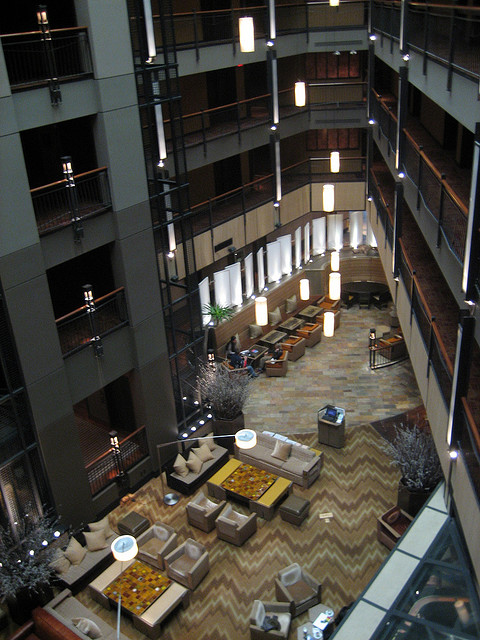
[Thanks to markj for the pic of the Tribeca Grand atrium in NYC; the News and Rabun Architects for the Westin rendering; the News for the Ballpark rendering)

In the mix x 2

Tempted?

We were able to sample the soft opening selections at Mix this week (a new bakery-cafe-bar that opened on the corner 0f 19th Street and 4th Avenue North). Besides a good variety of pastries, muffins, and donuts, the fresh bread stood out in a city where artisanal fresh bread is often hard to find. A baker was bringing out a fresh batch once we’d finished lunch; loaf sales have been brisk.

Getting fresh

The interior has been lightened and feels much less formal than the old restaurant. Wonderful art by local artist Amy Pleasant adorns the walls (with more to come). Chef/Owner Chris Dupont spoke with us about his plans, which include an evening bar menu, movie and poetry nights, and lots more bread. It’s an ambitious effort to overcome a tricky location, and to introduce a quirky, hip vibe into a somewhat unquirky, unhip building.  Perhaps if someone can do it, it’s Chris, who helped pioneer a new attitude about downtown dining at his Cafe Dupont a few blocks away.

Two facts make us optimistic: a large awning with the Mix logo has been approved to cover the sidewalk patio area, and a 1960’s New Wave film was projected on the wall when we dined. You can’t help but feel good about large outdoor seating areas and New Wave films. By the way, the food was delicious.

Grilled not boiled

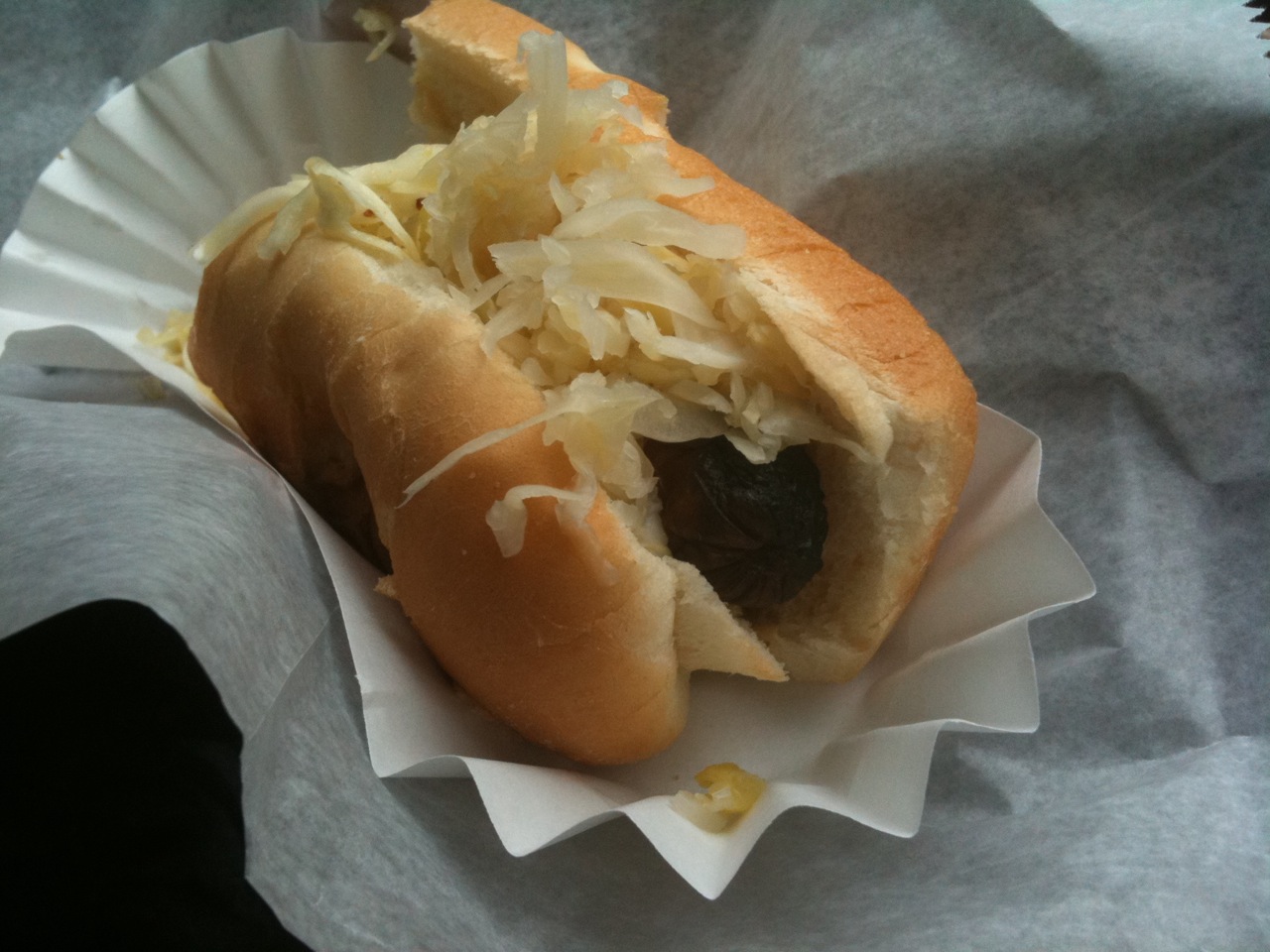
To round out our foodie lunch week, we stumbled into the Peace Dog stand today at the corner of 6th Avenue and 20th street North downtown. This is not your normal Birmingham hotdog stand–I felt transported to Austin. Hebrew National and veggie dogs, grilled to order, local small-batch mustards and relishes, Urban Standard provisions—all in a neat, compact, pedestrian-friendly package on the corner. You can find the stand there most Mondays, but for other days of the week follow their tweets to find out when they’ll be where (they also go to the Summit Shopping Center some days): @peacedogbham

We need more street vendors and taco trucks!