DIY

Unsanctioned but tolerated

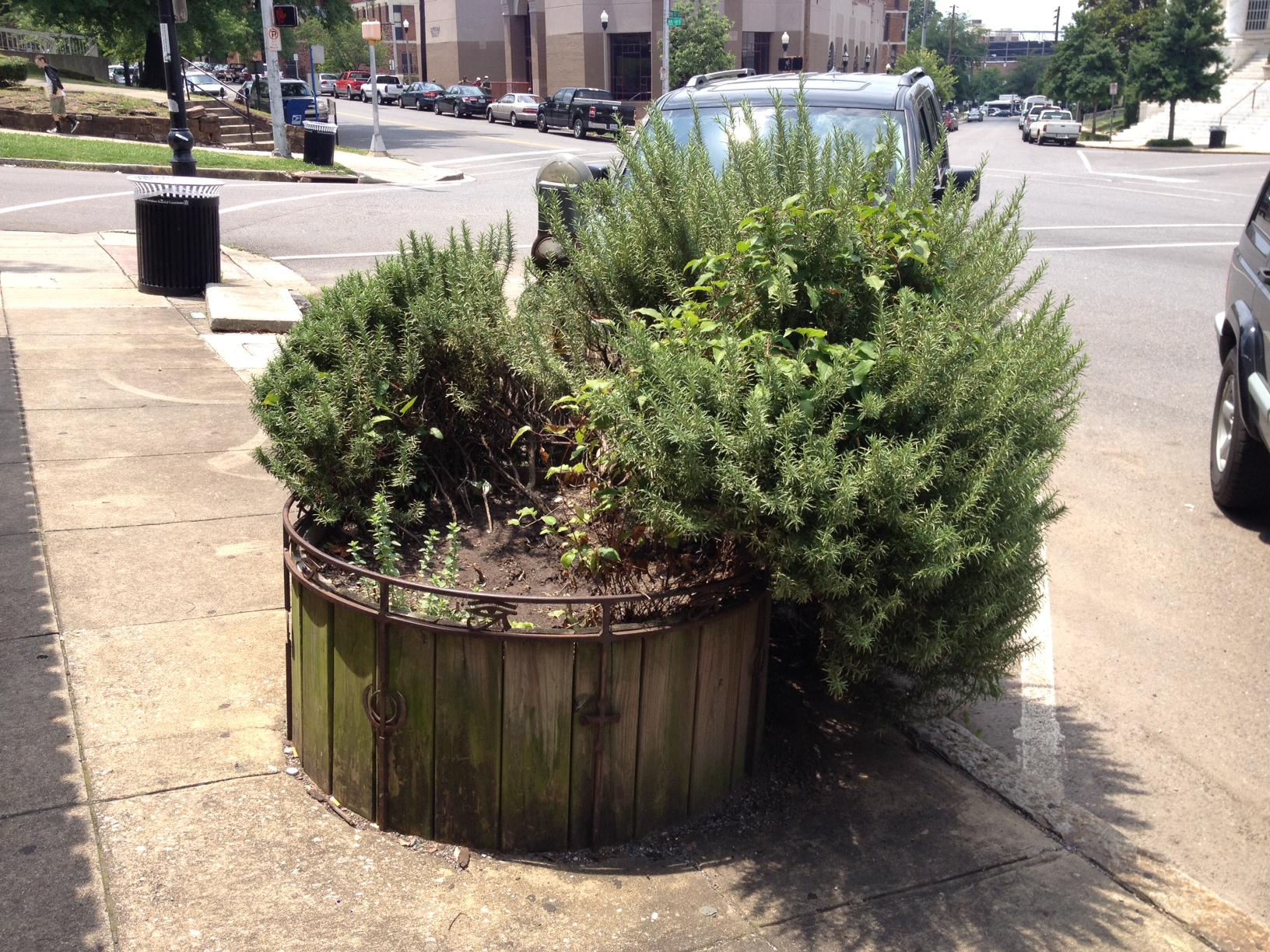
There’s a lot of talk these days about DIY (do it yourself) approaches to urbanism, with everyone from taggers to neighborhood residents taking control of their built environment and bypassing the authorities to do so. This interesting article in The Atlantic Cities talks about crowd sourcing techniques in the urban setting, and how some cities are starting to rewrite their rules to take advantage of this grassroots civic energy (above is one of many tree wells scattered through public right-of-ways in Birmingham which, in the absence of trees or sustained municipal care, have been unofficially adopted/planted/maintained by adjacent merchants or residents).

Channeling the energy and sanctioning it

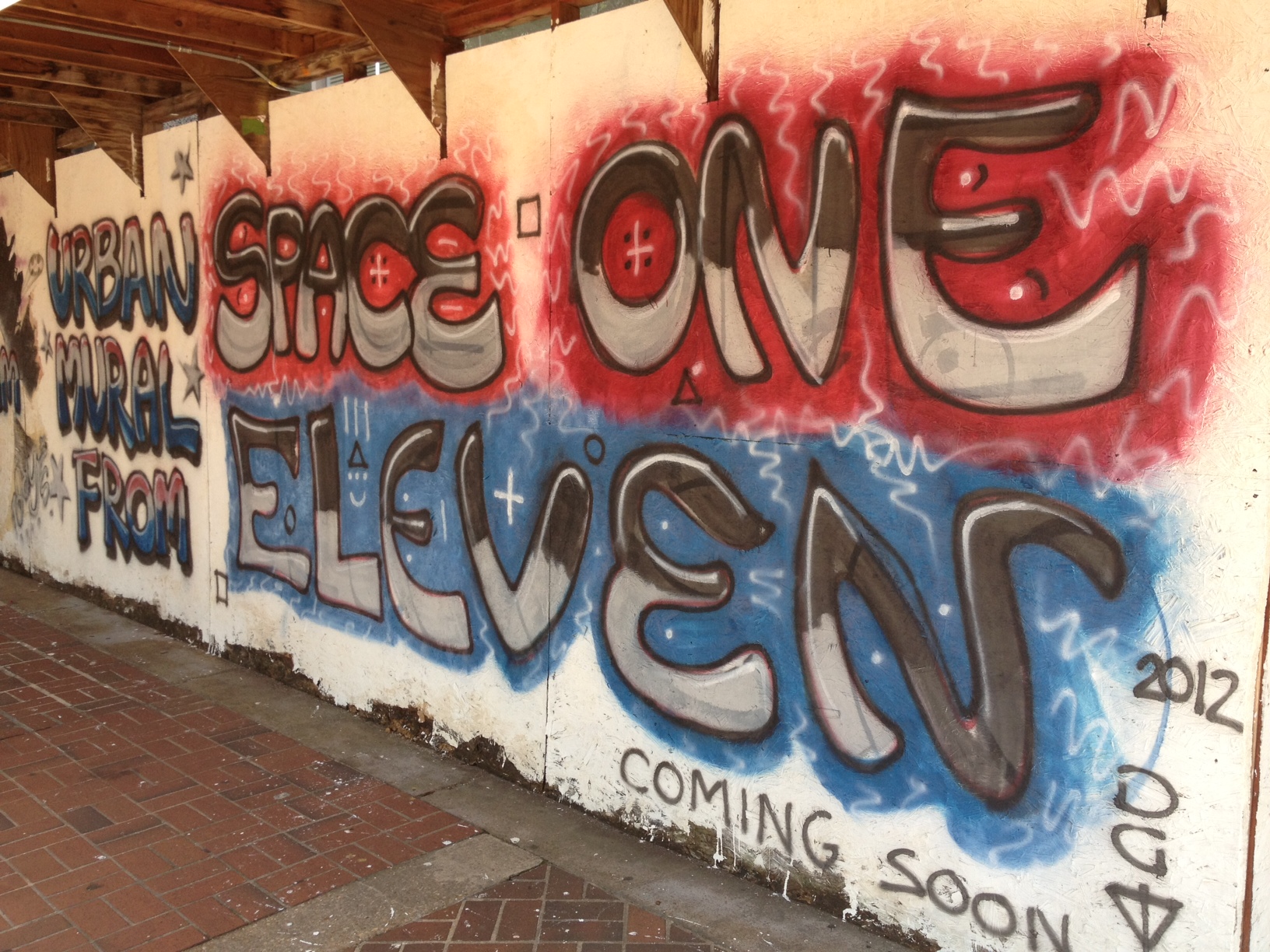
Graffiti is an ancient method of transforming public space without official sanction; above is the announcement of the next phase of an art project at 20th Street North and First Avenue at the vacant Brown-Marx building  coordinated by Space One Eleven and Operation New Birmingham (see our earlier post). Blank sheets of plywood that would have been prime targets for random graffiti are instead sanctioned for graffiti.

They paved paradise…and then they changed their minds

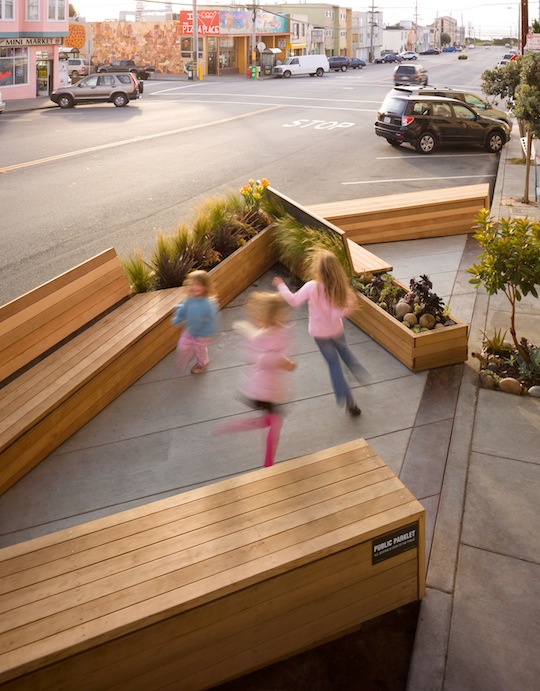
In San Francisco, that bastion of “people power” with its history of bucking societal norms, it is perhaps no surprise that the city has taken DIY to a new level of seriousness and sanction. Back in 2005 an art project consisted of feeding a city meter, then rolling out some grass into the parking spot to reclaim that little piece of asphalt as green space. Today the city’s “parklet” program allows neighborhoods to petition to officially–and semi-permanently– close down parking spaces and design and install (at their own expense) tiny park spaces (above). Permits are renewed yearly, so if the neighborhood decides it really needs that parking space back, they can do it.  It’s been a fascinating example of how grassroots DIY ideas have broken through the “system” and changed the rules. And in this case, an illustration of the triumph of human needs over those of the automobile–a few spaces at a time.

[Parklet photo courtesy of Wells Campbell via Atlantic Cities)

The big city

Yard of dreams

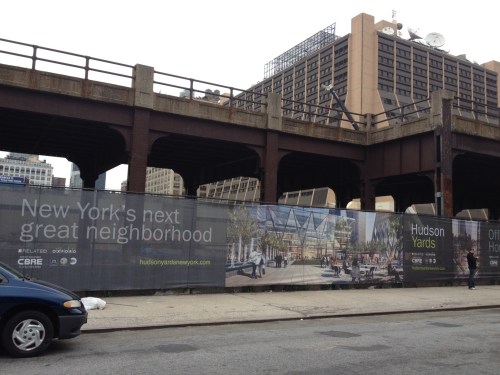
This post looks at last week’s trip to New York, focused on midtown and financial district locales. After many years of waiting, the Hudson Yards Redevelopment Project on midtown’s far west side at the Hudson River is underway (above at 10th Avenue and 3oth Street), with developers working on a first phase of mixed-use office, housing, and retail constructed in leased air rights over MTA‘s vast rail yards.  This ambitious plan includes an extension of the “7” subway train, thousands of new housing units, and large amounts of public space. A virtual no-man’s land (perhaps the last such area in Manhattan) promises to be completely transformed. You can see the development proposal here.
All about the brand

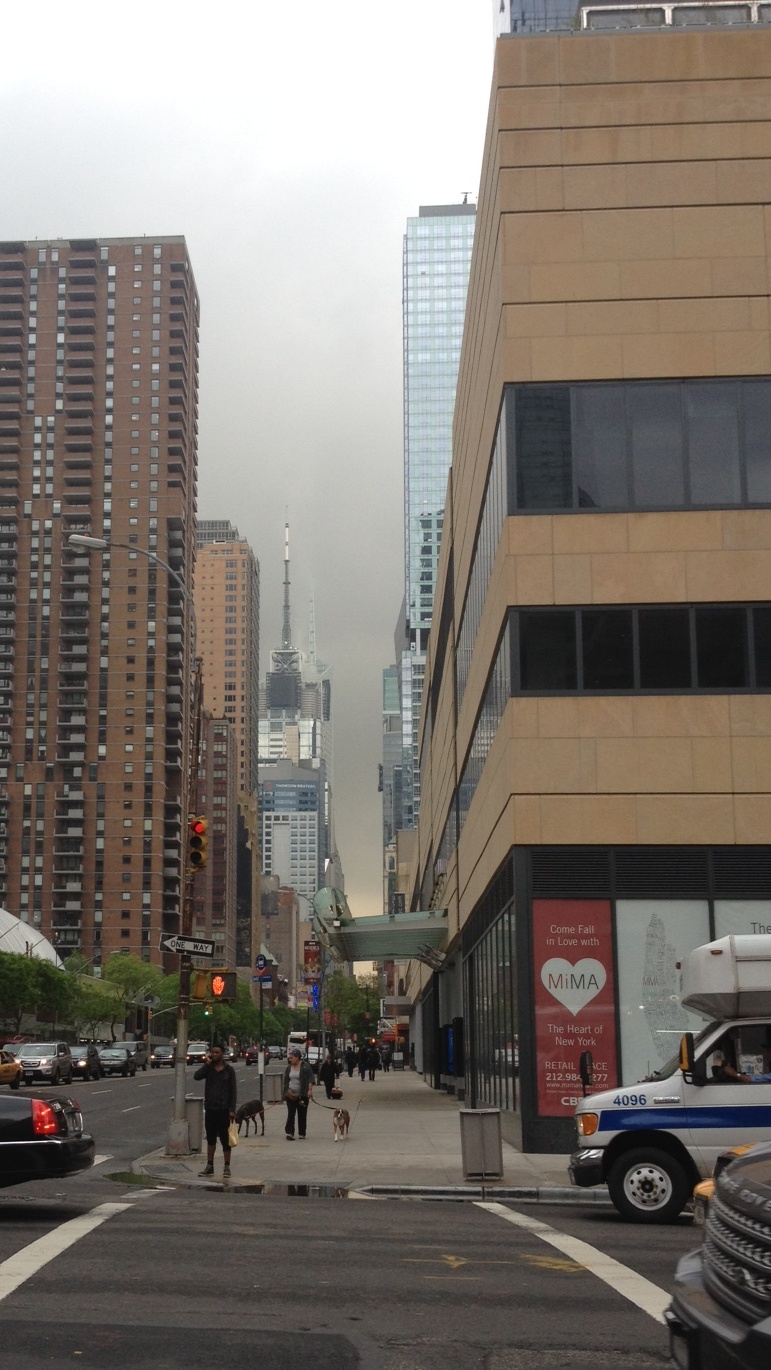
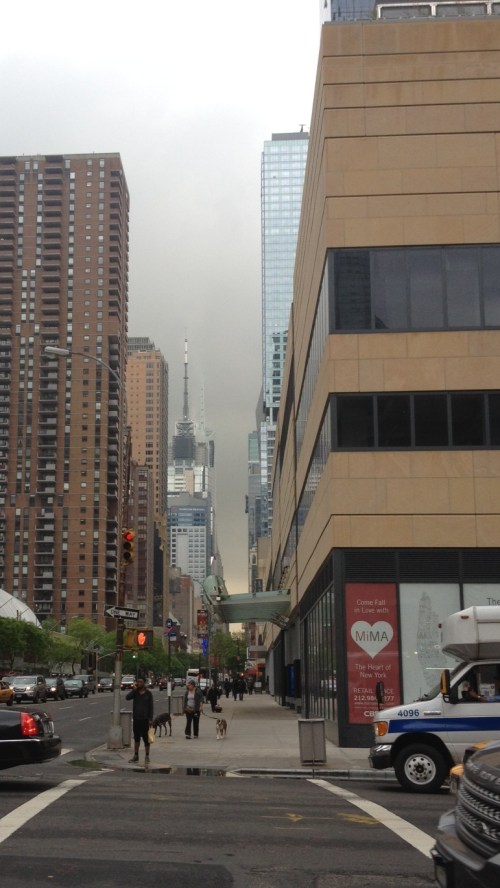
A few blocks north the same developer (Related Companies) is already leasing their MiMA building (above on the corner of 10th Avenue looking east along 42nd Street). Their marketing campaign for this high-end building (originally slated for condos before the recent economic downturn) was so clever that many New Yorkers have started referring to this far west section of midtown as “MiMA”–which means “Middle of Manhattan”. Perhaps a bit wishful to think of 10th Avenue as the “middle;” but with the massive Hudson Yards project underway, the center of gravity will shift somewhat, making this moniker more plausible.
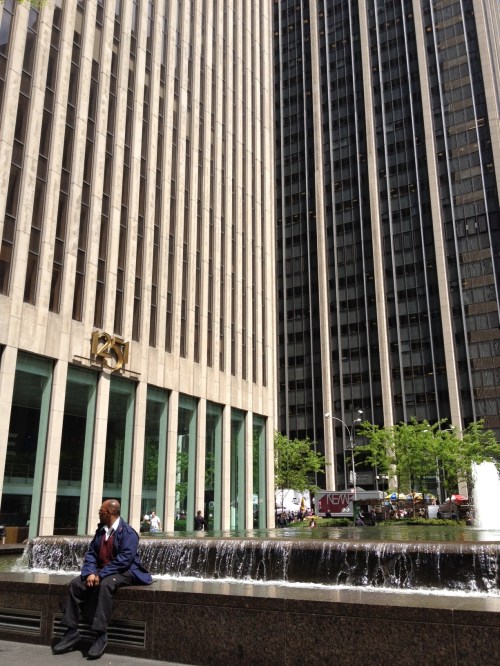
A contrast in scale

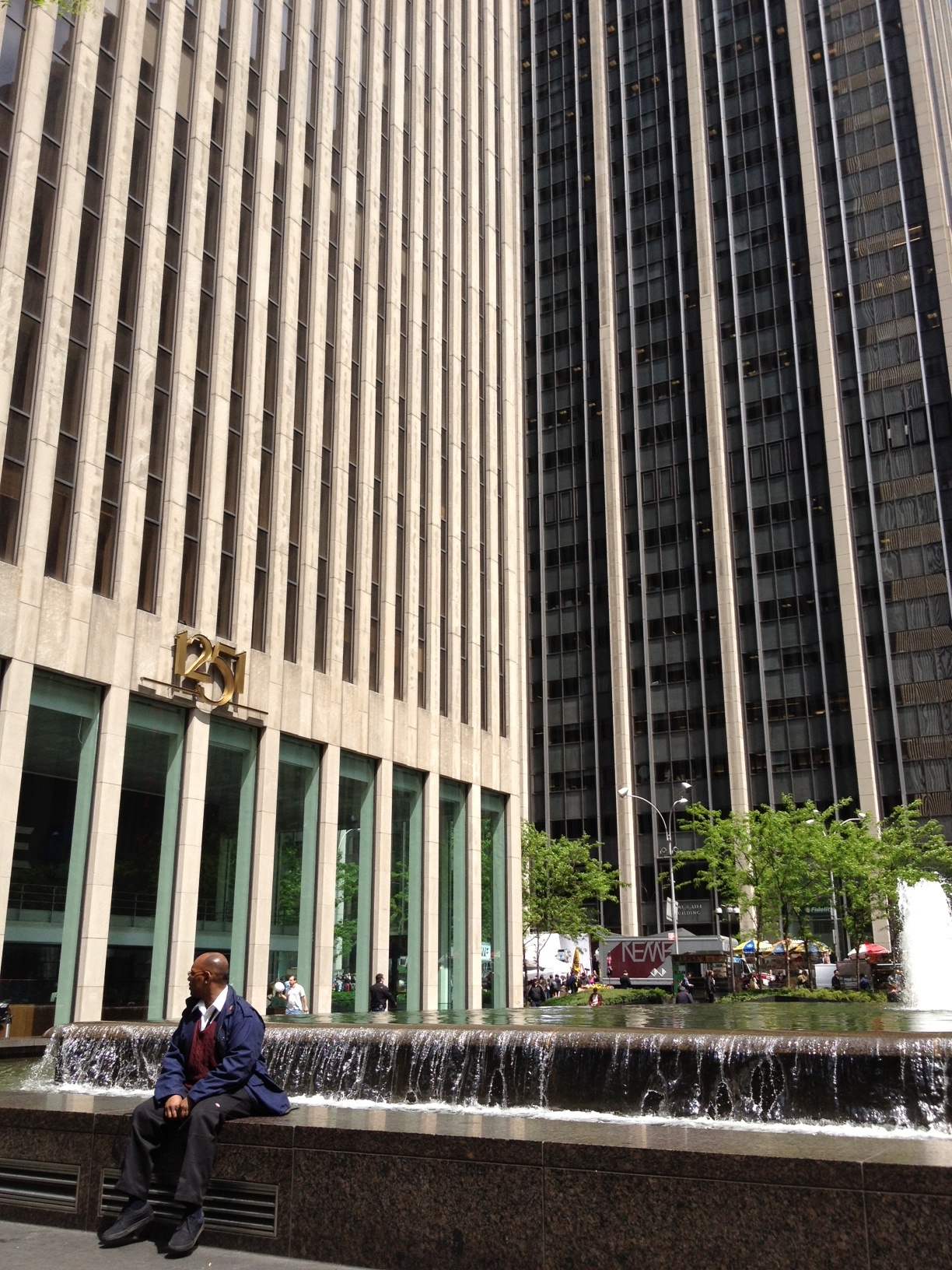
The more well-known midtown includes 6th Avenue (above, at 49th Street) where massive towers were set back from the street back in the 1960’s as a result of new zoning laws that allowed greater heights if the developer provided “public space” along the street. The famously bleak, wind-swept plazas that resulted were, at least in the location above, a little less bleak due to fountains, benches, and landscaping making the best of a very anti-urban condition.
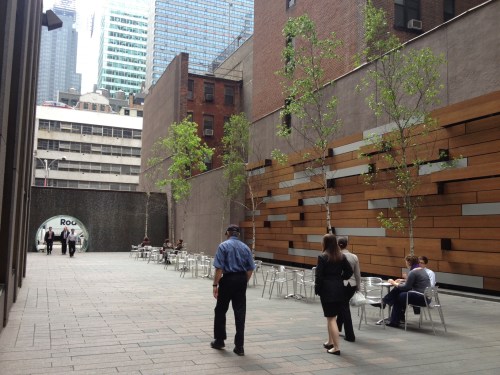
A little world of its own

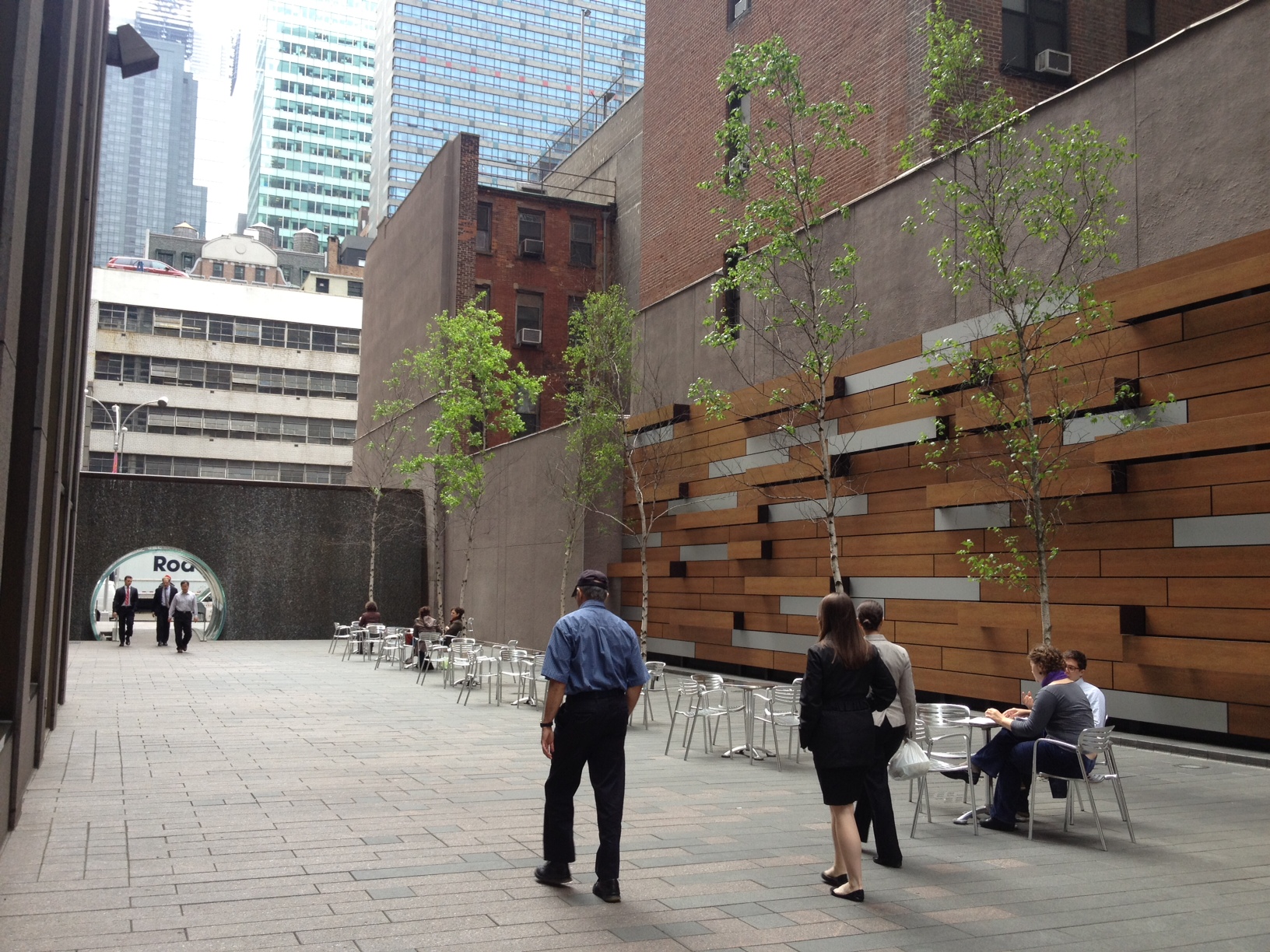
Pocket parks are scattered across Midtown–many again a result of zoning compromises that allowed developers certain concessions in return for providing public amenities. The one above provides a passage between 49th and 48th Street a block west of the 6th Avenue plaza shown previously. In many cases, pocket parks can be underused; pedestrian traffic patterns, adjacent uses, and other factors aren’t studied properly before locations are selected. In Manhattan, given the high density and almost constant foot traffic on countless blocks, these spaces have a better chance of success.
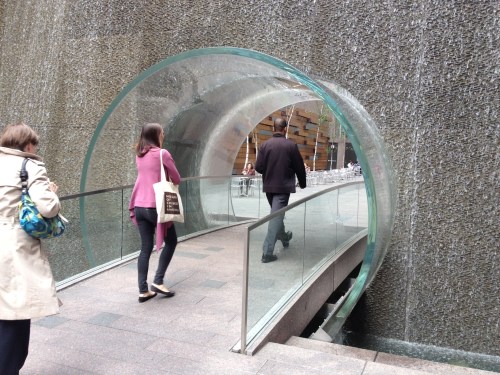
Hey, the taxpayer didn’t fund it

Above is the entrance to this pocket park from 48th Street–sort of Chinese garden gateway reinterpreted. You pass under a thick transparent tube inserted through a concrete wall with water rushing down the full length of the wall, splashing the ceiling above you, and falling into a trough below. It’s a wonderful effect–you really feel like you’re passing from one realm into another. The expense of this sort of feature makes one reflect on the “only in New York” budgets these spaces can have.
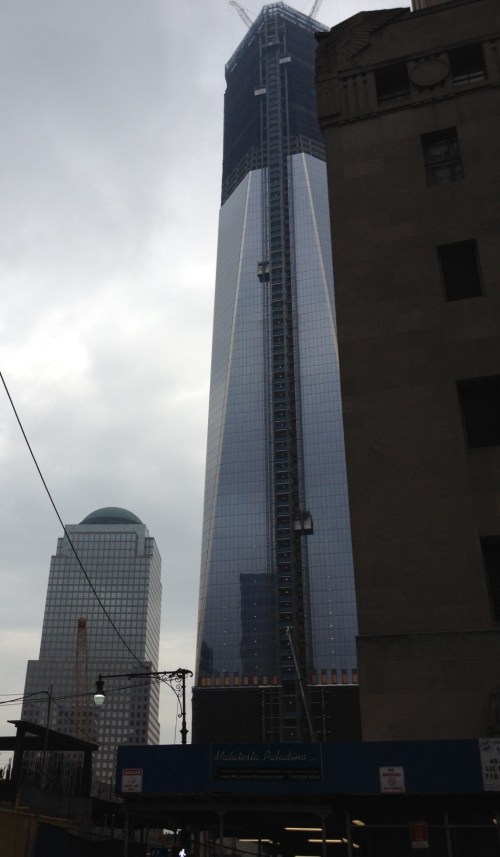
Welcome back, downtown skyline

All the way downtown in the Financial District, One World Trade Center (above) is finally nearing completion. It’s an understatement to say the downtown skyline has been missing an anchor since the September 11, 2001 tragedy; this new tower is a welcome symbol of New York’s resilience. It comes at a time when lots of other things are happening in this oldest part of Manhattan, whose vibrant, mixed-use streets of 200 years ago became dominated by finance, banking, and law firms (at the expense of shipping, housing, and saloons). In the last 10 years, however, more and more office buildings have been converted to residences, new apartments have been constructed, there are more restaurants, schools, and groceries—and many thousands more people are living here and walking the streets (about 56,000 compared to 15,000 at the time of the attack).
Occupying the park

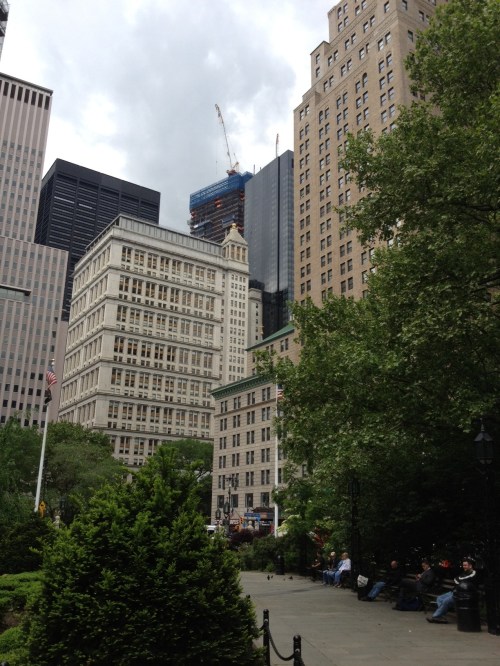
Partly as a result of the influx of new residents, the area’s parks have been renovated: people from neighborhoods further north flock south with their kids to enjoy the Financial District–an activity that would have been unheard of 10 years ago. Above is City Hall Park, which at 9 AM Thursday was filled with office workers, mothers with strollers (and a few nannies), and tourists.
The proportion of foot to auto traffic is remarkable

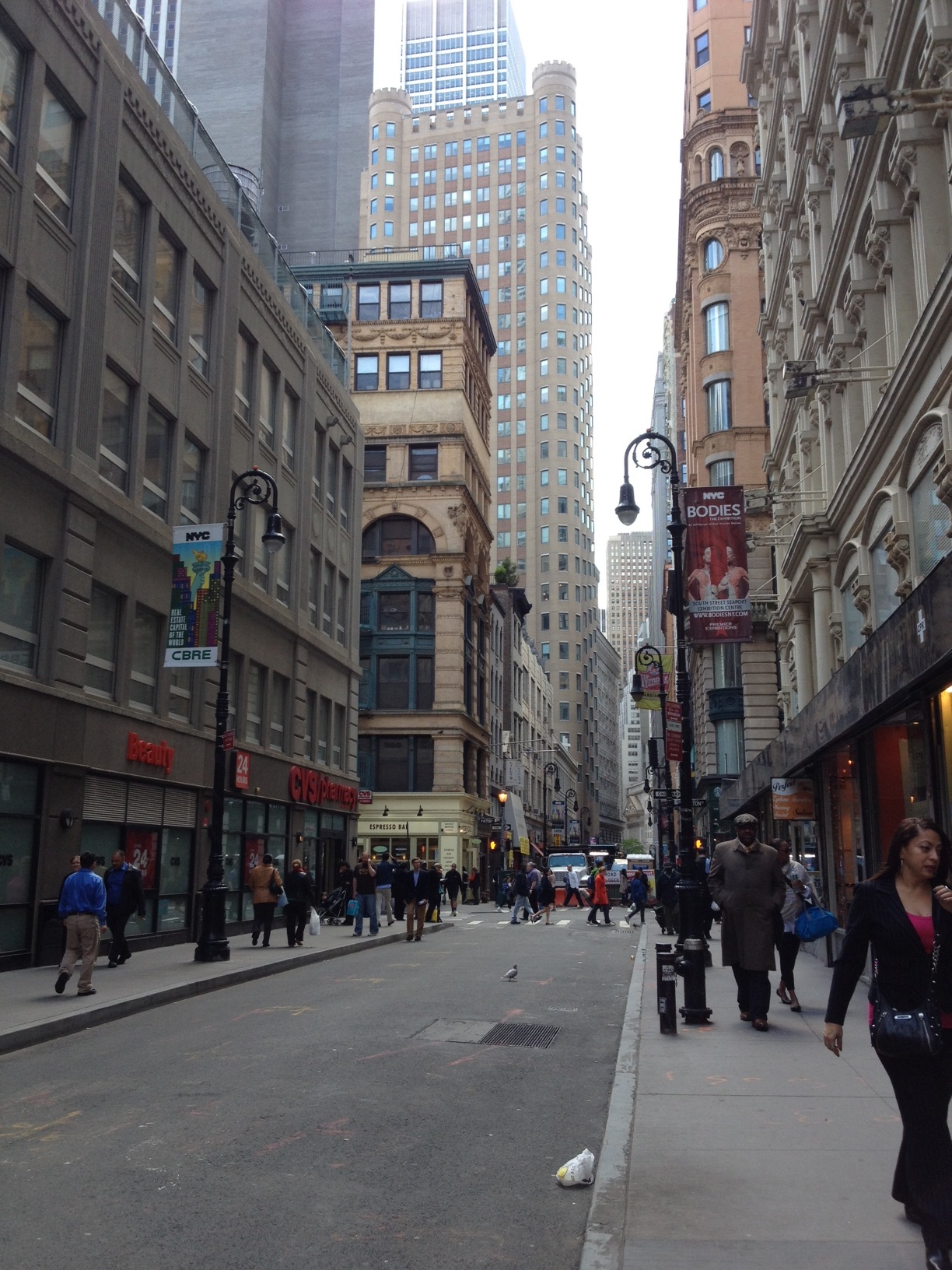
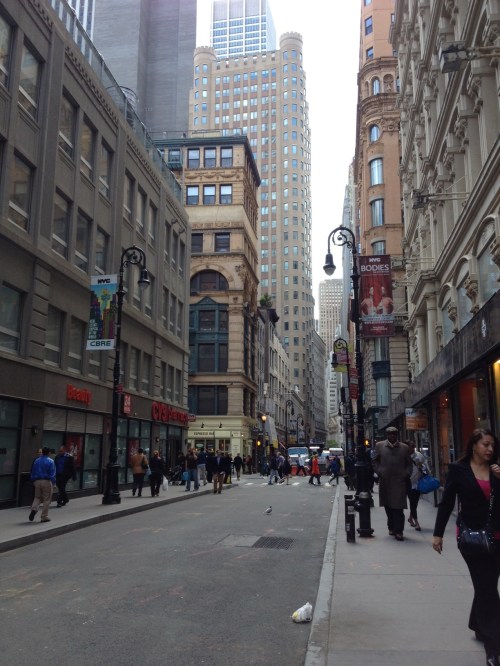
Compared to the relatively new (1811) street grid further north, the older street pattern in this neighborhood is full of curves and diagonals, with narrow roadbed widths (above is Fulton Street looking east from Nassau Street). This tends to confine auto traffic to certain widened arteries, with pedestrians often having free reign in the streets retaining original dimensions.
A colorful concession to the public realm

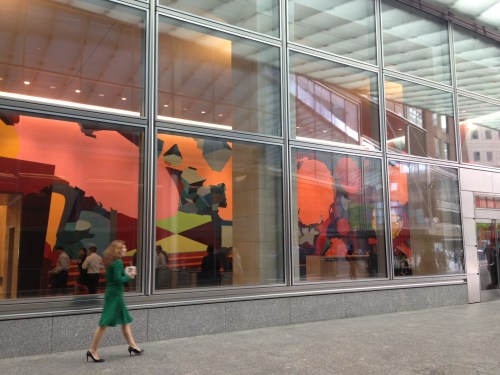
Across from the new One World Trade Center is 200 West Street, the global headquarters for Goldman Sachs. Choosing this location in part to demonstrate strong commitment to the World Trade Center area after the tragedy, the 43-story building opened in 2009 and was designed by Pei Cobb Fried with other design firms handling different portions of the interiors. Huge murals were commissioned for the numerous lobby spaces, designed for the enjoyment of passerby, including “Sunrise, Sunset” by Franz Ackerman above (you can read a New Yorker review of 200 West here).

Serving titans of finance, among others

One of the most interesting features of 200 West is the adjacent Conrad Hotel linked to the office tower by a promenade (above). Goldman acquired the former Embassy Suites, renovated it into a sleek, contemporary hotel more in keeping with their own image and clientele, and created the promenade. The Applebee’s lease was not renewed; several Danny Meyer restaurants were brought in. Both office workers and nearby residents are delighted. It’s an urban amenity win for everyone.

Yes please

Note the new apartment towers directly across from the promenade (and Shake Shack) above. This neighborhood is becoming very interesting. And tastier.

Eye-catching

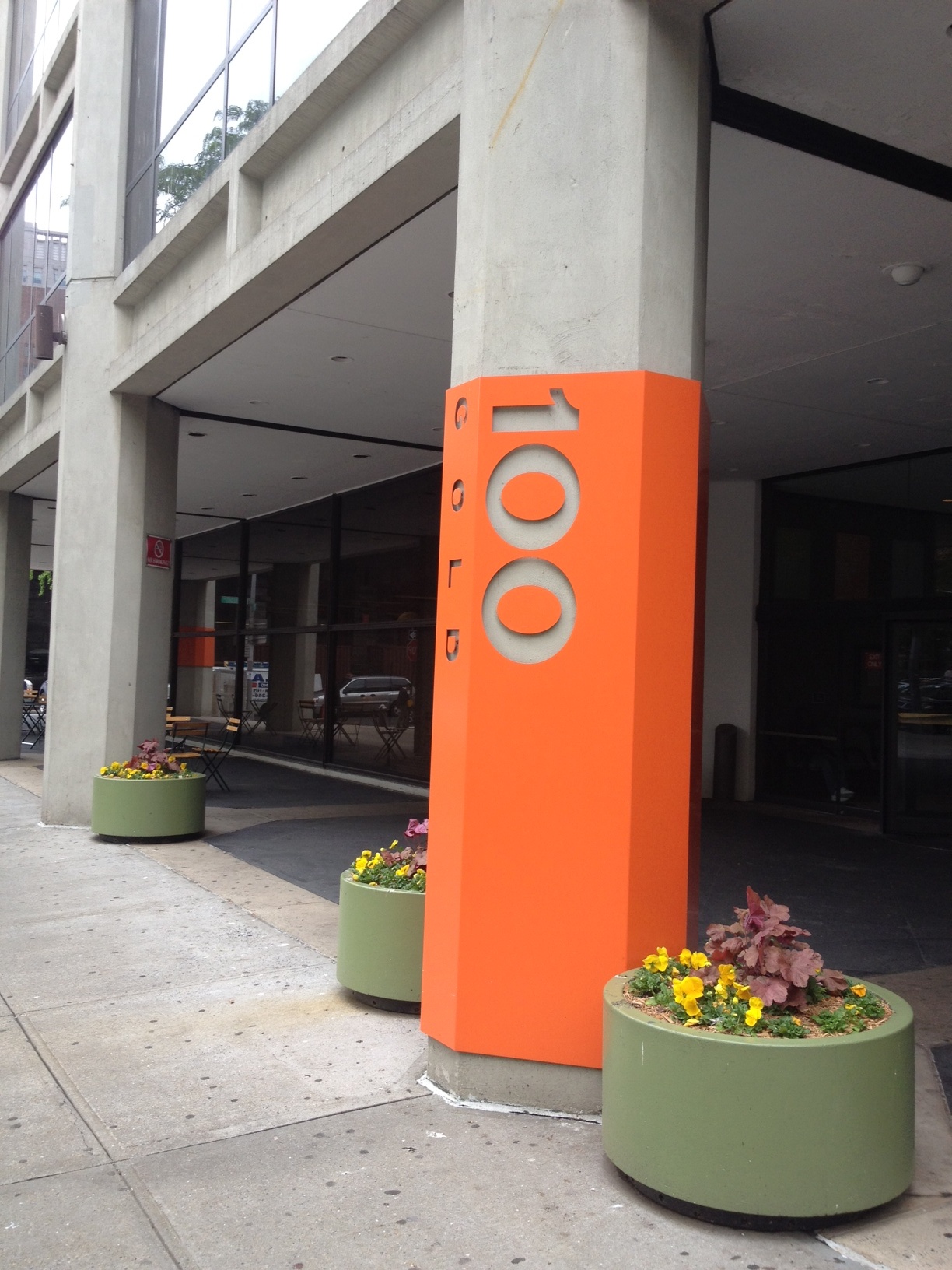
While Goldman Sachs famously has no corporate logos or company signage of any kind on its building–even the security guards wear anonymous black suits–100 Gold street, a bland 1970’s building a few blocks away, had an image problem. The wrapped address signage (above) does a good job announcing the building to the public, without distracting from the lines of the original design. This is a simple, but sophisticated addition.

Is this for real?

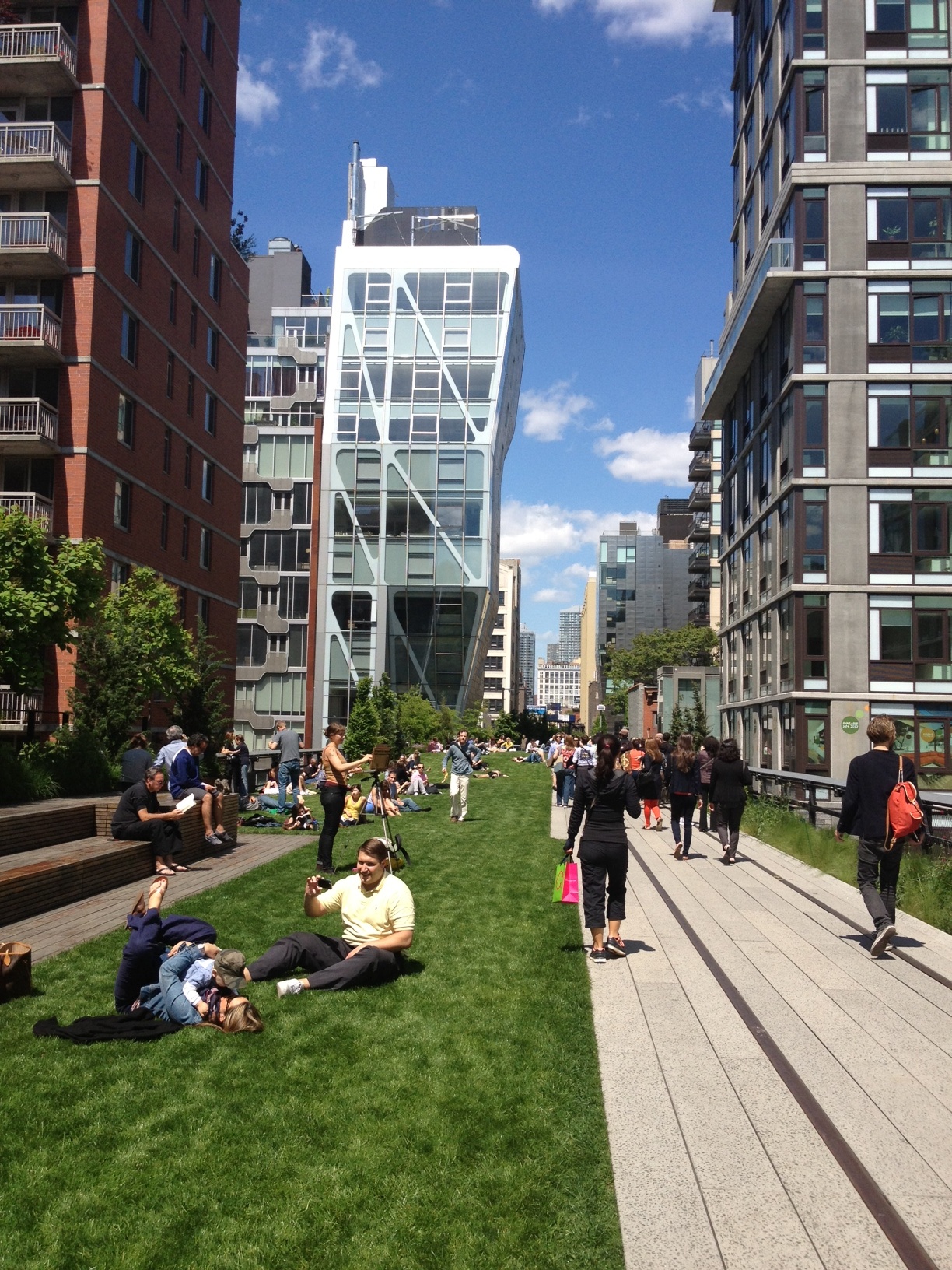
Finally, no trip to New York is complete without visiting the High Line park–shown above around 22nd Street looking north. On a picture-perfect Friday lunchtime, families are playing in the grass, locals and tourists are eating sandwiches, an artist is painting at an easel—and new office and apartment towers frame the stunning views. It’s an urban vision that’s so beautiful, it’s hard to believe it was an abandoned, weedy, rusty set of tracks just a few years ago. Railroad Park, anyone?

Food truck park

One asian rib-eye beef quesadilla please

Well here’s a great idea from the metropolis 2 hours east: the Atlanta Food Truck Park, located about a mile northwest of Atlantic Station. It’s the first dedicated place in town where up to 15 food trucks can sell their wares at a time (for both lunch and dinner); it’s got on-site parking, musical entertainment, and weekend farmers’ markets. There’s still a need for the curbside trucks downtown (like the Yumbii truck above), but this is a great option to have as well. And yes, we wish we had one here too.

Everyone have a great weekend–your author will be traveling again next week, so we’ll be back with more after a brief respite. Cheers.

[thanks to ksolo22 for the Atlanta food truck pic]

..and flickering back on?

We'll all drink to that

It’s been reported in today’s Magic City Post that Harbert Realty, the property manager charged with repairing the exterior of the building on the  1800 block of First Avenue South, had worked out a plan to restore the historic 1950’s mural after all (see our previous post here). Just two days ago the Design Review Committee voted to allow the Nashville owner to remove the mural.

More details will be forthcoming as they emerge. Have a great weekend everybody.

[thanks to vintagebrowser.com for the 1956 image]

Flickering out

A visual time capsule

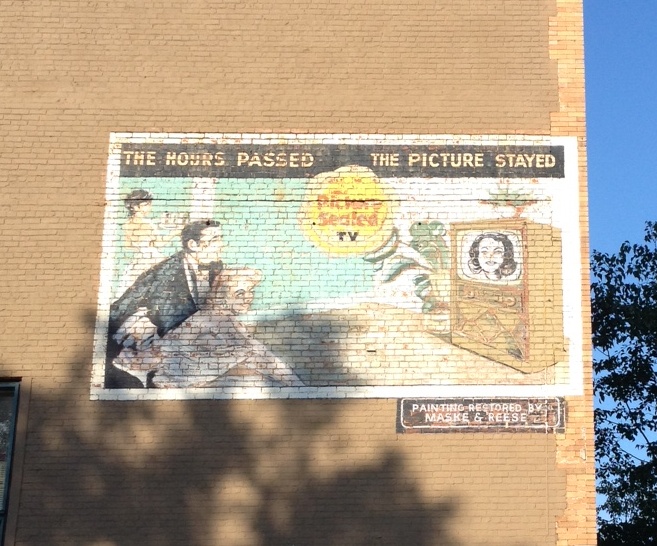
This morning’s Design Review Committee approved painting over an historic mural advertising sign (above) which has delighted passerby for years at the corner of 19th Street and First Avenue South. The sign, which shows two couples in evening dress enjoying a television program, was presented by the building owner’s representative as too costly to restore, and not worthwhile to preserve in its current state due to unfavorable warranties on clear sealers (the owner plans to repair, repaint, and waterproof this entire brick wall).

Another Tom Collins please

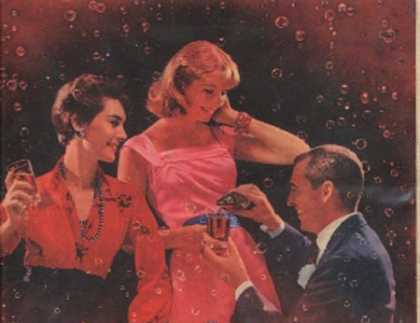
The mural is based on the above print ad for Sentinel TV, ca. 1953. Why are painted murals like this so important in an urban environment? They give character and texture to otherwise blank expanses of brick; they remind us of the layers of history old building have; and they make the public space we move through unique. Without them we have just a bunch of painted brick walls.

Others see the value

One irony of this unfortunate decision by the committee (despite a valiant plea from member Nolanda Hatcher to save the sign) is that literally a few yards away is the Birmingham Printing and Publishing sign (above) which was carefully preserved when design firm ArchitectureWorks renovated the building for their offices a decade ago.

It's all happening here

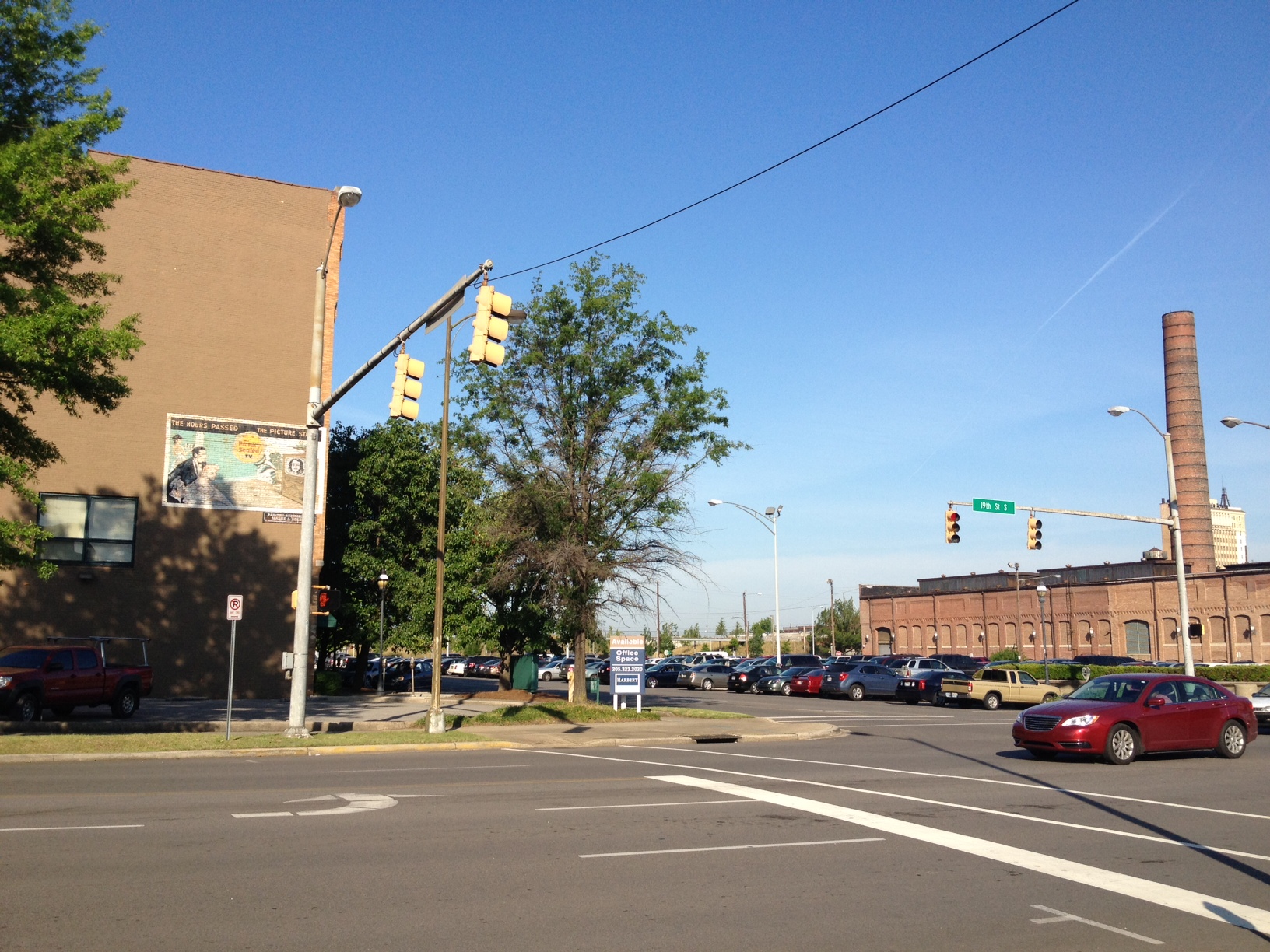
Perhaps a greater irony is the mural’s context (above), which includes Railroad Park a block away, proposed mixed-use development directly across the street, and the soon-to-be-decommissioned Alabama Power Steam Plant with its intriguing potential right beyond that. Oh, and a new baseball park under construction a couple blocks west with all the anticipated surrounding development. One can imagine few places in town where we shouldn’t be trying harder to maintain what’s unique about our historical buildings, as we anticipate lots of new construction and foot traffic to be joining them soon.

[thanks to Vintage Ad Browser for the print ad]

Oh Brother

Another affront to the park?

A few months back we discussed the condition of Brother Bryan (formerly Magnolia) Park which lies just a block east of the fountain at Five Points South commercial center. We return to the park today for a brief look at the sudden demolition of the former Kingsley Apartments at the important NE corner of Richard Arrington Blvd. and 10th Avenue South (above). This 1920’s-era apartment building was practically the last vestige of the original residential neighborhood that surrounded the now forlorn park.

What a way to face a park

As the neighborhood transformed from upper-income housing with some local shops to a destination, mixed-use district with offices and nightlife, poor design decisions were made around this park, including the Building Trades Tower (above), which literally turns a blank 12-story wall to what would otherwise be a prime urban vista.

Well at least they realized the view

In a related move, Magnolia Office Park (above, built 1966) sought to bring “suburban” amenities to this part of town–lots of on-site parking, modern floor plates–and absolutely no ground floor retail or commercial space. In fact, a grim parking garage stares out at the park across the street. What a missed opportunity that was.

And now it's all that's left

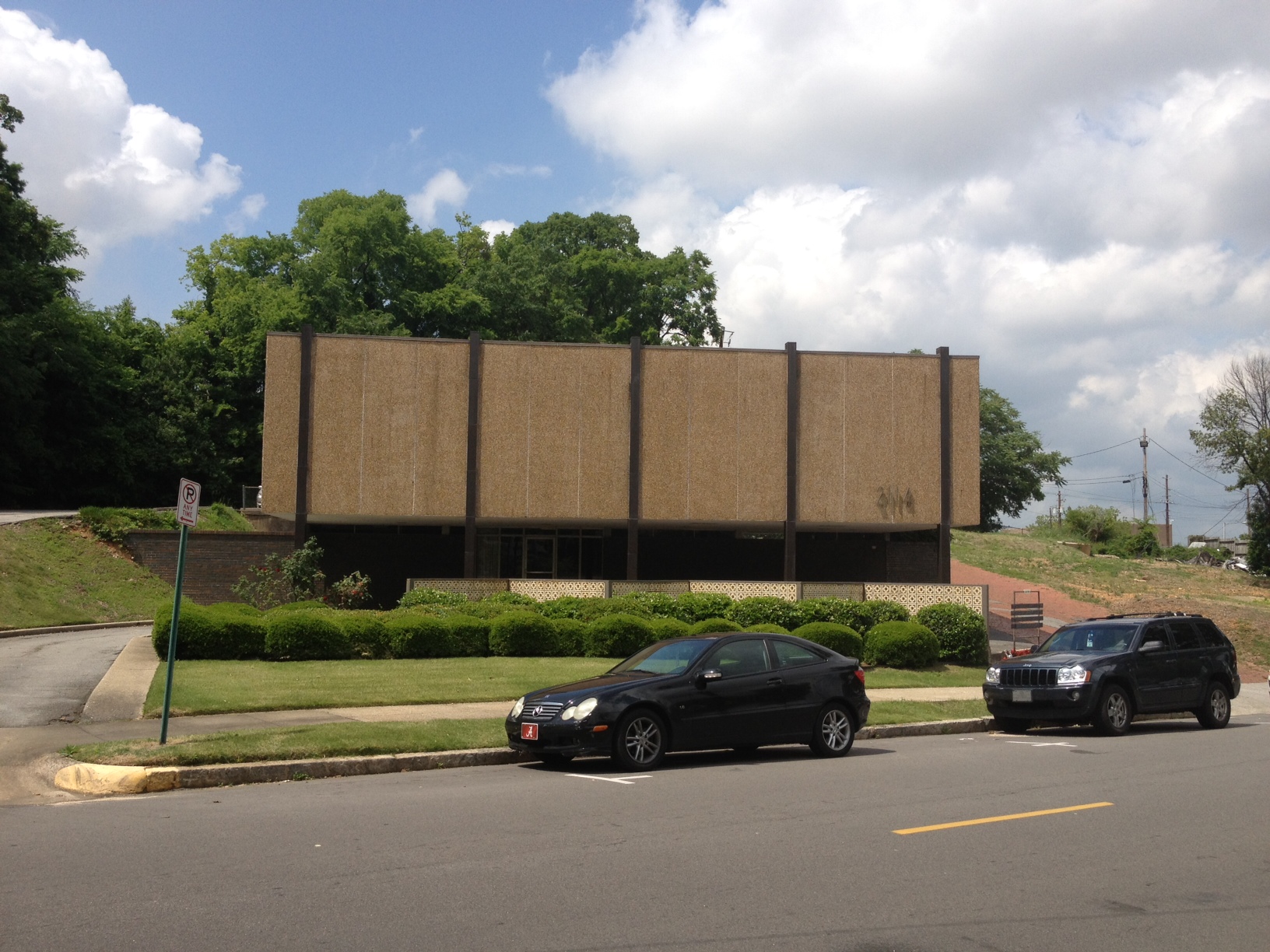
Across 10th Avenue South from the park is this medical office building (above) that–while we can appreciate its period Mad Men-ish architecture–again turns a mainly blank face to the park. Worse, the few large historic houses immediately to the east (to the right in the photo) have in the last few years all been demolished due to fires or for other reasons. Vacant land is all that’s left. With the apartments directly west just demolished, this  building is the sole mass facing the park from the north side. Which is depressing, but it could also be an opportunity: what if UAB (whose affiliate Southern Research Institute has a campus just north of here) partnered with the City and private developers to completely re-imagine the park and its surroundings as mixed-use office, retail, and housing to complement Five Points South and the campus?

This poor park and its edges have suffered enough.

Miss Fancy would be happy

A self-conscious shabbiness

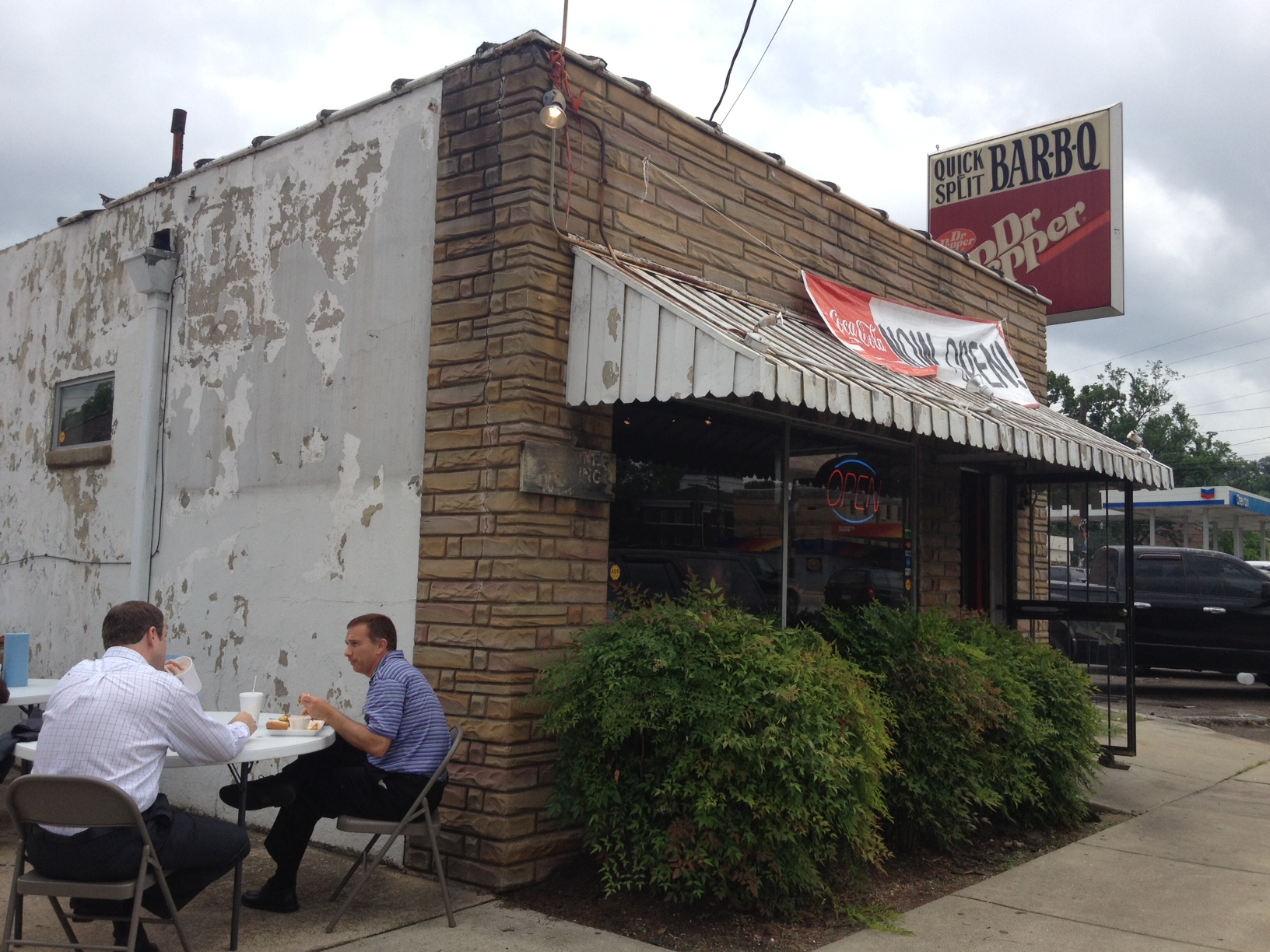
A lunchtime visit to the new Saw’s Soul Kitchen in downtown Avondale (200 block of 41st Street South, above) was a chance to muse over the momentum in this part of town (an historic working class commercial center that served the surrounding bungalows and industrial concerns). While longtime gay bars (no longer open) drew patrons into Avondale for decades, it wasn’t until Bottletree Cafe opened in 2006 that the neighborhood started getting noticed more broadly. In the last couple years, Parkside Cafe and Avondale Brewery Company have helped make Avondale a multi-faceted nightlife destination [a few professional firms and residential lofts have also been quietly moving into the commercial district]. It was perhaps a matter of time before a new daytime restaurant would open; Saw’s is a twist on the popular original location in Edgewood. Determined to maintain a true “hole-in-the-wall” appearance, the layers of peeling paint, perma-stone, and 1970’s-era Dr. Pepper sign are all intact. What’s new is the great food and outdoor seating–perhaps the first time in history that anyone has sat outside in downtown Avondale to be served lunch.

Lucky to find a seat

This understatement continues on the interior (above) where off-the-shelf cheap tables and chairs have a large chalkboard and “roadside shack” decor as a backdrop. The real star is the food: familiar, but thoughtful, and at a great price. Currently open for dinner until 8 PM, they also deliver to drinkers at Avondale Brewery next door. Which is a bonus if you’re enjoying a Saison.

What can't grow in Alabama?

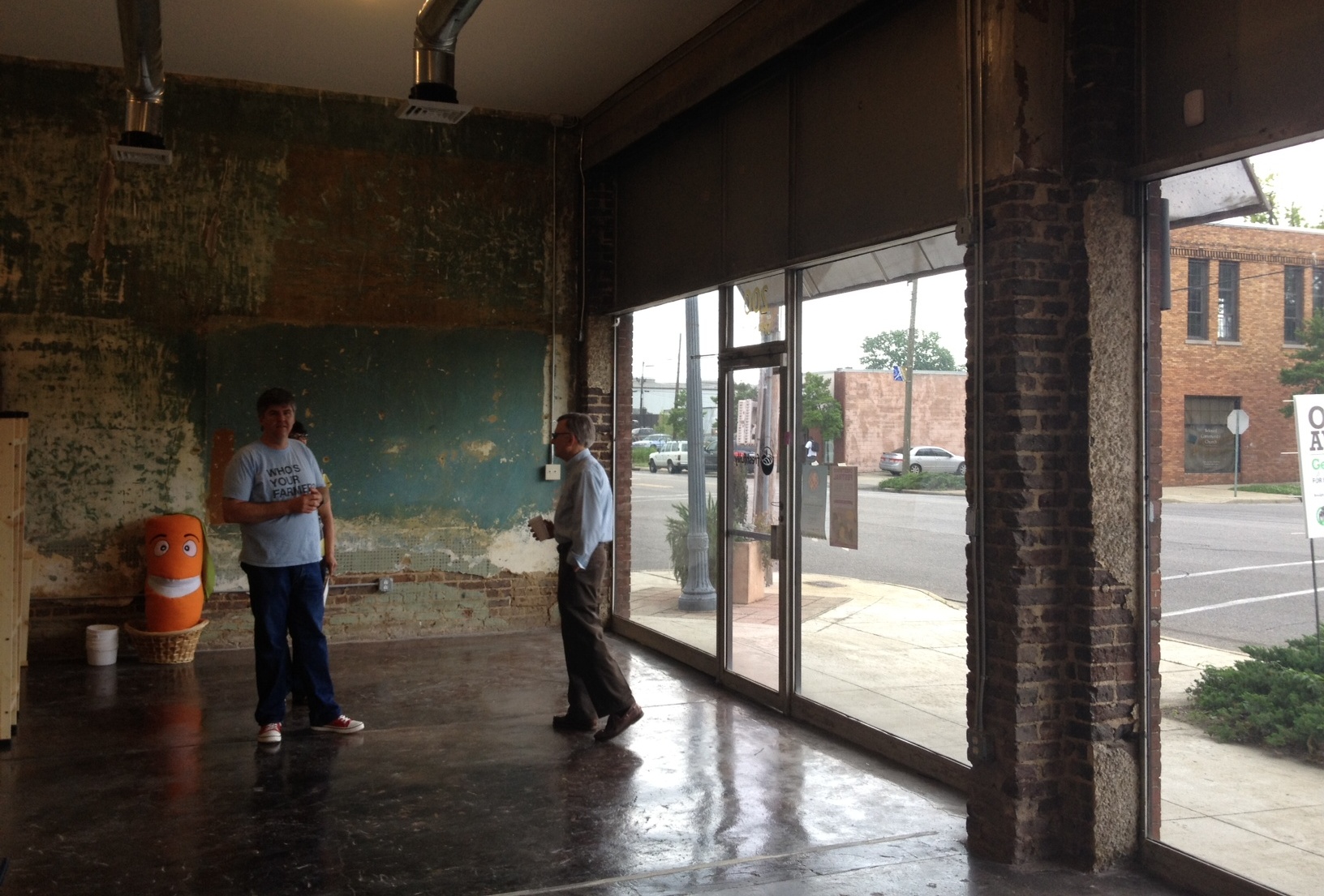
Across the street Freshfully is planning an opening for the first week of May. A brand-new business that connects local farmers to consumers, it will be filled with fresh eggs, produce, farm-raised chicken, fresh dairy products, seafood—all of it from Alabama. This is the first store of its kind that we know of in the state, and will not just serve a foodie population eager to support local farms–but also a neighborhood that’s been without a supermarket for a long time (the historic storefront space, above, was once a Hill’s Grocery). Freshfully won the innovative Occupy Avondale contest sponsored by Main Street Birmingham and Avondale Brewing Co.–we can’t wait for it to open.

A thing of beauty

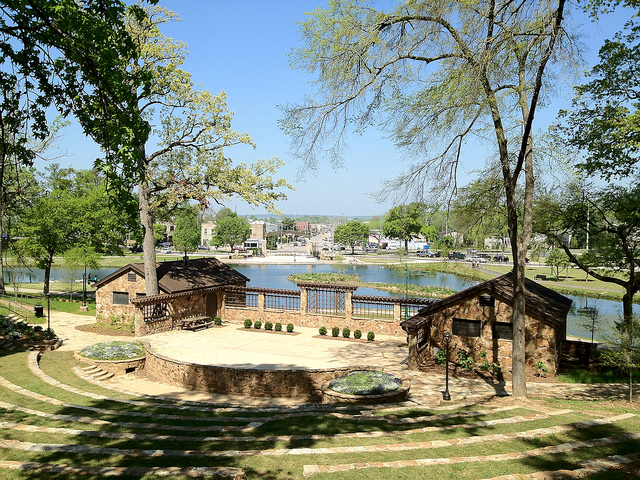
Across from Parkside Cafe and just up the street from Saw’s and Freshfully is the newly renovated Avondale Park (above, looking north towards the 41st Street commercial district), which has served Birmingham for well over 100 years (renovation designed by KPS Group). Seeing the rejuvenated park, and the new businesses opening down the way, makes us agree with others buzzing about the place: downtown Avondale is on a roll. Let’s support these businesses–and encourage more to follow.

On a final note–41st Street South in Avondale has far too many car-lanes for its light capacity, which doesn’t help foster the new pedestrian life here. Lose a lane (or two), widen sidewalks, create angled parking–plenty of traffic calming measures are possible. Hopefully the City will contemplate them soon.

[thanks to ditchell for the Park pic; and a reminder to those who don’t know the title reference: Miss Fancy was a famous elephant at Birmingham Zoo’s original location at Avondale Park before it moved to its current location just outside Mountain Brook Village. She is now the proud logo of Avondale Brewing Co.]

North Birmingham (1)

Unfortunate

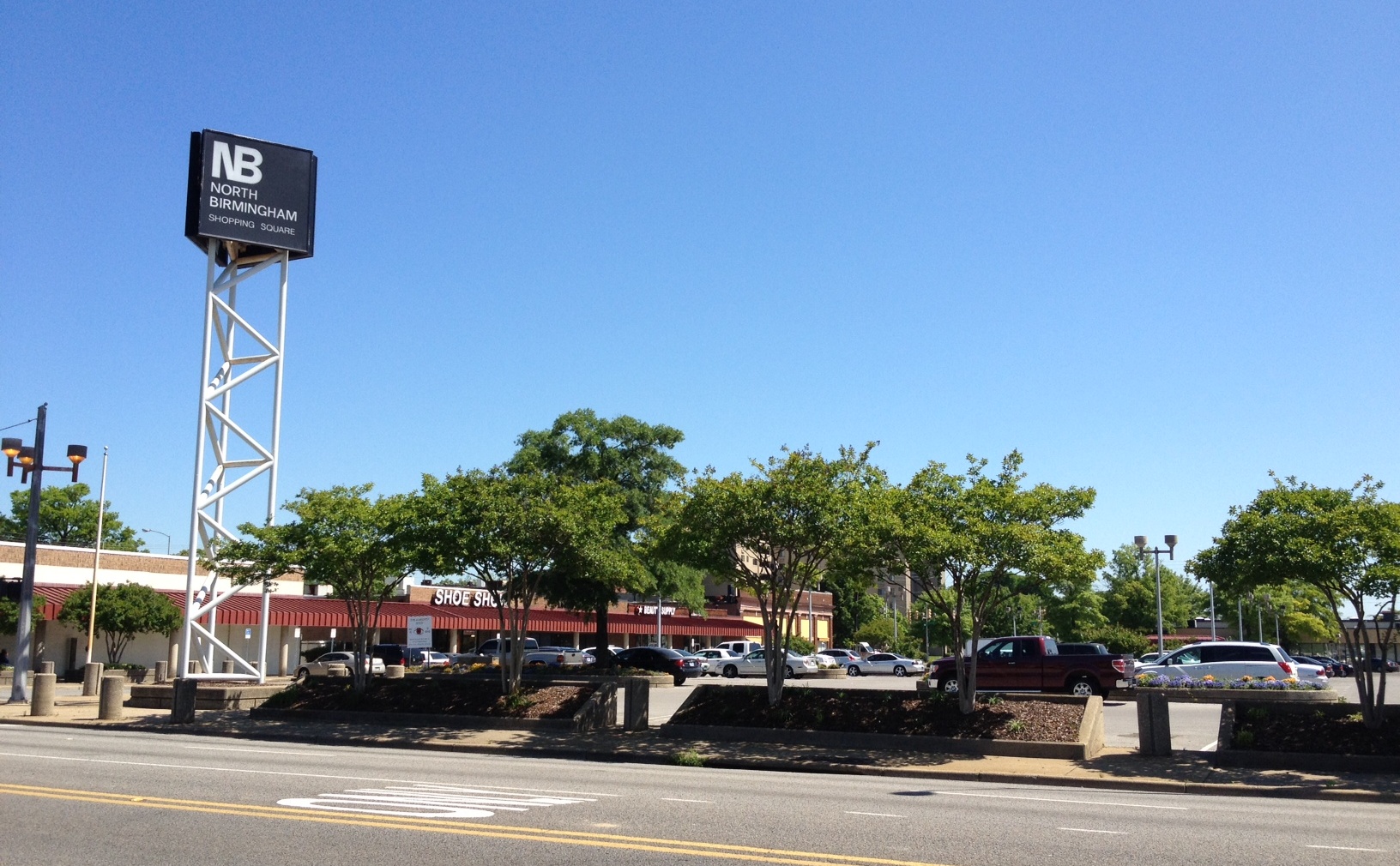
Just 20 blocks north of the BJCC’s new entertainment district is the commercial center of North Birmingham, an important early satellite city of the early industrial region, which was incorporated into Birmingham proper in 1910. This center has an incredible urban fabric, considering its economic woes–and considering the ill-advised attempt a few decades ago to “suburbanize” its downtown (above): an entire half-block was demolished for a parking lot, with existing and “modernized” storefronts facing it, with the whole venture branded as “North Birmingham Shopping Center.” Bunker-like landscape elements line 27th Street where buildings and businesses used to front.

Future potential

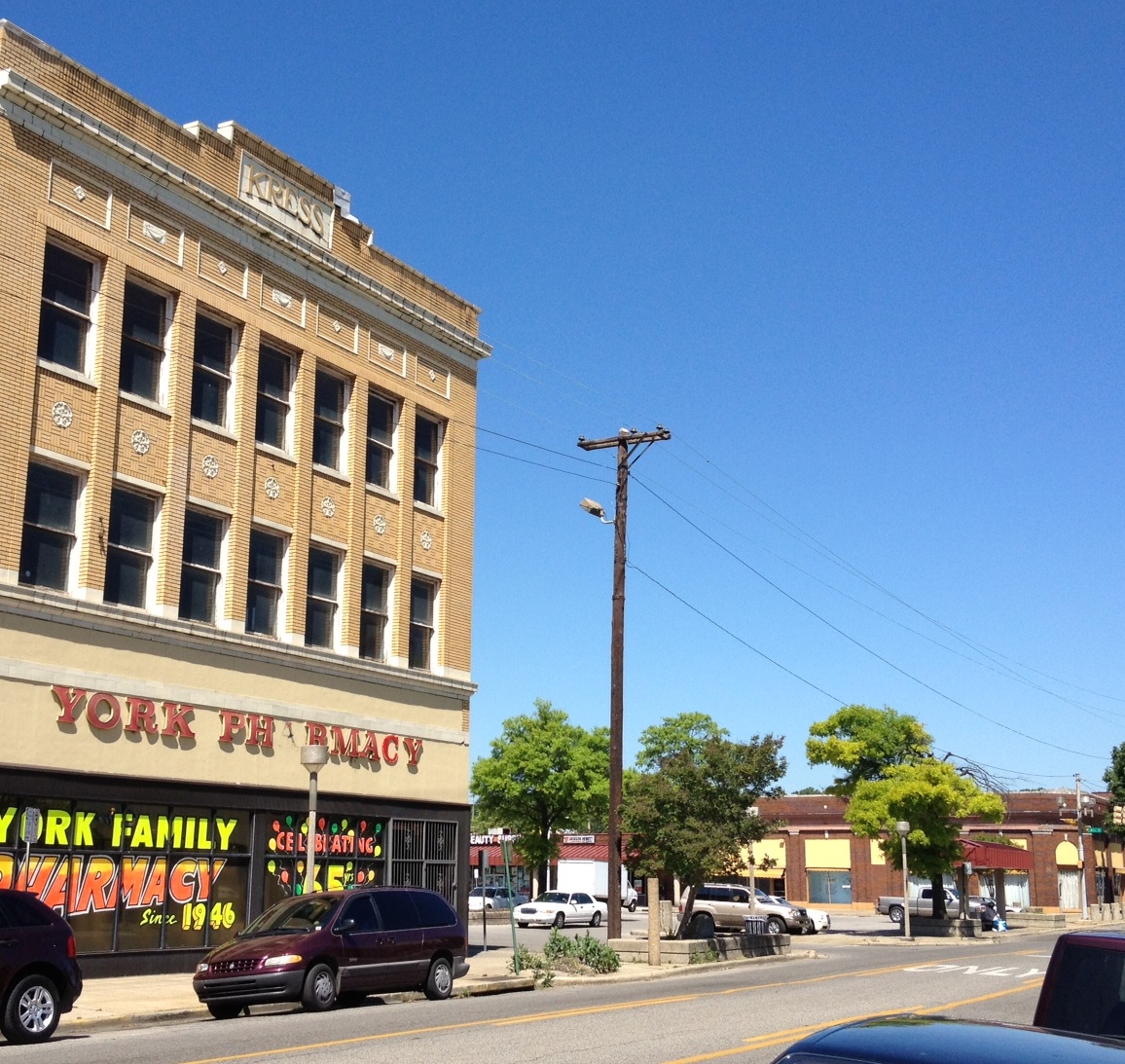
Above we see the former Kress Five and Dime, whose size and detailing is testament to the former importance of this commercial center. Despite the misguided demolition around the corner, much of the historic fabric is intact (the above shot is along 27th Street looking north towards 30th Avenue).

Even more beauty, and more potential

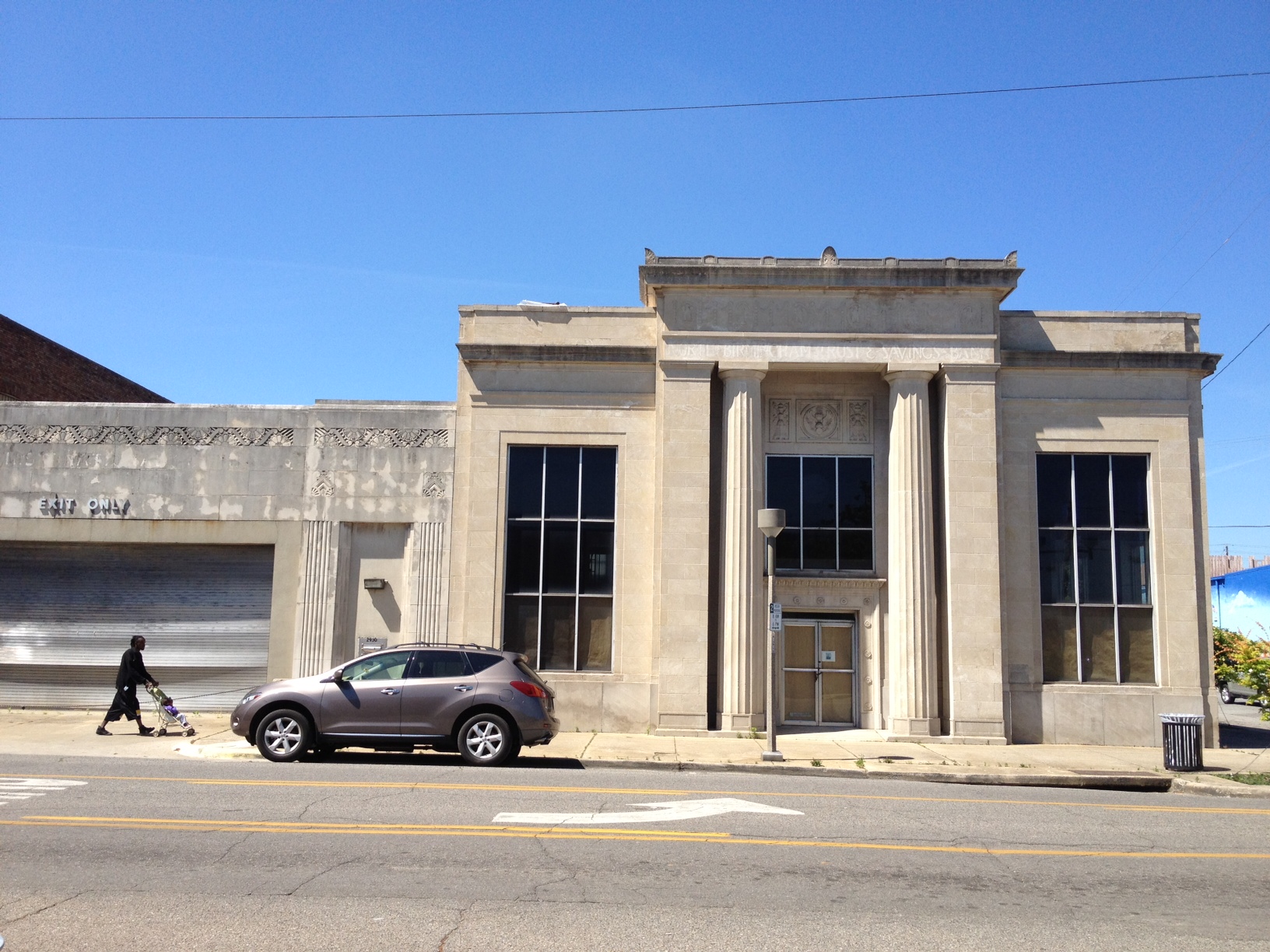
More testament to the fine urban fabric is the great neo-classical former North Birmingham Trust and Savings Bank (1926) and adjacent Art Deco former supermarket (above) which have been recently purchased by a young local design firm Regarding Architecture to renovate into a mixed-use development. The architects are planning a sensitive restoration of the exteriors (the former supermarket became a drive-through for the bank a while back!).

The way we were

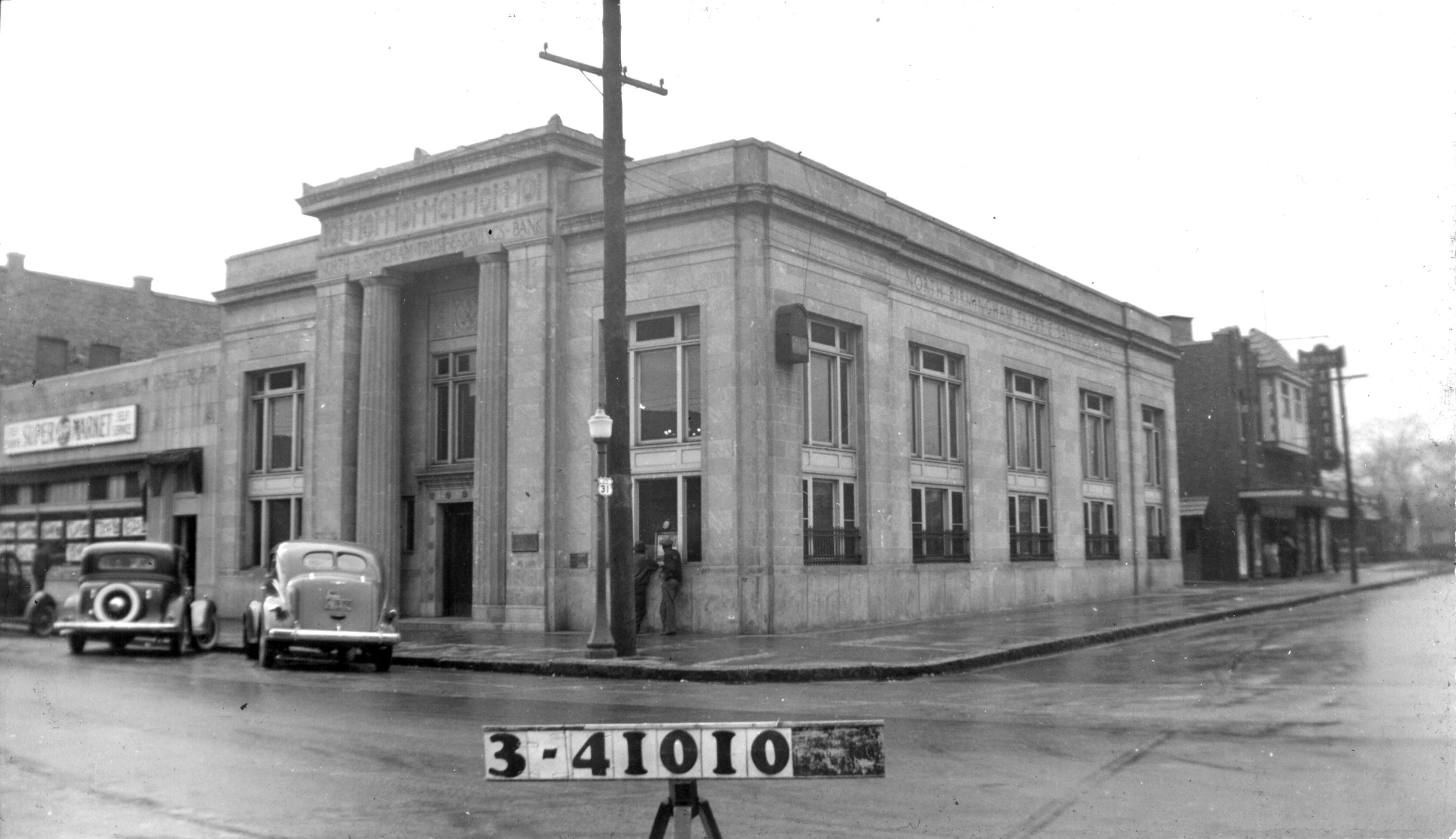
The photo above is from perhaps the late 1930’s,  illustrating the same buildings. The fantastic building stock on these blocks is ripe for forward-thinking pioneers like RA, who are breathing new life into the district.

Keep it coming

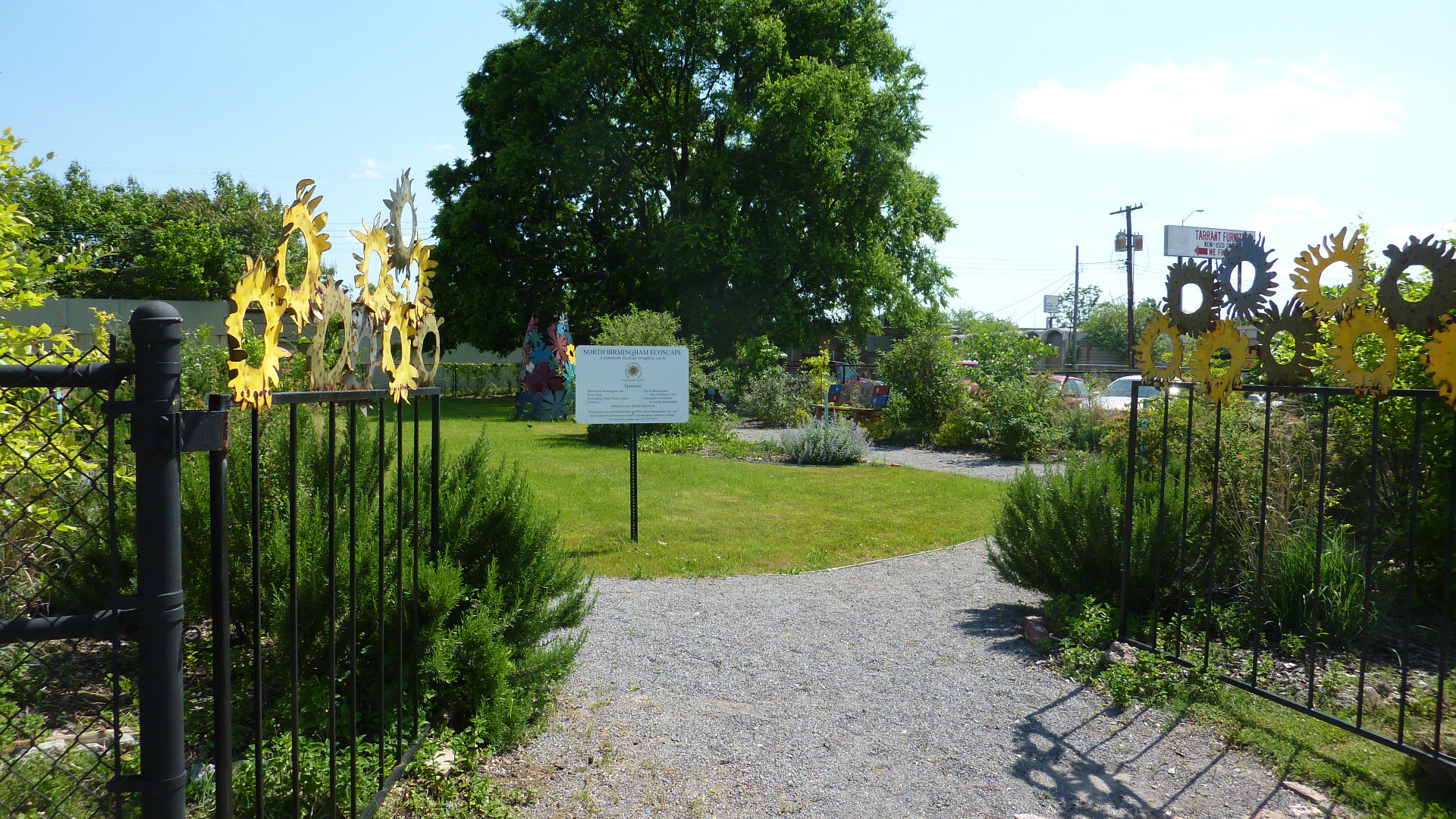
Another recent investment is the Ecoscape garden that replaced a vacant lot (above). A project of the local neighborhood, Wells Fargo bank (which recently renovated their local bank branch), Birmingham Southern College, and Main Street Birmingham, it’s another example of a positive new direction for this place.

Not what one would hope for

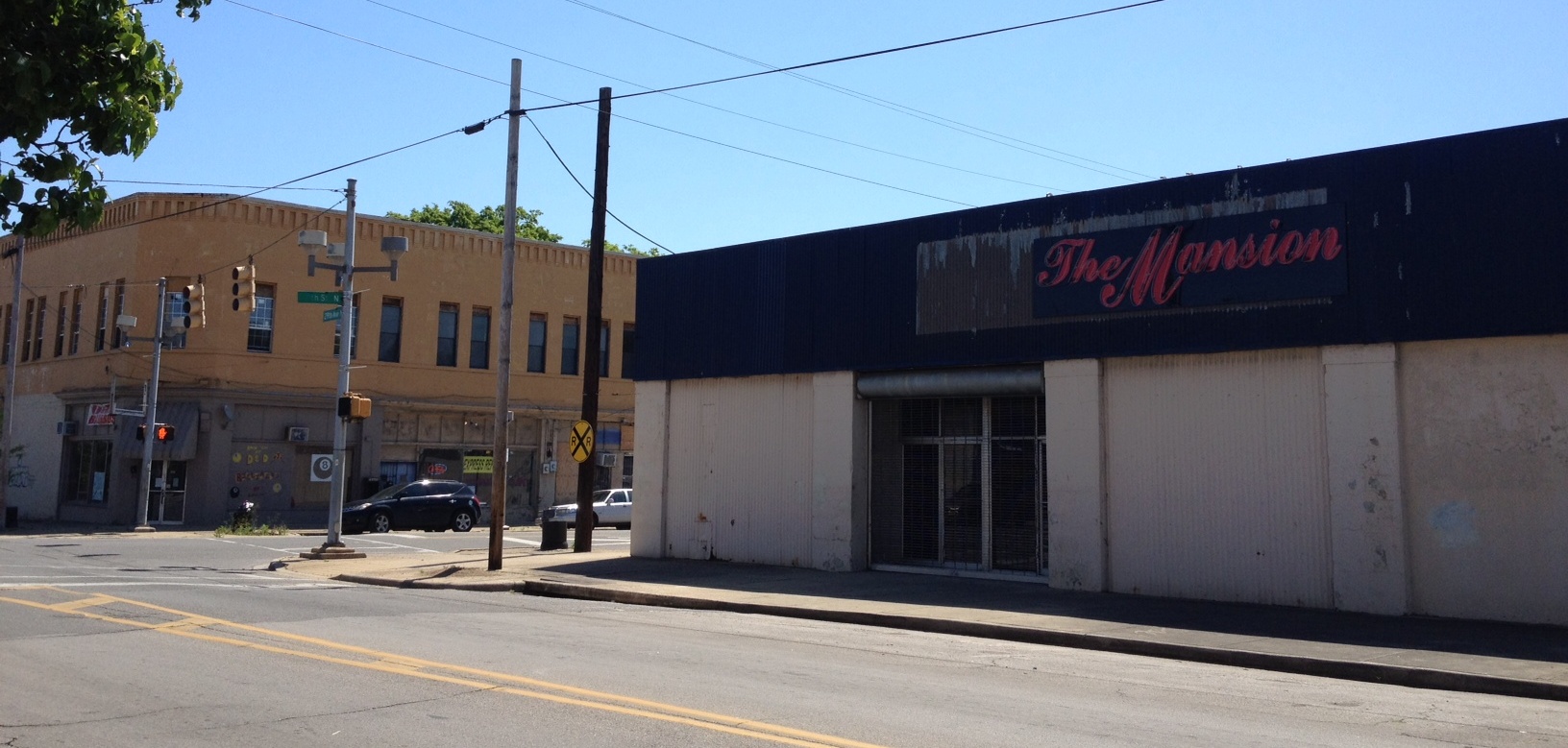
A less positive note for the neighborhood are the proposed alterations to an historic building (above right), whose fake mansard and blocked-up storefronts puts it at odds with many of its better-preserved neighbors.  The Design Review Committee yesterday denied the business-owner’s request for a new neon sign–which has already been installed anyway (without approval). The owner also proposed stone infill to one side of the entrance–adding insult to injury on this facade. The business is a nightclub (The Mansion) that seems to have been operating without proper licenses, proceeding with interior renovations without a permit, etc. It also seems the owner has chopped down city trees on the sidewalk, an outrageous act in any neighborhood–but to this day has not replanted anything.

While a nightclub has a right to be in an urban district, wouldn’t it be great if it was a good neighbor–applying for permits properly, working to renovate its facade in a manner more in keeping with this place? My hope is that this neighborhood will see more of RA’s effort, and less of The Mansion’s.
[Historic photo courtesy Birmingham Public Library]

More beantown!

It certainly garners attention

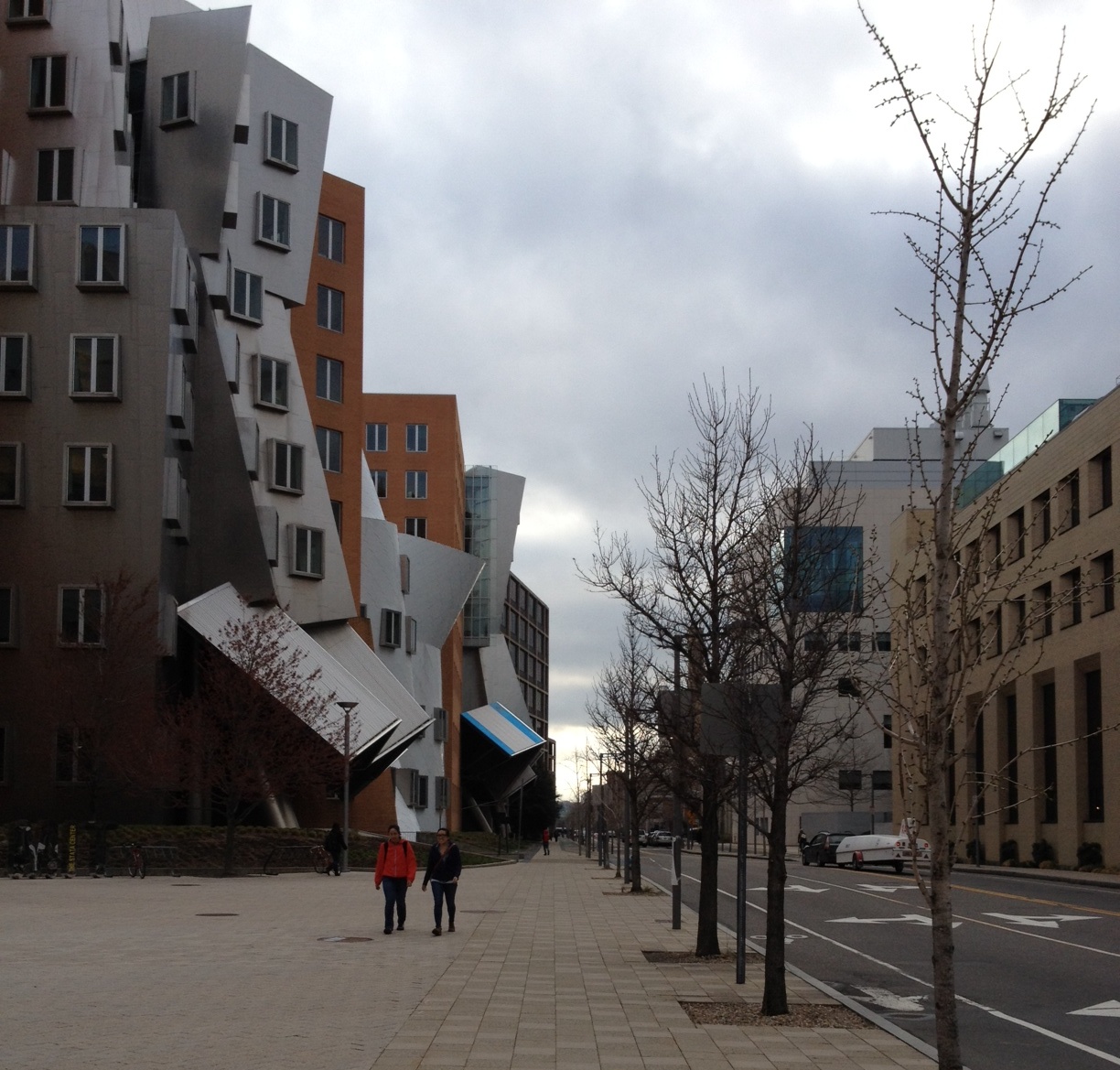
After several weeks of travel, it’s back to Birmingham for a while. This post shares some images from last week’s trip to Boston–to get us all thinking and inspired. Above is Vassar Street in Cambridge, which runs through MIT‘s campus. MIT’s Stata Center (designed by Frank Gehry) is to the left. Subject to lawsuits and other controversy, it was a bold effort on the part of the university to bring more notable architecture to the campus. Vassar, and other streets, have been improved with wide sidewalks, bike lanes (sometimes in the road bed as shown above, sometimes integrated into super-wide sidewalks), and planting that makes a pleasant walking or biking environment.

Studying for the advanced astrophysics exam can wait

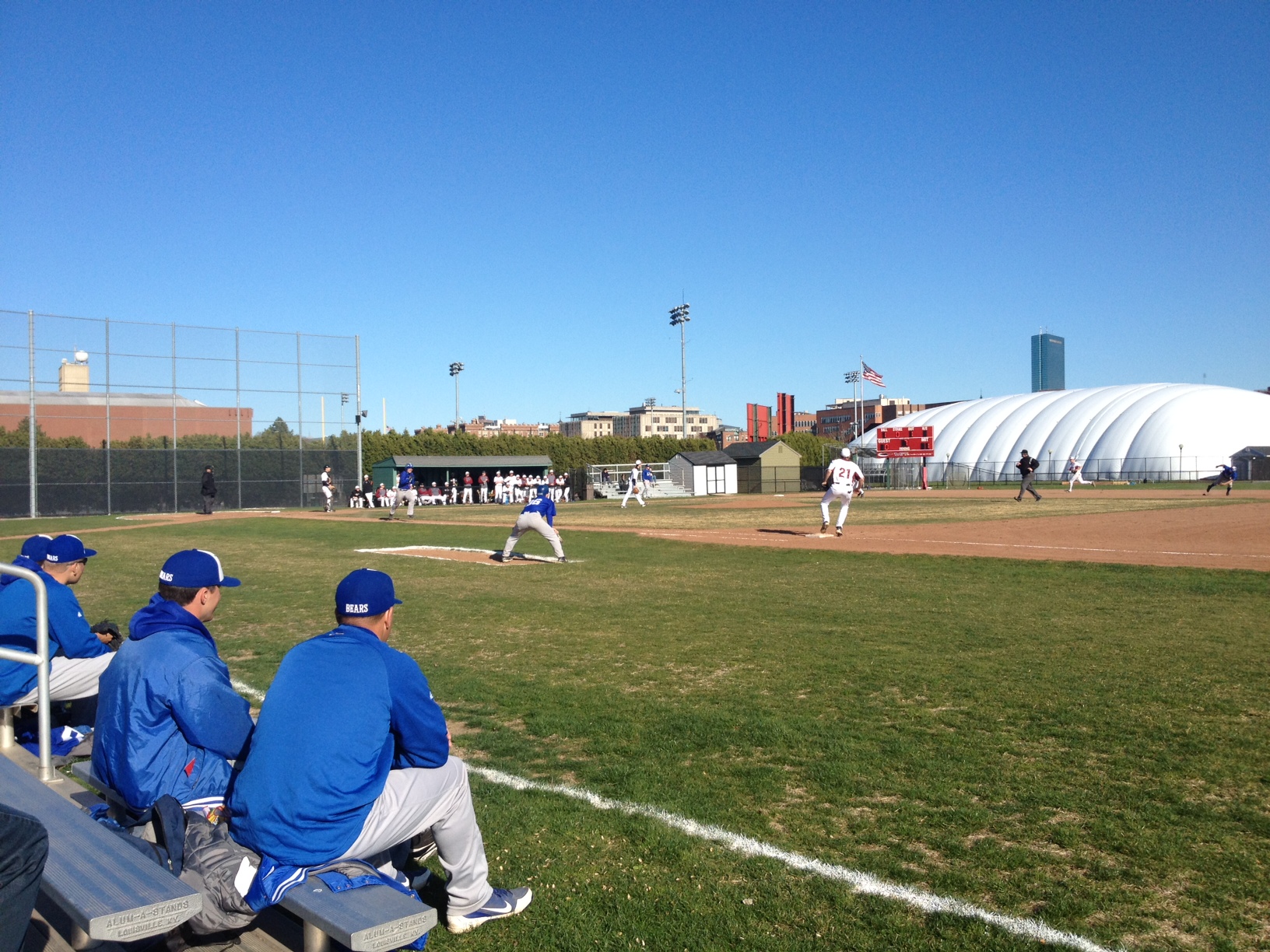
The pedestrian experience is enhanced by playing fields easily accessed from the street, where an MIT-Coast Guard Academy game was observed, above. The Hancock Tower in the Back Bay area across the river is visible to the right.

Where's my Dunkin' Donuts?
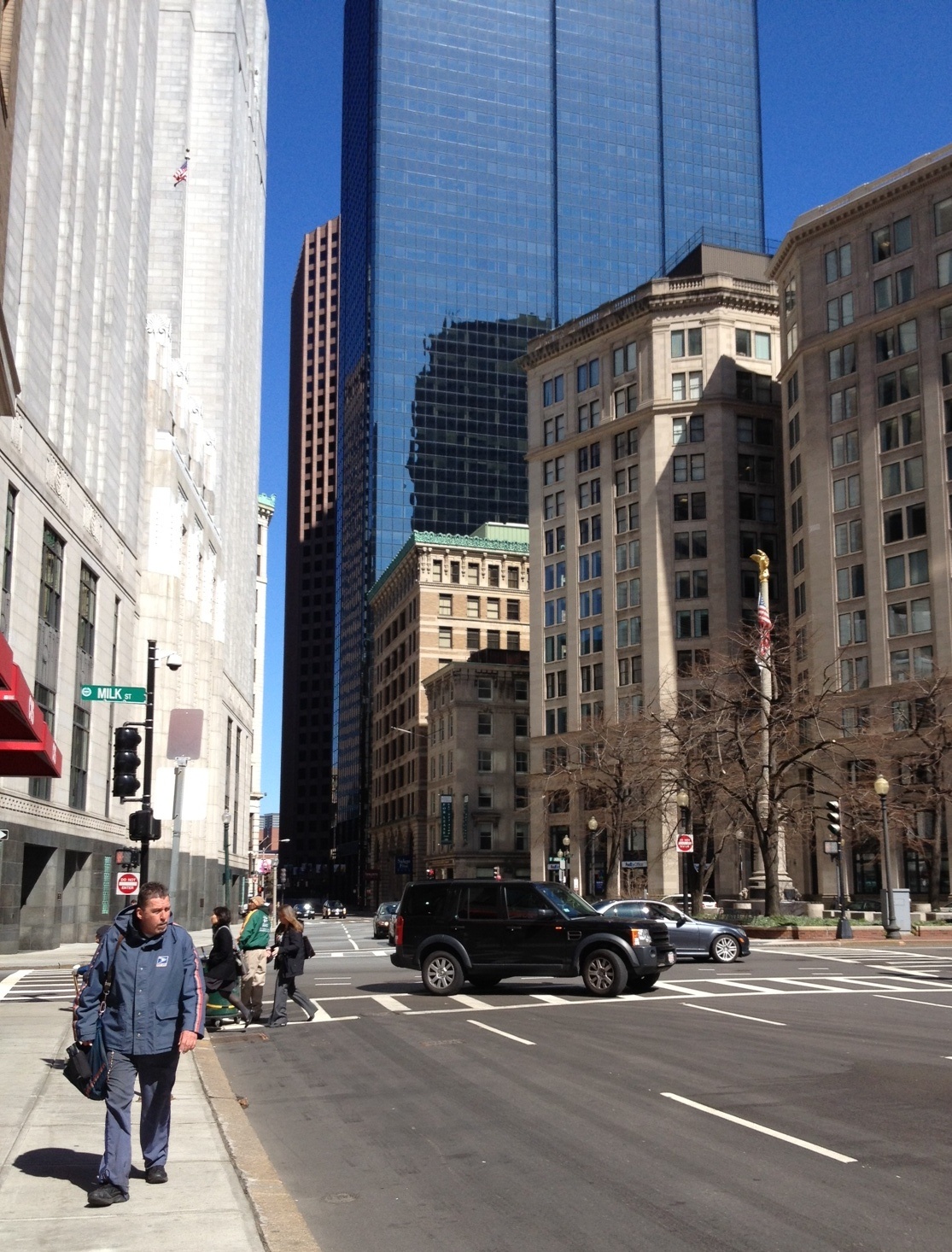
The downtown Financial District, above, is a mix of old (some very old) buildings, and newer structures. On a Friday morning it felt somewhat sleepy, with underwhelming foot traffic (a lot more than downtown Birmingham, but a lot less than New York).

The British are coming

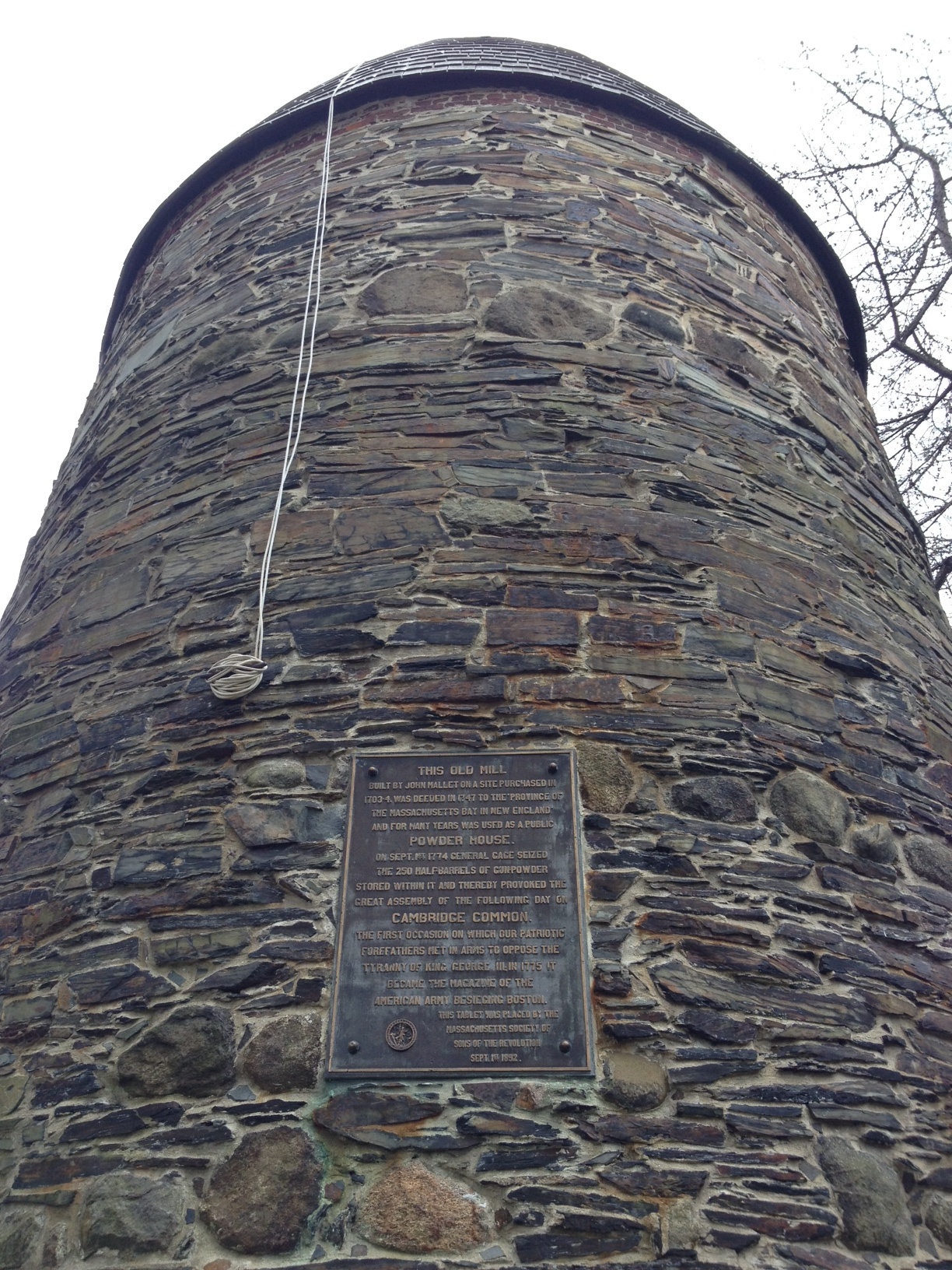
Speaking of old buildings, this beautiful old windmill (above), converted to a powder house in 1747 (and subsequently a key rallying point during the Revolutionary War) is the centerpiece of Powder House Square in Somerville, a couple stops on the T from Harvard Square. Boston is full of this sort of heritage, and has done a great job preserving, labeling, and marketing its history.

But where will we all fit?

Back down the street at Harvard Square, the Graduate School of Design was holding an open house party (above) for prospective students in its main building, Gund Hall. Designed by John Andrews in 1972 in a sort of soft-brutalism style, it was to accommodate a maximum of 300 people. That number now approaches 900 and if it felt like it was bursting at the seams already in my tenure 20 years ago–it now has reached a new crisis. Design students need some space!

Tomorrow's cities envisioned today

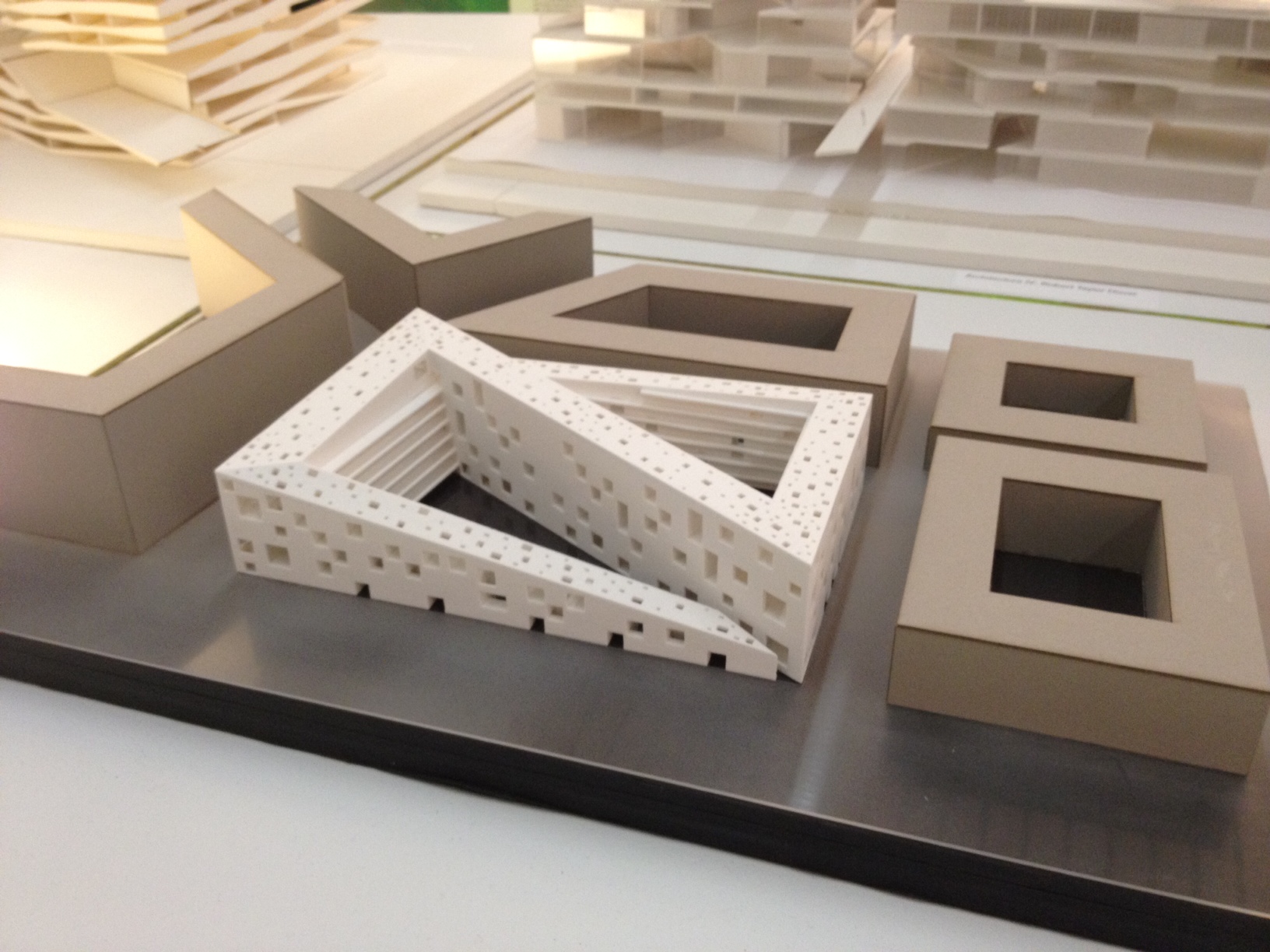
Despite that lack of space, GSD students continue to conceive provocative designs in studios based not just in Cambridge but around the world. A student model was on display in the lobby, above. Student projects can be great challenges to how we conventionally think about buildings and cities.

For cheap beer best to head back to Somerville

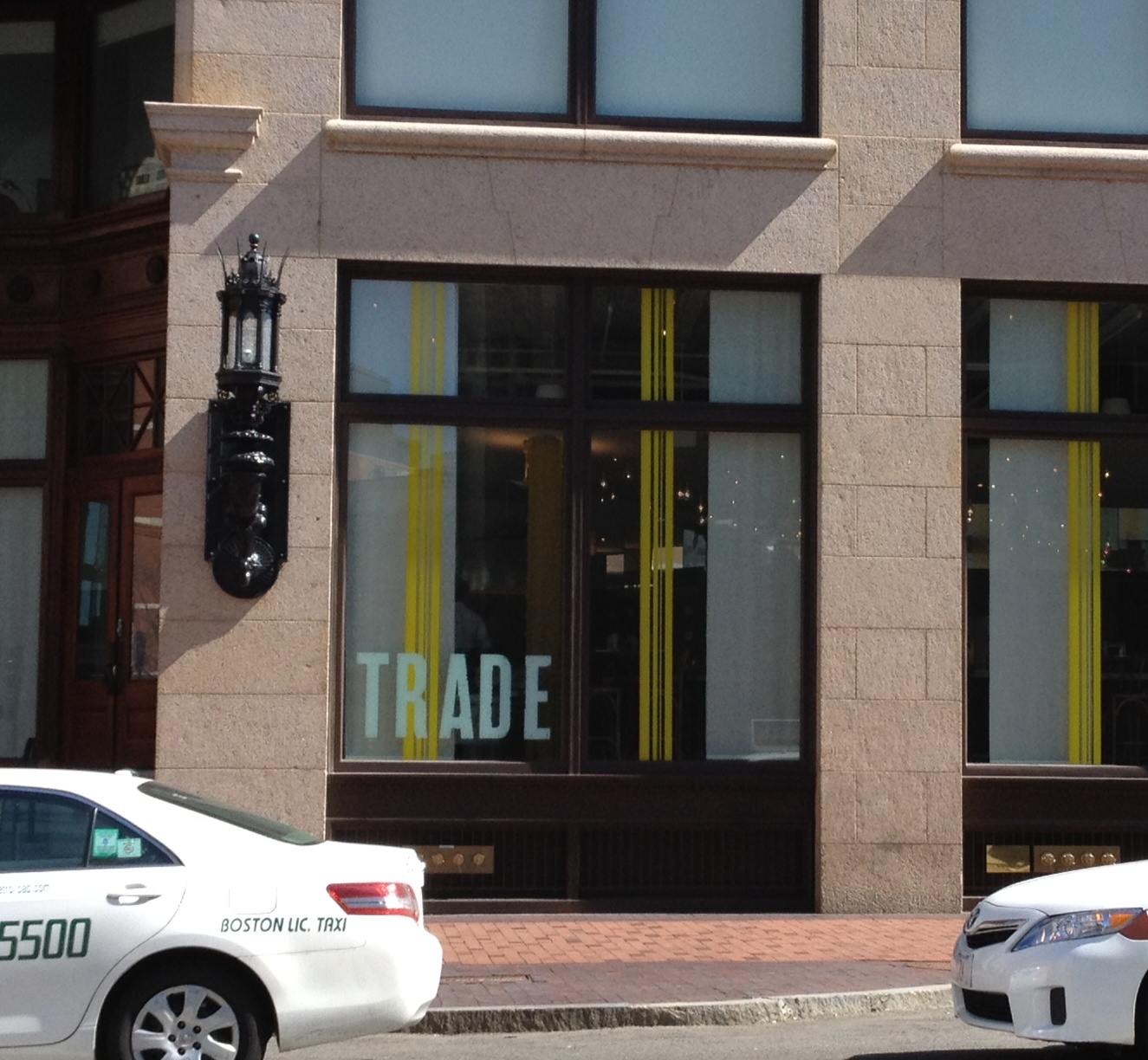
Back downtown, the above restaurant Trade was spotted: kudos for the arresting graphic including bright yellow stripes. The graphic sensibility of Boston is generally subdued, so this one stood out.

Straight out of a Woody Allen movie. Except not in Manhattan

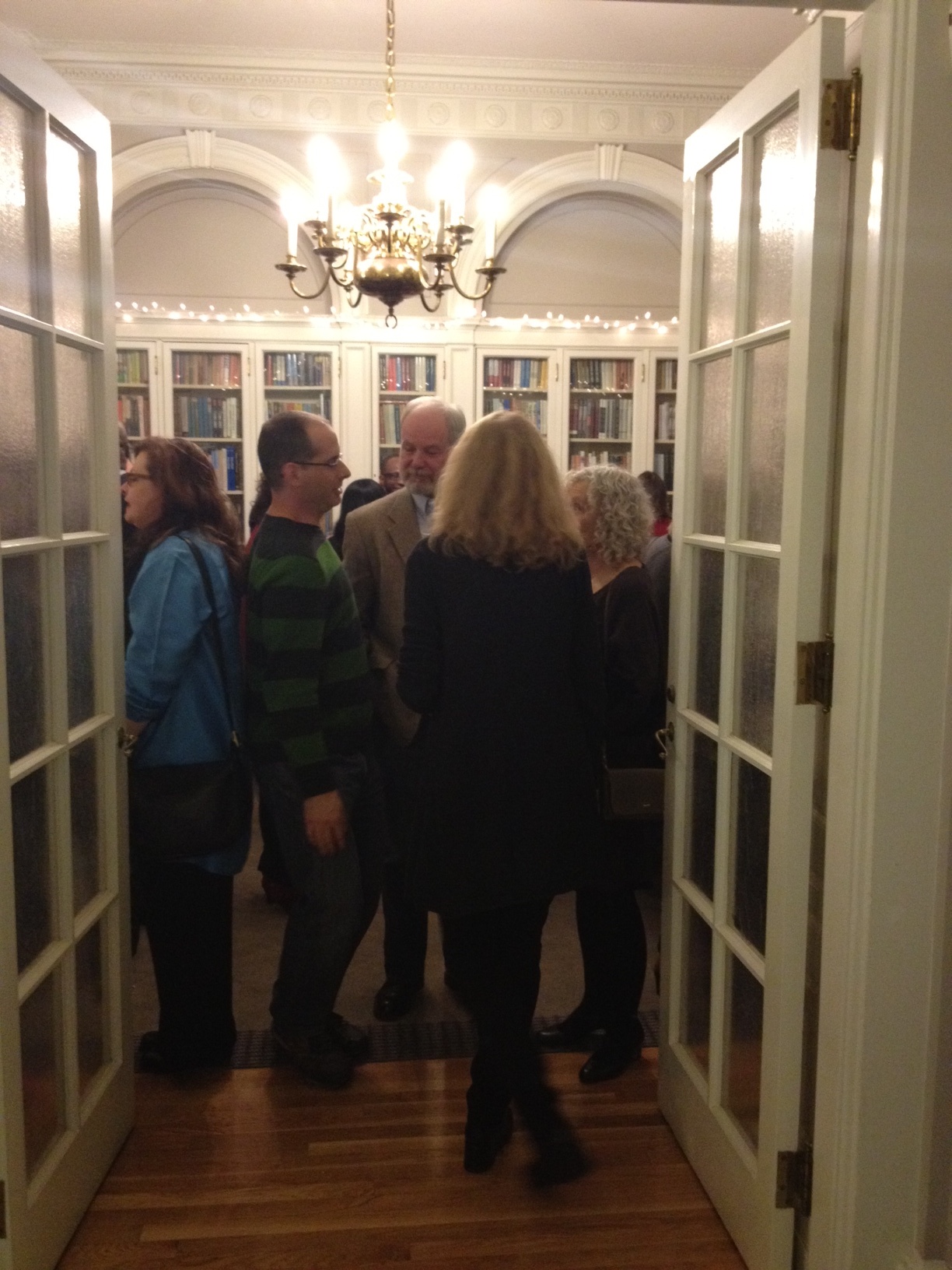
What better city in which to enjoy a literary salon than the famously well-read Boston? Above is an event at Beacon Press on Beacon Hill, in a lovely old building. Filled with writers, poets, and editors (and a few hangers-on like your author), it was a reminder of the intellectual fabric that supports the physical fabric of this city.

All about scale

Back out past Somerville to Medford and a visit toTufts University. Above is a nicely designed new dormitory building, whose modern detailing and careful massing make for a handsome, appropriate addition to this historic campus.

How to retrofit a roof

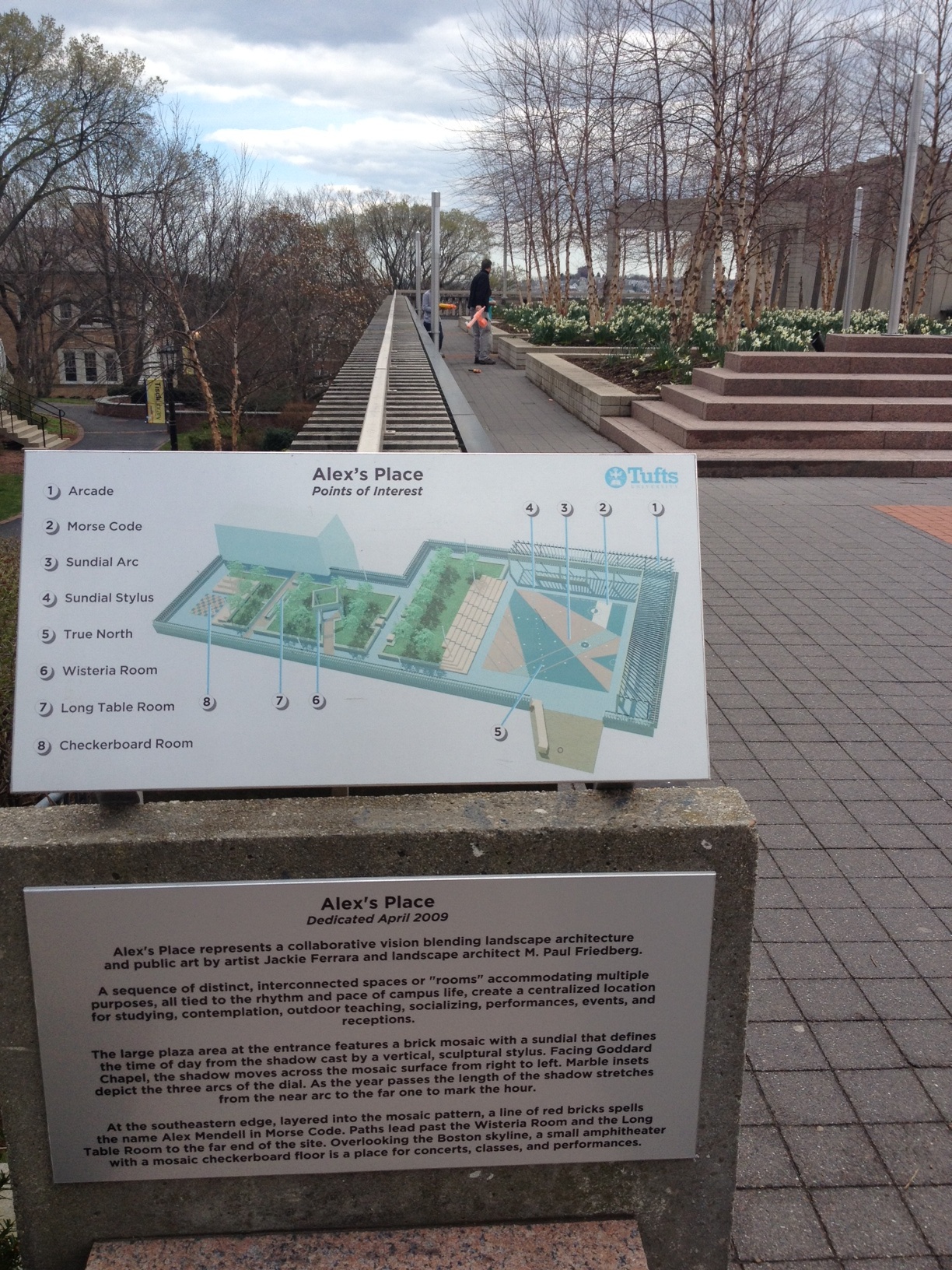
Tufts has recently renovated the roof of their library (above) using a concept of outdoor landscaped rooms and art. It’s fantastic (and so are the views to the Boston skyline).

Not really caring what the neighbors think

We leave Boston with the above image of a house in Medford near Tufts–complete with bright blue paint, bright blue vinyl fencing, plastic flowers in the planters, and a collection of plastic and stone figurines out front. Surely grandfathered from any current Design Review guidelines, it somehow still speaks to the pride and sense of place that’s evident in the many neighborhoods in Boston…

…even if the physical resolution of that pride is blue vinyl fencing and a plastic Bambi. Have a great weekend everybody.

A possible solution

Solving this problem becomes ever more urgent

The I-20/59 interstate connector that runs through downtown (above) has been mentioned in this blog and by many over the years as a real impediment to integrating the convention center (seen on the right, or north) with the rest of downtown (seen on the left, or south). The 2004 City Center Master Plan suggests submerging this portion of the interstate, creating bridges and plazas above that would re-link these two areas of the center city.

It's an improvement, but is it worth it?

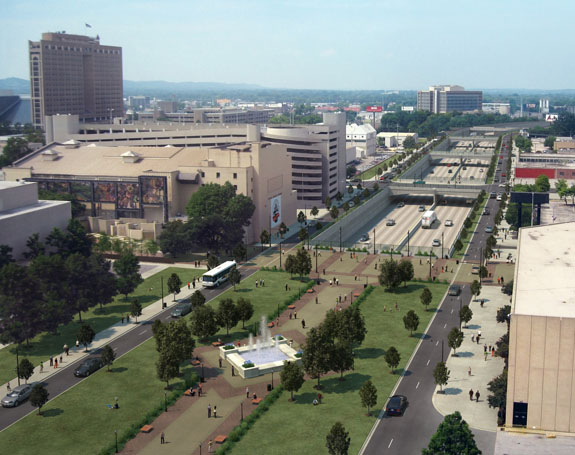
Above is a rendering of the same view, with a suggestion of possible bridges, plazas, and landscaping. While preliminary engineering shows this can be accomplished, the price tag will certainly be greater than just replacing the existing connector with a similar elevated structure (which will have to be done anyway soon, as it nears the end of its useful life). Unless the highway is mostly covered over, allowing lots of green space and buildable area, will the effort be enough?

Over at Next American City, it’s worth reading this interview with John Norquist, current CEO of the Congress for the New Urbanism, where he discusses the success other cities have had in submerging or otherwise replacing similar downtown highways. If anyone comes up with another, less costly solution, we are all ears. But in order for the new BJCC entertainment district and the convention center itself to reach their potential, a solution does need to be found.

Beautiful in Boston, but the Big Dig was costly in many ways

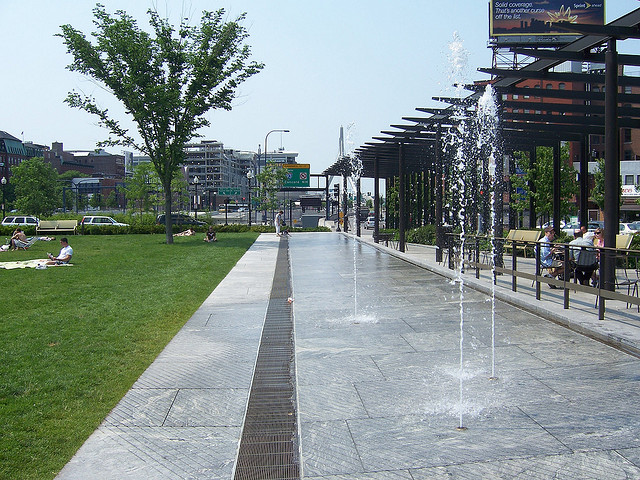
The photo above is a new park located above a submerged highway in downtown Boston: a reminder of visible benefits this sort of project can bring to a city. The huge cost overruns and corruption associated with this Big Dig project are at the same time a cautionary tale. Birmingham’s plan is much smaller and less complex, to say the least. One way or another, we need to figure this one out. It’s too important not to.

[thanks to City of Birmingham, ONB and bhamwiki for the connector images and helveticafanatic for the Boston post-Big Dig pic]