Category Archives: Uncategorized

Chick-Fil-A Denied…Again

About 30 minutes ago, the special appeals board upheld the Design Review Committee’s decision to deny Chick-Fil-A the right to build a stand-alone drive-through restaurant at the corner of 20th Street South and Highland Avenue in the heart of the historic Five Points South neighborhood.

In making the motion to uphold, board member Elizabeth Barbaree-Tasker noted the following to her fellow members, David Allen and Frederick Chatman:

1. A drive-through is not appropriate to the intent of the Commercial Revitalization District ordinance;

2. Traffic counts (verified at 38,000 cars per day at this intersection) make this an inappropriate place to further burden the traffic stream;

3. The site plan (a small stand-alone building surrounded by a sea of parking) is not appropriate to the surrounding context, where all buildings–except this one proposed–fill the full frontage with building mass;

4. The design is not architecturally compatible with the neighborhood. Other, historic buildings are clearly adaptable into multiple uses, while the Chick-Fil-A building is designed to be ONLY a Chick-Fil-A, to look like other Chick-Fil-A’s across the country, and to not be easily adaptable as something else.

5. The dumpster is not well-located on the site.

The motion was seconded, and the vote was a unanimous “Aye” to uphold the DRC.

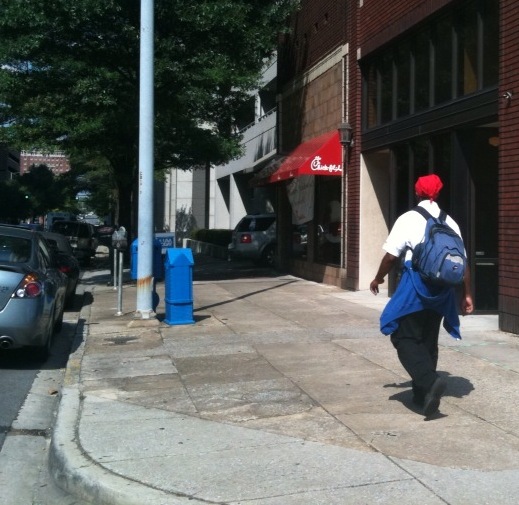
As a reminder to Chick-Fil-A: we love your chicken, we really do. But we expect something closer to the below–which you already have in downtown’s northside–if you want to come to downtown’s southside!

Urban Chick-Fil-A just a few blocks away

PS: it will remain to be seen if the property owners go to court over this, or if better heads will prevail and a satisfactorily urban Plan B is proposed.

PPS: Form Based Code needed!

Playing Chicken

Come unto me, all ye miscreants

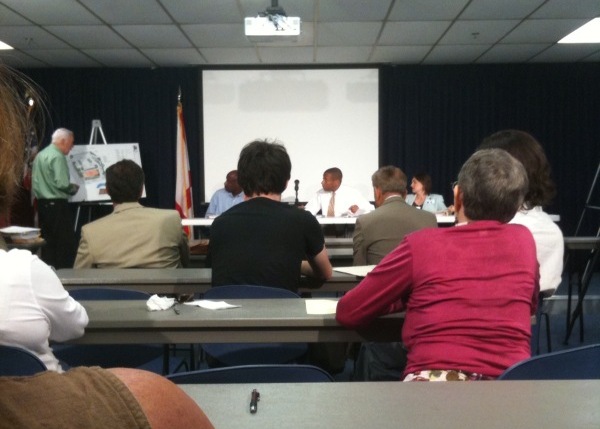
Today was the first of 3 public hearings of the special Appeals Board hearing Chick-Fil-A‘s appeal of the Design Review Committee‘s unanimous decision to deny the construction of a stand-alone restaurant and drive-through at the corner of Highland Avenue and 20th Street South in the heart of Five Points South. 3 1/2 hours later, here’s the (longish) report:

1. Attorney Charlie Beavers, representing Chick-Fil-A, reduces the case to a fundamental question: did the DRC have the right to deny this project based on its proposed use? Answer: no, it did not. The use is allowed by current zoning and the DRC overstepped its bounds. He then proceeds to argue that, beyond this simple fact, Chick-Fil-A bent over backwards to modify its design numerous times, resulting in a very urban and appropriate design. At least according to Mr. Beavers.

2. Erwin Reed, Vice-President of Chick-Fil-A in charge of real estate, then states his corporation “doesn’t like to come to neighborhoods where we are not wanted.” He assures the chamber (about 50 people in all) that once it was built, the neighbors would love the place.

3. The opposition now has a chance to state its views. Attorney Alton Parker stands to contend the plan as drawn is suburban both in style and traffic accommodation, and therefore is not in keeping with the character of the neighborhood. “Why does Chick-Fil-A insist on doing something so opposed by the neighborhood?  Why insist on the drive-through?” [Note: both the Commercial Revitalization District and National Register designation papers, which were adopted as city ordinance, call for development in the neighborhood to be complementary and consistent with the historic, pedestrian character of the place; it is on these ordinances which the DRC based their ruling.]

Mike Calvert, president of Operation New Birmingham, states that he has 40 years of experience as an urban planner and expert witness on the topic, and this plan neither conforms to the City Center Master Plan nor to the Five Points South Revitalization Plan, and the DRC ruling should be upheld.

Bob Moody, adjacent property owner for 30 years, asks the board to uphold the ruling.

Frank Stitt, Alabama’s and one of the South’s most famed restaurateurs, states he loves Chick-Fil-A, but a drive-through is not appropriate on this site.

James Little, president of the Five Points South Merchant group, reminds the board that both his group and the Neighborhood Association approved (non-binding) resolutions opposing the current plan. He also states that Chick-Fil-A itself has admitted it needs a more “urban” prototype for pedestrian neighborhoods, and is implementing a pilot program in Chicago. He mentions the long lines at local suburban Chick-Fil-A outlets, and how this tight urban site can’t accommodate such traffic.

Joseph Baker, organizer of I Believe in Birmingham, speaks passionately  about the urban nature of the neighborhood, how we can’t put inappropriate uses into these special areas, and that corporations are not citizens. And if they go against the will of citizens, a boycott will be announced.

Betty Bock speaks about traffic nightmares if the plan were allowed.

Libby Rich says Chick-Fil-A is “a wonderful corporation. But this is our neighborhood. You [Chick-Fil-A] have overstepped your bounds.”

Ron Council points out the plan drawing only shows the property with almost no context, i.e. it leaves out all the historic structures around the intersection. More traffic woes for elderly people who walk or use wheelchairs on the sidewalks and must cross curb cuts.

Alison Glascock, Highland Park Neighborhood president, states she is not anti-corporation, but wants corporations to listen to the neighborhoods in which they locate. She regrets this situation has become “us vs. them.”
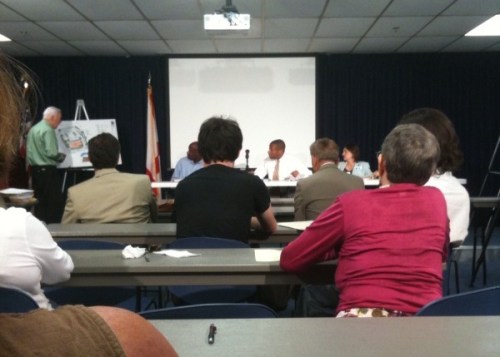
A long slog of a hearing

4. Charlie Beavers now stands up for Chick-Fil-A to rebut. He mentions the company’s traffic engineers have studied the site and are satisfied it will be fine. He insists this is indeed an urban design. He again asks the Board to overturn the DRC.

5. Greg Despinakas stands on behalf of the owner (who would lease the land to Chick-Fil-A). This is perhaps the most colorful moment: in a fiery, preacher-like sermon, he declares this project would be a “God-given enhancement to the neighborhood.” Which he then describes as deteriorating, filled with “…miscreants.  And head shops. And tattoo parlors. Broken glass. Piercing shops. Graffiti.” Even…saloons! He then dramatically turns to the audience and says. “Clean it up! Before you tell Chick-Fil-A what to do, clean up your own neighborhood!”

6. It’s now question time from the Board. How many customers will be served?  250-300,000 annually, about 50% of which is drive-through. Why this site? Because it maximizes our investment. Can you survive without a drive-through? We could, but this would not meet our financial expectations. How can you assure us that stacked cars waiting for the drive-through won’t be a nightmare at peak times? Trust us. We are the fastest drive-through in the US and we’ll hire traffic directors at peak times if required.

7. Executive Session. For maybe 30 minutes. Break time. Milling around, some wary hellos between camps, but mainly each sticks to his own.

8. Board returns. They ask the hours of store operation (6AM-10PM M-T; 6AM-11PM F,Sat; closed Sun). They announce the next public hearing is 8:30 AM Friday June 18, Room 215 City Hall. But no more public comments on that date; it’s just deliberation with public observation. One more important item: the board asks City staff to provide updated traffic counts for that intersection by Friday morning. With current budget woes at the City, there are not exactly extra bodies sitting around to count traffic. Here’s wishing staff good luck with this request!

So that’s it for now–stay tuned.

The takeaway? We need a form-based code for this neighborhood (and others)! Pronto. No one wants to sit through this again, trust me.

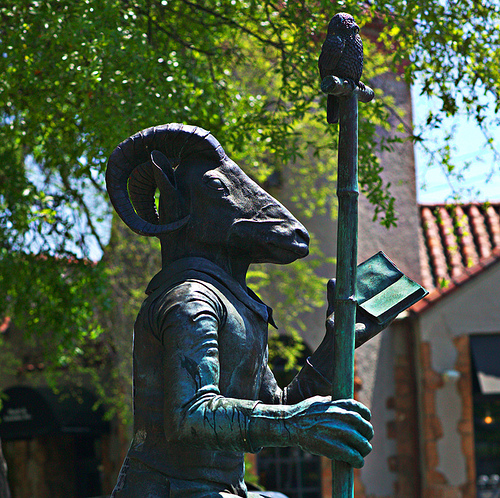
[thanks to southernpixel for the shot of Frank Fleming’s sculpture at Five Points fountain]

Rooftop danish

An ambitious plan

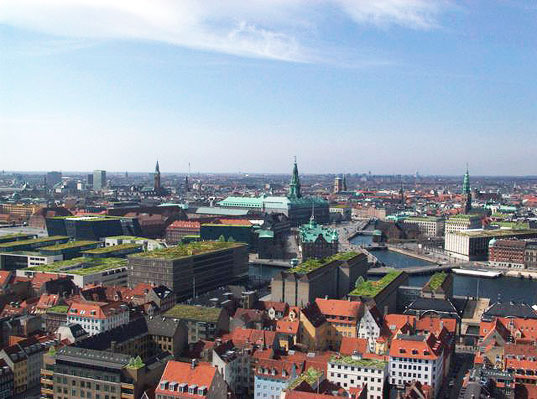
Denmark’s capital Copenhagen has become the first Scandinavian city to mandate green roofs on all new buildings with slopes of less than 30 degrees. You can read the article here–courtesy of inhabitat.

One of the reasons why we don’t have more green roofs in Birmingham is the lack of incentives. While green roofs offer many benefits–they reduce the need for costly storm water systems; they provide great insulation; they prolong the life of the roof; and they help reduce urban temperatures and clean the air–they are relatively costly to install, especially for smaller projects. Chicago had a great plan that gave small residential and commercial projects grants for installing green roofs; Cincinnati offers low-cost loans for commercial green roofs. We are way behind Europe, however, where cities like Stuttgart, Germany have a smart combination of mandates and incentives resulting in green roofs everywhere.

It can be done here too

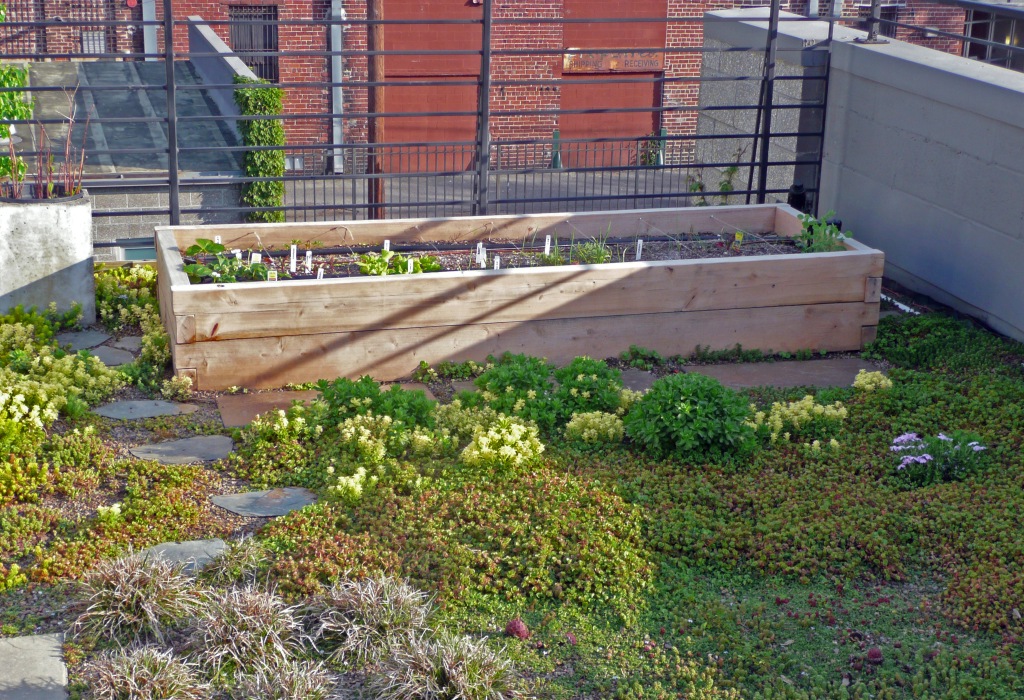
Despite the lack of local incentives, we were able to design the green roof (shown above) on a new townhouse in downtown Birmingham. It’s one small step forward to reducing energy costs for all of us. Now, if Birmingham could create a Department of the Environment, with a super-progressive director backed by the mayor and council—we’ve got some great citizen and designer interest. We just need a program and some incentives!

Birmingham: the Copenhagen of the Deep South? Dream big.

[thanks to inhabitat for the Copenhagen photo]

POSTSCRIPT:

I couldn’t resist adding this photo from the December, 1953 edition of National Geographic, showing an early green roof on the top of the A.E. Staley Manufacturing Company, Decatur, IL:

An early pioneer

Fire Station No. 22 Delayed

Today’s City Council Economic Development Committee meeting to help decide the fate of Fire Station No. 22 on Clairmont Avenue has been delayed to July 6 at 3 PM. Mark your calendars.

P-town!

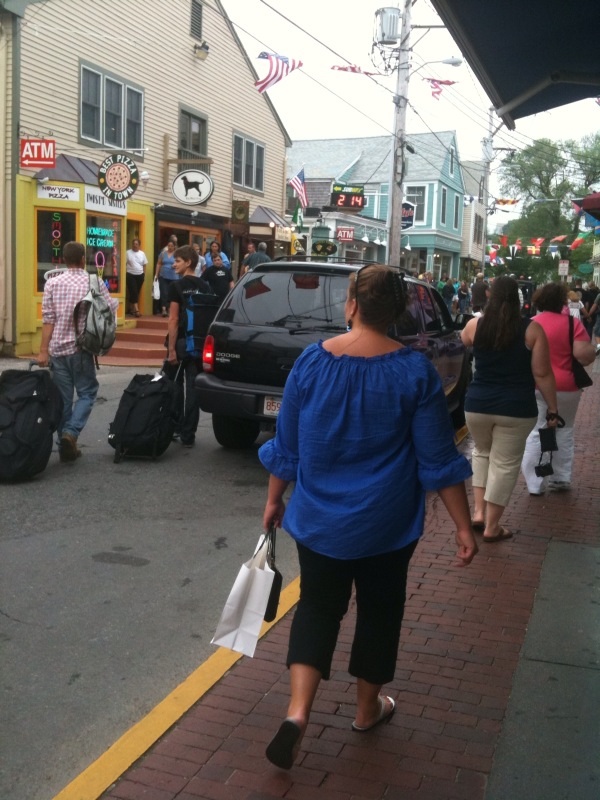
Pedestrians dominate the street

I’ve had the good fortune to be invited to Provincetown, MA for an extended weekend. A former fishing town that boomed in the 1800’s, it has since become known as a center for the arts and tourism. With a permanent population not much above 3000, the summer population swells to over 50,000. At the tip of Cape Cod, the town is accessible by ferry from Boston, or by car across the Cape. Once you get here, though, you enter an environment where the pedestrian, rather than the car, controls the public space of the street.

An example of compact, dense New England town planning, Provincetown has narrow streets, houses very close to one another, and multiple services all within easy walking distance. Starting at our friend Joe’s house on Cottage Street, within 15 minutes’ walk east on Commercial Street, we pass restaurants, a hardware store, several coffee shops, many restaurants, clothing stores, houseware stores, art galleries, the Town Hall, public library, post office, tailors, small grocery stores, two cinemas, hotels. Cars on Commercial Street move at a snail’s pace, making way for people constantly crossing and spilling off the sidewalks. Many benches, stoops, and low walls beckon walkers to sit and relax.

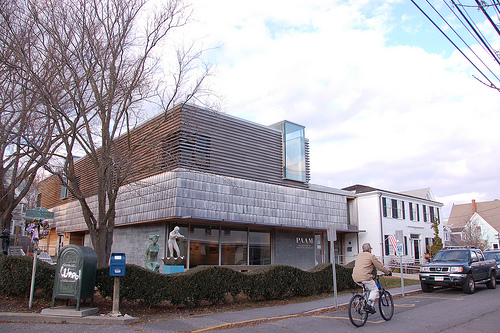
The Historic District is filled with beautiful old frame structures, many from the early and mid-nineteenth century. On a rare infill lot, site of the Provincetown Art Association and Museum, the firm Machado and Silvetti designed a wonderful, modern addition to complement the historic, older museum. This is a great example of how sensitive, modern architecture can be respectful and contextual with its historic neighbors, without resorting to overt historicism. The weathered cedar shingles, wood trim, and scale all feel appropriate to this New England townscape.

PAAM: modern contextualism

Beautiful historic architecture; great modern infill; lots of vibrant street life; abundance of independent stores and restaurants; and lots of small-scale charm. No wonder people jam into this community every summer for a New England urban experience that’s pretty darn special.

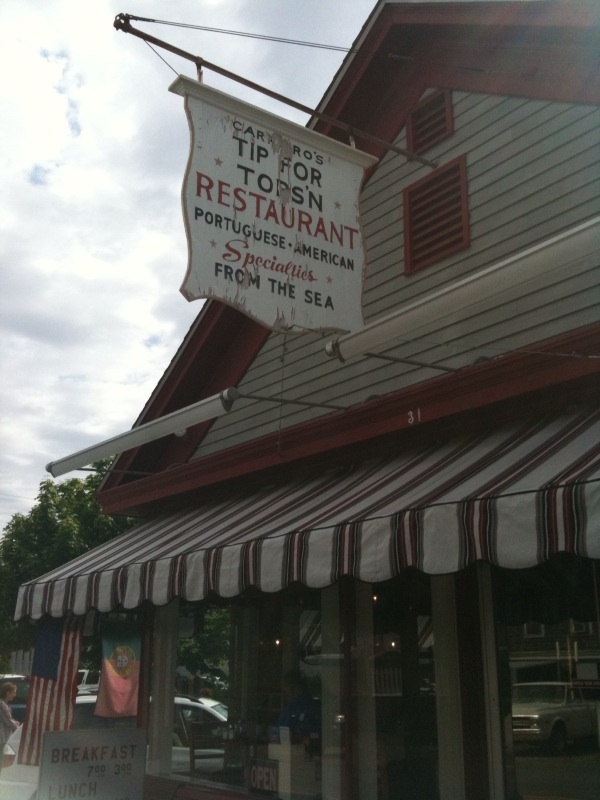
Best breakfast diner just a block from our house

[thanks to Chris Devers for the shot of PAAM which was, well, just a lot better than my own]

Now or Never: Chick-Fil-A and Walgreen’s Updates

It is time to make yourself heard. Public hearings are set for two controversial issues:

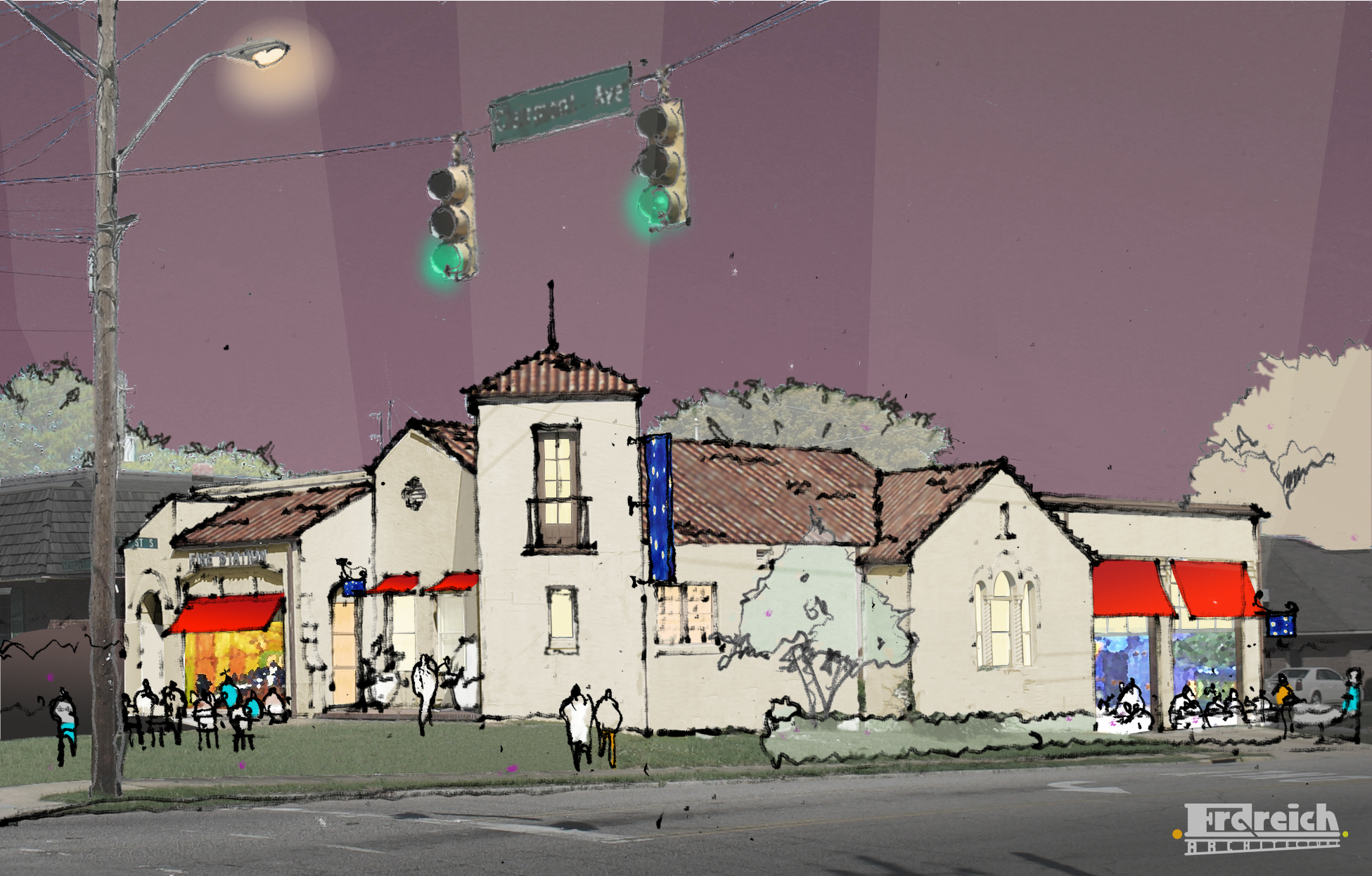
The City Council’s Economic Development Committee will discuss the proposal to sell the historic Fire Station No. 22 to Walgreen’s Drugstore on June 7 at 4 PM in the Council conference suite at City Hall. In related news, local developer and Highland Park resident David Carrigan has put together a counter-proposal that fully preserves and restores the Fire Station into a neighborhood gastropub. You can see the website here.  (Full disclosure — the rendering below is by the writer of this blog)

Another path

Second, the Birmingham News reports today that a special panel–set up to hear Chick-Fil-A’s appeal after the unanimous decision of the Design Review Committee to deny their building a stand-alone restaurant and drive-through at the corner of 20th Street and Highland Avenue South in the heart of Five Points South–will hold public hearings June 16, 18, and 21. They will then rule on the matter within 7 days of the last hearing.

This is one particular situation where Form Based Code would be potentially very useful. While Chick-Fil-A argues that this is purely a zoning matter (and indeed drive-throughs and stand-alone restaurants are allowed by zoning on this property), the neighborhood and other advocates (including myself) argue that the Commercial Revitalization and Historic District organizing papers clearly state that new development should be in keeping with the character of the neighborhood. These papers are city ordinance, just like zoning. Instead of one lawyer arguing that an ordinance takes precedence over another, Form Based Code would settle the matter up front, telling any prospective developer that along certain streets, or within certain blocks, there can be no drive-through. Or no building less than a certain height. Or all parking must be hidden at the rear of the lot.

The process of putting together a Form Based Code is typically driven by neighborhood consensus. Highland Park is the first City neighborhood to adopt such a code–just a few weeks ago. In order to protect the urban assets we have, and enhance them with thoughtful, coordinated development, Five Points South and other neighborhoods should consider following Highland Park’s lead.

If you care about the urban environment in Birmingham, please plan to attend any or all of these important meetings.

Stay tuned for reports on the upcoming public hearings in both cases.

Wagging a tail

Revealing

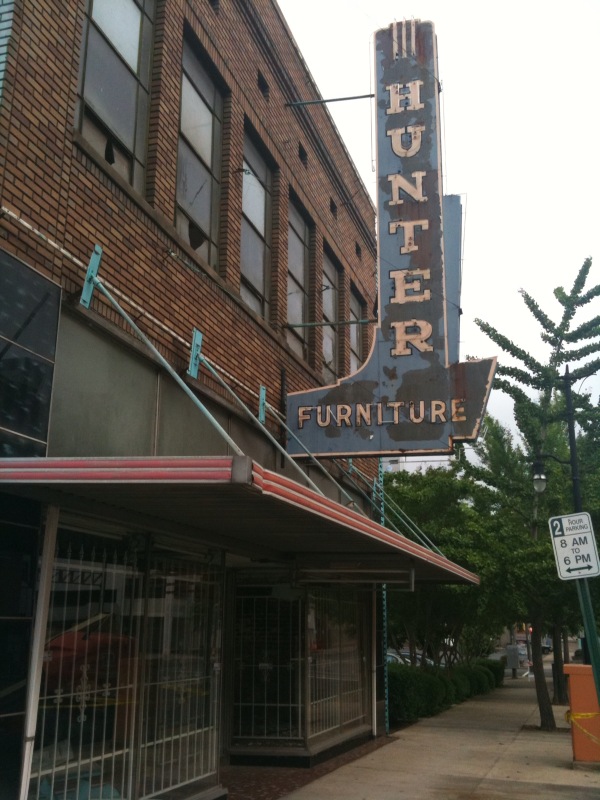
Yesterday, Dog Days of Birmingham–the new pet grooming/daycare facility was presented at Design Review. Housed in the former Hunter Furniture Building on 18th Street North, the business will occupy the first floor and the owner will live in a loft apartment to be constructed on the second floor.

Once the 1960’s false front was recently taken down (you can see what that looked like here) the original masonry facade and windows were revealed, pretty much intact.

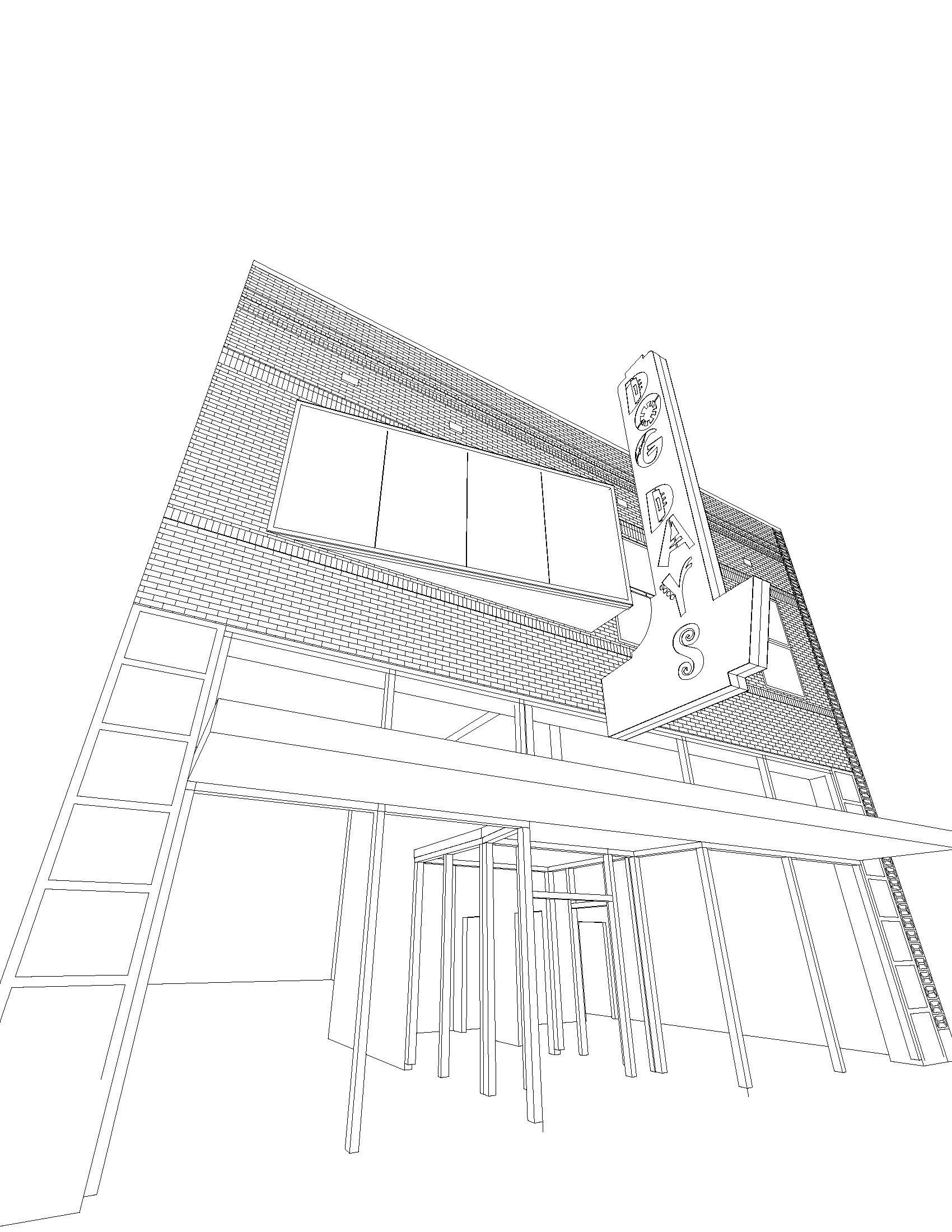
Architect Michael Gibson with Appleseed Workshop presented the plan for exterior renovation, including a sketch of a proposed asymmetrically angled bay window extending over 3 of the historic second floor openings. I held my breath wondering if the Committee would approve such a “modern” intervention to the historic structure.

The Committee unanimously approved it–I think in part because the intervention was relatively modest, and didn’t damage the existing facade. I also think there is a growing understanding on the Committee that historic preservation can accommodate thoughtful, contemporary design as part of the plan. But judge for yourself: Michael’s rendering is below.

Another angle

[Thanks to Michael Gibson for the rendering]

Unwelcome news

The report came out today that HKW, the architecture and planning firm founded in Birmingham in 1994, is shutting its doors due to economic circumstances brought on by the recent recession. Many architecture firms not just in Birmingham, but around the country, are in precarious states as the construction and design industries appear to be among the last to benefit from improvements in the economy.

A strong design community depends on lots of competition, constantly raising the bar. HKW will be missed.

[image of Boy Scouts of America Building, which was a 2005 winner of the American Institute of Architects Merit Award; photo taken by Timothy Hursey]

Walgreen’s and DC

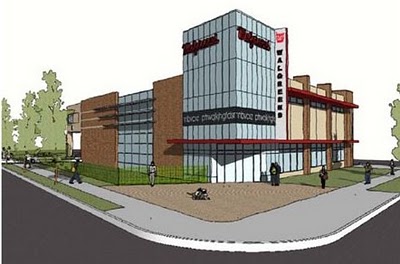
An example of careful historic preservation

UPDATE:

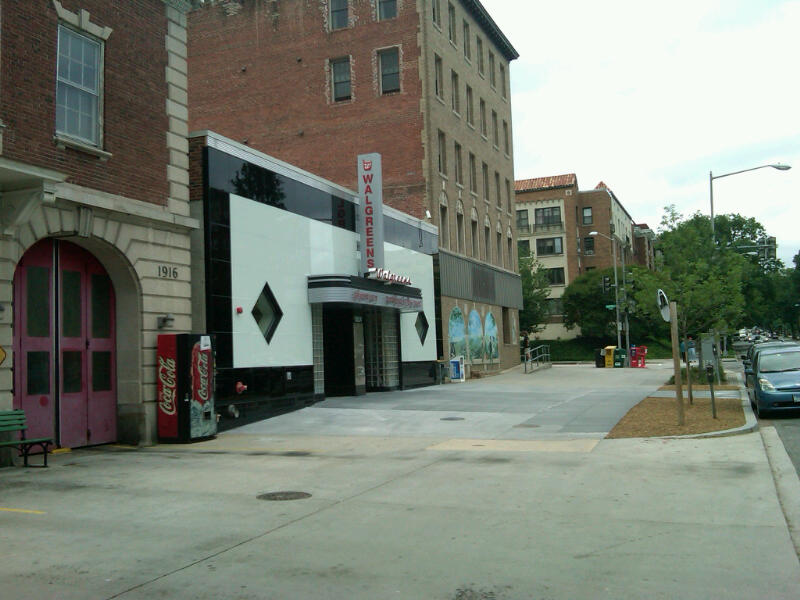
Andrew just took this pic (on his way out of the Metro, of course) of the Cleveland Park Walgreen’s:

Walgreen's being the good urban neighbor

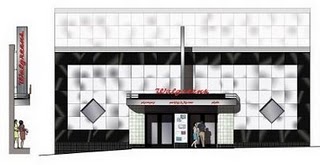
My friend Andrew Aurbach, who has served on Washington, DC’s Historic Preservation Review Board, sent me a link to a blog that discusses Walgreen’s moving into a restored restaurant in historic Cleveland Park (rendering shown above), as well as a neighborhood protest surrounding a new Walgreen’s proposed for the Van Ness neighborhood (below).

Similar to Birmingham, both Walgreen’s projects in DC are within a stone’s throw of existing CVS Pharmacies.

The neighbors don't like it

[thanks to DCMud for the renderings]

Putting out fires

An open letter to Kathy Okrongley, President of Connolly Net Lease, LLC–the developer of a proposed Walgreen’s drugstore at the site of historic Fire Station No. 22, Bogue’s Restaurant, and Clairmont Auto on Clairmont Avenue South:

Dear Ms. Okrongley:

I read with interest the article in today’s Birmingham News, where you state you want to work with the neighborhood and the Design Review Committee to come up with a proposal acceptable to all. Given the current neighborhood aversion to the project as depicted so far–tearing down the historic Fire Station No. 22 and other small, local businesses including the 70-year-old Bogue’s Restaurant, and replacing them with a generic, boxy Walgreen’s drugstore, asphalt parking lot, and drive-through–I welcome this willingness to explore alternatives. I know the members of the Facebook protest site, as well as the brand-new civic group I Believe in Birmingham, are also cautiously optimistic about your next steps.

A second chance?

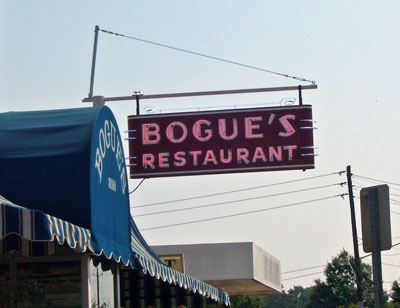
First: the excellent points you discuss. You say you’re an architect by training, and have an appreciation for historic structures. You say you’re interested in developing a sustainable design, possibly with LEED certification. You say that you are seriously considering saving all or part of the Fire Station and incorporating it into the design. You also say you will work to find another neighborhood location for Bogue’s, carefully restoring the historic neon sign at a new location.

As Alison Glascock, Highland Park neighborhood president states in the article, a lot of opposition “would end” if the above goals were all achieved.

Second: the note of caution: I’m reading good things, but an actual detailed plan is yet to be presented. I don’t want some clumsy pastiche that makes a few “references” to the historic Spanish-style architecture of the Fire Station. I don’t want Bogue’s and Clairmont Auto to just disappear for a parking lot–I want an earnest effort to relocate them. I know the corporation, Walgreen’s, that you represent has the resources to commit to fine design, neighborhood involvement, and relocation of existing businesses–if the will is truly there.

Ms. Okrongley, there are plenty of local community leaders and neighbors–and designers (this author included)–who’d be delighted to work with you to make this a winning project for everyone. Please understand that if the Walgreen’s effort falls short of your newly stated intentions, I feel the City has an obligation to reopen its RFP process to other developers who stand by committed to preserving the Fire Station and local businesses. I’m eager to see your next step.

Yours sincerely, etc.

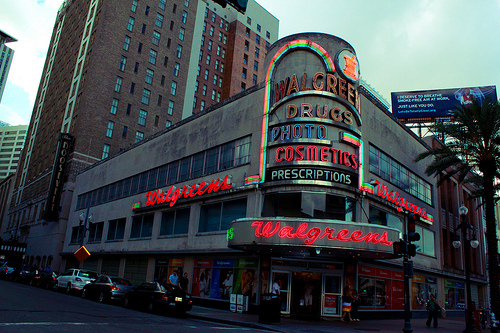
Walgreen's CAN do urban, pedestrian, and contextual. And historic neon.

[thanks to acnatta for the Bogue’s shot, and willcrusta for the Walgreen’s in New Orleans]