Category Archives: Uncategorized

A publican, a grocer, and a chef

A high gravity pour coming soon

The Central City Neighborhood Association approved lots of Liquor Licenses today (all approvals are contingent on final approval of both the Public Safety Committee and the City Council).

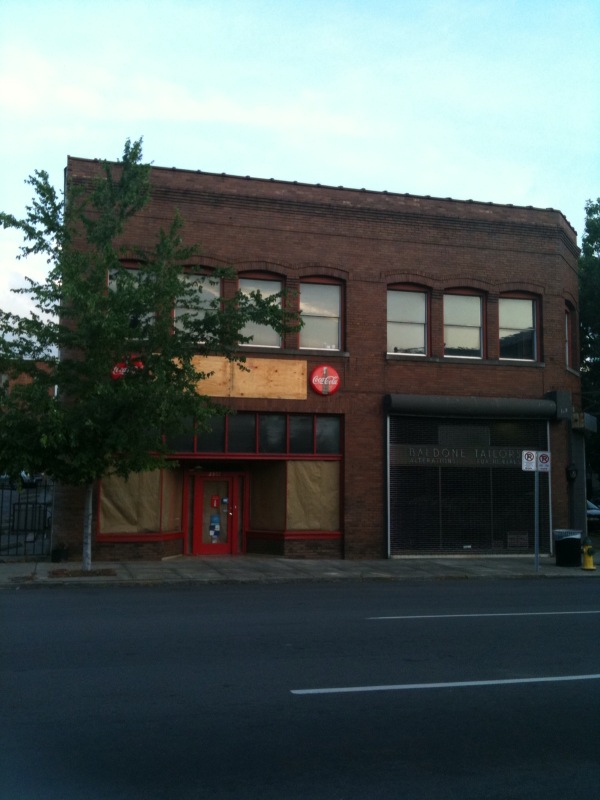
First off was Pale Eddie’s Pour House, to be located in the former Shift Work space directly east of What’s on 2nd (Second Avenue North between 23rd and 24th streets).  The neighborhood decided to adopt a new procedure, asking this bar (and all future applicants) to sign a “Good Neighbor Agreement” chiefly to prevent violations of the City Noise Ordinance. This has become a problem with the Rogue Tavern, as well as some other bars downtown. The owners seemed eager to do what it takes to satisfy those residents who may appreciate a toddy at 9 PM, but not necessarily a loud band amplified into their bedroom at 1 AM. A large selection of gourmet and high gravity beers will be available, a patio will be out back, and they hope to be open by August.

Walking across the street for a bottle of milk

Next up: Mamanoes, a new grocery and convenience store opening in the former Gypsy Market space. Antonio Boyd, the owner, has signed a lease and expects to be open by mid-June. He will sell Mr. P’s meats and deli sandwiches, a full selection of wines and beers, grocery staples, and ice cream. The neighbors seems especially appreciative of the ice cream. Boyd has experience at Whole Foods in Rockville, MD and we are all eager to see the paper come off the storefront to reveal an essential neighborhood service.

I was surprised at some disapproval voiced in the room regarding the grocer’s plan to sell single beers. Neighbors stated that such a policy encouraged homeless, recovering alcoholics, and other unfortunates to patronize a store–thereby annoying other customers. Others, however, stressed that it’s customary for gourmet beers to often be “split” from their six-packs and sold individually, for much higher prices than Colt 45, I would guess. So, in the end, Boyd will sell single beers at his discretion (there is no law saying he can’t, by the way).

About to open for dinner

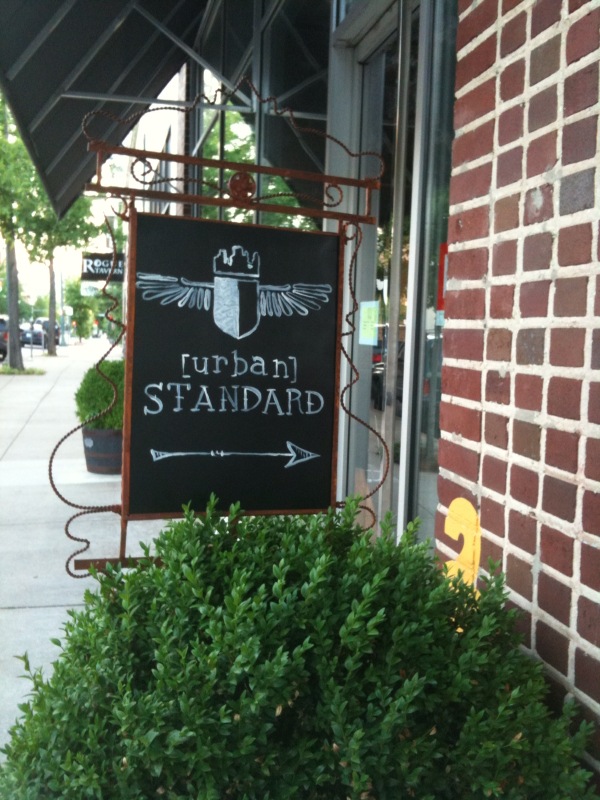
Finally, the neighborhood gave the nod to favorite local coffee shop Urban Standard, which plans to start serving a new dinner menu–with beer and wine–in the near future. I’m sure that I’m not alone wondering what culinary treats Chef Meloy has in store.

A new pub, a new grocery, and dinner next door. I’ll drink to that.

An unappealing appeal

Chick-Fil-A will appeal last week’s Design Review Committee decision to not allow the company to construct a freestanding restaurant and drive through on the corner of 20th Street and Highland Avenue South in Five Points. The City must convene a special Board of Appeals to hear the case. You can see the Birmingham Business Journal story here.

We will post more when we hear more. Stay tuned.

New Urbanism (1)

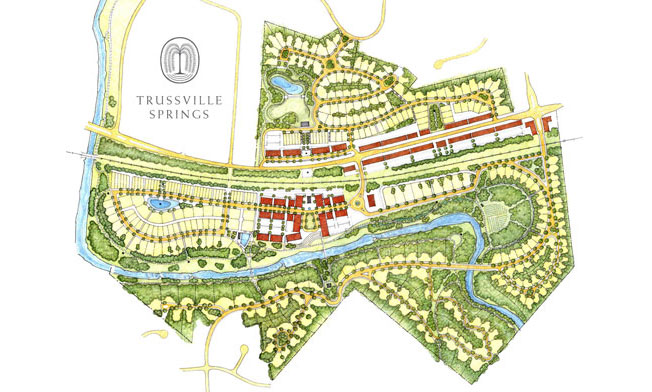
Yesterday I traveled out to Trussville Springs for the first time. This is a planned, mixed-use development about 15 miles northeast of downtown Birmingham, and was designed by the internationally recognized planning firm Duany Plater-Zyberk (DPZ). DPZ–which has also designed the Mt. Laurel and Blount Springs developments in the metro area–is known as the preeminent proponent of New Urbanism worldwide. New Urbanism draws on time-tested urban principles, and argues that communities should be compact, mixed-use, and friendly to alternative transport. It is an antidote to sprawl.

A vision for Trussville

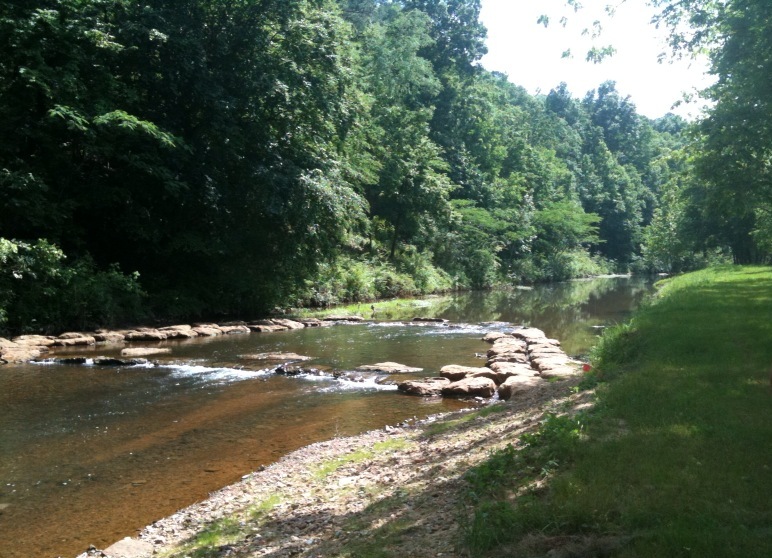
Trussville Springs’ master plan is certainly typical of DPZ work: lots of preserved open space and public amenities instead of private lawns; garages fronting alleys, rather than driveways on the main streets; a commercial center designed within walking distance of all residents; and a distinctly old-fashioned marketing package that draws heavily on nostalgia for an earlier time. The Cahaba river runs through here, and is beautifully framed by old trees and rolling hills. Yes, the developer skillfully inserted some stones into the river to create both a “rushing river” sound, and to allow a path across. But still, it is a stunning natural feature.

A truly public amenity

However, something strikes me about this–and many other new towns designed by DPZ and their many imitators. While certainly preferable in many ways to typical, sprawl development, whose gated communities and feeder roads encourage car use, social isolation, and single-use development, I can’t get over the feeling that Trussville Springs isn’t dense enough to qualify as a real antithesis to sprawl. It’s hard to say due to the current economy (only a few houses have actually been built), but with all the empty housing stock in the metro area, much of which is already in compact, urban neighborhoods, and without larger influxes of new people moving into the metro, the overall need for a place like Trussville Springs seems questionable.

In fact, right across Main Street is downtown Trussville: a fairly compact, urban, walkable neighborhood, with big trees, narrow streets, and sidewalks filled on Saturday with families strolling to the school for a festival, to the library or just chatting with neighbors on front porches. As an authentic, organic neighborhood, that actually seems to thrive with a lot of the New Urbanist principles, it made me wish all that energy spent across the street in Trussville Springs was instead being spent elsewhere. It was sort of like an “Old” Urbanist neighborhood already existed across the road.
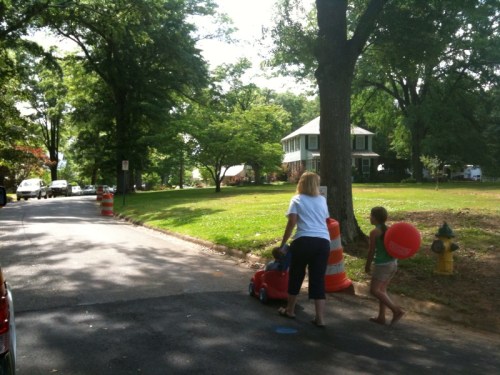
Compact, walkable, and populated: downtown Trussville

If you talk to Andres Duany, he will tell you that the final rendition of the developments he planned is often disappointing. The original intent for affordable housing? Gone, due to market forces. Transit connections? The municipality isn’t interested. That quaint commercial center filled with corner grocers, ice-cream shops, and quirky live-work spaces for artisans? The developer just didn’t see the demand, and filled the space with more houses instead. So residents end up having to get in their cars, head onto the highway, and go the the strip malls like everyone else. Instead of truly transforming how people live and interact, these places become just prettier, slightly denser versions of homogeneous suburban developments.

Here’s an idea: let’s hire DPZ (or some like-minded company) to design a master plan for an existing urban neighborhood in need of revitalizing and repopulating. We’re not creating new roads, or extending the power grid, or tearing up more virgin land on the outskirt of the urban core. It could be Woodlawn. Or Rosedale-downtown Homewood. Or the Railroad Park neighborhood. Places that could benefit from more density, more alternative modes of transportation, more shops and services. DPZ did a master plan for an area of downtown Providence, RI that examined many smaller sites, suggesting new densities, retail opportunities, transit improvements, etc. To me, this type of planning is what is going to save Birmingham from soulless sprawl and urban neglect, not far-flung suburban communities like Trussville Springs, as well-intended as they may be.

Providence had the vision

Of course, Providence didn’t just hire DPZ to make pretty renderings like the above. They have been methodically implementing the plan over the last decade. Birmingham has a terrible history, as I’ve noted before, of commissioning plans which, due to lack of community buy-in and leadership, sit gathering dust on the shelf. Wouldn’t it be great if we had excellent urban plans, prepared by experts with lots of community participation, and the will/mechanisms to actually implement? I see a city where New Urbansim and plain-old Urbanism could weave together in a brilliant web of vitality. There’s a lot more to say about this topic, coming soon.
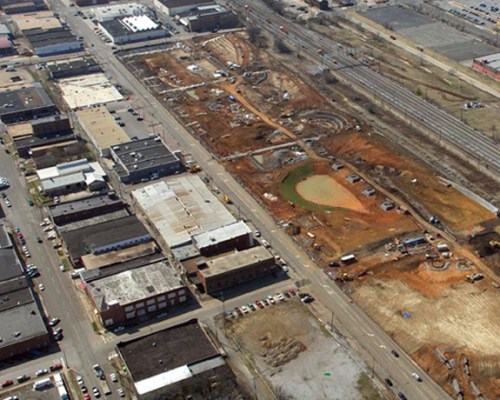
This neighborhood deserves a plan as good as the park itself

[Thanks to DPZ for the master plan of Trussville Springs, and the Providence rendering; and to Tom Leader Studio for the aerial of Railroad Park.]

Chick-Fil-A Denied

The Design Review Committee voted unanimously this morning to deny Chick-Fil-A’s request to place a new restaurant and drive-through at the corner of 20th Street and Highland Avenue South, in the heart of the Five Points South Historic District.

Delivering an impassioned speech about the duty to maintain “the vitality of the whole neighborhood”–and the incompatibility of drive-throughs in this pedestrian-friendly area–Committee member Cheryl Morgan eloquently laid out the reasoning behind the vote.

James Little, president of the Five Points South Merchant Group, spoke of residents’ and merchants’ approving a resolution against this and any other drive-through in the district. He mentioned that other chain outlets known for drive-throughs–Jim-n-Nick’s and Starbucks–are successfully operating in the area in historic urban storefronts with no drive-throughs.

Despite several Chick-Fil-A attorney presentations which revolved around property rights and the fact that zoning does allow drive-throughs in this part of town, in the end the Committee decided that the Downtown Master Plan, Five Points South Design Guidelines, and the Five Points South Commercial Revitalization plan trumped the generic zoning allowance.

With all those lawyers at their disposal, I would be surprised if this is the last we’ve heard from Chick-Fil-A. It’s a real pity they’d want to pursue something so opposed by their neighbors and this community at large.

Mike Calvert helps make the case for denial

One final note–Committee member Don Cosper brought up an aspect of this proposal that has been lost amidst all the talk about drive-throughs–the architectural compatibility of the building itself. The representatives of Chick-Fil-A were at a loss to defend what’s essentially a suburban-mall-out-parcel style building. Yes, they’d made some modifications (brick instead of stucco) in the hopes of helping their case. But thoughtful architecture that responds to its context? Far, far from it.

Stay tuned.

[Thanks to Victor Blackledge, with Planning, Engineering, and Permits, for allowing me to photograph the public proceedings of this Committee]

UPDATE:

Real estate sources have confirmed that Panera Bread is the second choice tenant of the property owners, and is poised to present a plan for a new restaurant in this location without a drive-through (if the owners decide not to continue pursuing Chick-Fil-A). You can read the article in the News here.

Art of the Urbane

So THAT'S what we can do with the broken meters

Directly east of Space One Eleven Gallery, a new contemporary art gallery has opened downtown. It’s called Beta Pictoris and it’s the brainchild of Guido Maus (you can view the gallery website here). The shot above shows the storefront on the 2400 block of Second Avenue North.

Guido moved to Birmingham 5-1/2 years ago from New York City (he is Belgian). He ran furniture galleries in Tribeca before his wife, an expert in antique furniture restoration, was lured to Birmingham to help the Museum of Art with their collection. After a furniture venture here, Guido decided to follow one of his dreams and open up a fine art gallery, showing both local and national artists. His first show exhibited both Birmingham and New York artists, and according to Guido, “visitors couldn’t tell the difference.” He is interested in upending this notion of “local” vs. “national” art, to establish dialogs through visual art.

Dressed to kill

This interest in dialog is why his current show is so spot on. Entitled “Dazzling”, it exhibits photography by local artist Sonja Rieger (the example here is “Kitti Smoking” and the image is courtesy Sonja Rieger and beta pictoris gallery). Sonja photographed drag queens while they were gathered at a large, African-American drag event in Birmingham’s west side. Close to 500 people turned out for the opening night of this show, and, according to Guido, provocative discussion was everywhere.

“Art should provoke discussion, not just look pleasing.”–Guido Maus

Guido feels there is a vibrant art scene in Birmingham, but no vibrant art market. This is why so many galleries are forced to sell art that “looks pretty” and is acceptable to interior decorators–and that’s fine; there’s a place for that. But Guido feels there’s also room to support other artists who are stretching the boundaries beyond what is just pretty, towards what is provocative.

I have long felt that urban areas must have artists and art in order to be truly vibrant. This city could do a much better job of offering incentives for artists to relocate here, for galleries to open and flourish, for public art programs. In the meantime, kudos to Guido for sticking with the Magic City and choosing to take a risk that a provocative, intellectual approach to art can work here. His small gallery is just a start; he’d like to open a much larger space suitable for large exhibitions, artists-in-residence, etc. Mark your calendars for his next opening Friday May 28!

Passionate about the power of art

Finally, a brief note about the pic at the top of the post: Space One Eleven, the neighboring gallery, has put together a great piece of urban “public” art, utilizing street trees, storefront windows, and yes, broken parking meters. I’m only half-joking when I suggest we may have finally found a solution to repairing the vast number of broken meters across this city!

Design Review Alert

Design Review Committee will meet Wednesday morning (May 12) at 7:30 AM on the Third Floor of the Center for Regional Planning and Design, 1731 First Avenue North. Thus far there are only 2 items on the agenda (more may be added by Wednesday:

1. Street Banners for Woodlawn;

2. Chick-Fil-A project for Five Points South.

Magic City Manifesto posted an interesting piece this morning about Councilor Austin being upset about several concrete benches being removed to make way for expanded outdoor seating for Cafe Dupont on downtown’s 20th street. Personally, I would rather have vibrant storefronts with lots of outdoor seating–as opposed to empty storefronts and lots of benches. Especially sad, tired old benches. You can view the Birmingham News piece here.

Great architecture and trees; not so great 1970's sidewalks, street furniture, benches

If Councilor Austin were really concerned about 20th Street, he would be working on a long-range complete renovation of the dated, 1970’s -era plantings and street furnishings, which lend a worn-out air to the whole street.  These benches are hardly “historic” or “art” as he states.

Finally, please check out the new Facebook protest site for anyone interested in stopping Walgreen’s from destroying the gorgeous, historic Fire Station No. 22 on Clairmont Avenue. The City Council should vote tomorrow on the sale. City Councilors, please heed the wishes of concerned citizens and don’t sell this historic landmark for $200,000 to Walgreen’s!

(thanks to pjchmiel for the pic)

Fire Station No. 22–What’s Next?

It’s time to get up and do something.  Explaining and garnering interest is one thing; sometimes the hard part is corralling all this interest into a cogent plan for moving forward.  Many readers have asked “what can I do?” to help prevent the lovely Fire Station No. 22 (and its neighbor Bogue’s Restaurant) from being demolished and redeveloped into a Walgreen’s drugstore and parking lot–and drive-through. While I don’t have all the answers, here are some suggestions:

1. Media pressure. Set up a facebook page, write letters to the editor, get local TV and print coverage: then the City would feel the heat.

2. Petition the City with a long list of citizens great and small, opposed to this particular development.

3. Propose an alternative use for the site that preserves, rather than demolishes.

4. Call Jonathan Austin (City Councilor for that district) and express your opinion. And call Valerie Abbott (City Councilor for the district directly across the street) and express same.

5. Grow the cause — make up some cheap posters/yard  signs that could direct people to the facebook page for more info (for personal yards and maybe even at the Firehouse itself : SAVE ME!)

6.  Show up at the next Design Review (I will confirm in a later post when this is) — with things to say, ready to address the committee, and talk to the media there.

I am hardly a community organizer — if there is an individual out there (this could be you!!) who has the time to spearhead this effort — I am all ears and all the folks who have gotten up in arms about this would be SO grateful.

All of the above could be basically applied to the Chick-Fil-A situation in Five Points as well.

Take change into your hands folks, and let’s get something done in a positive way for this City!

Anticipation (on a positive note)

Nature comes into the city

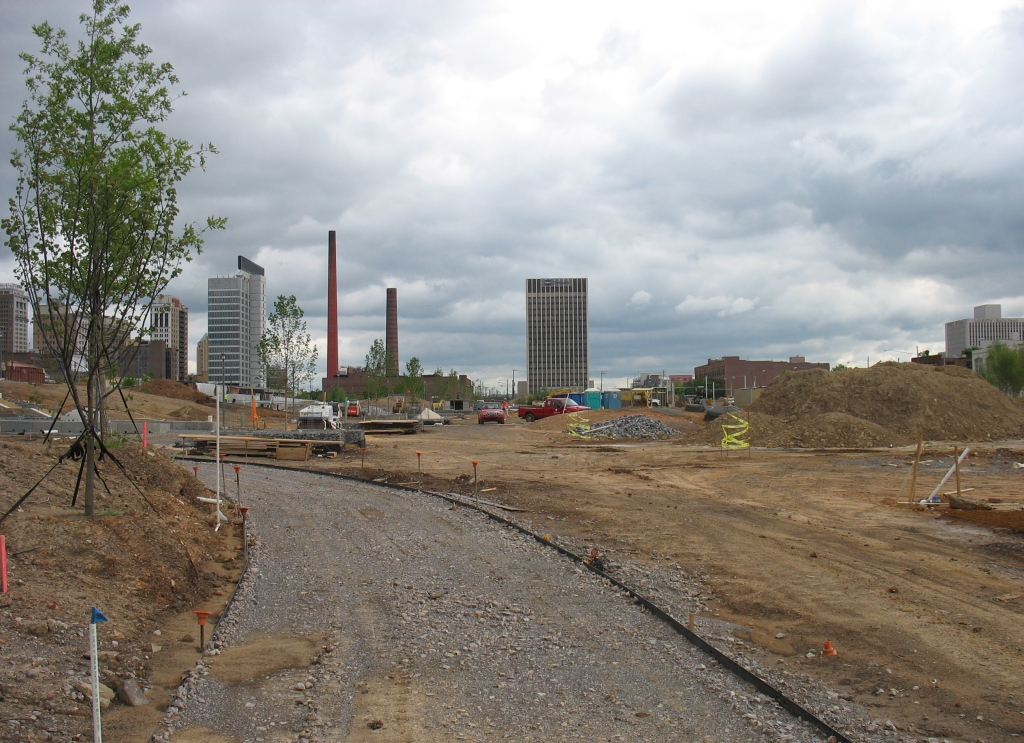
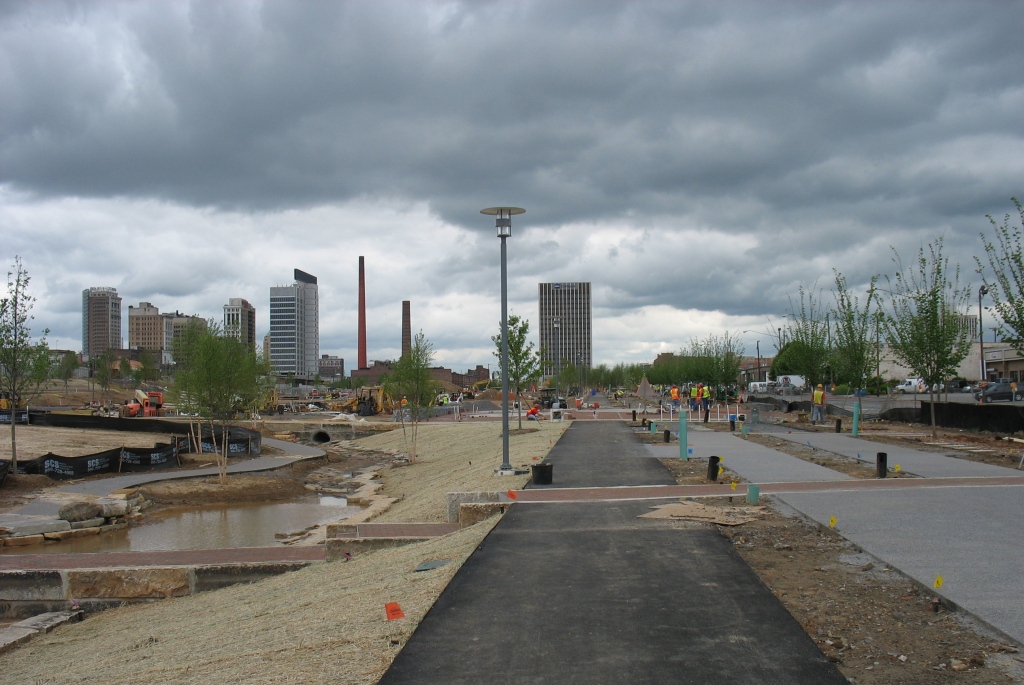
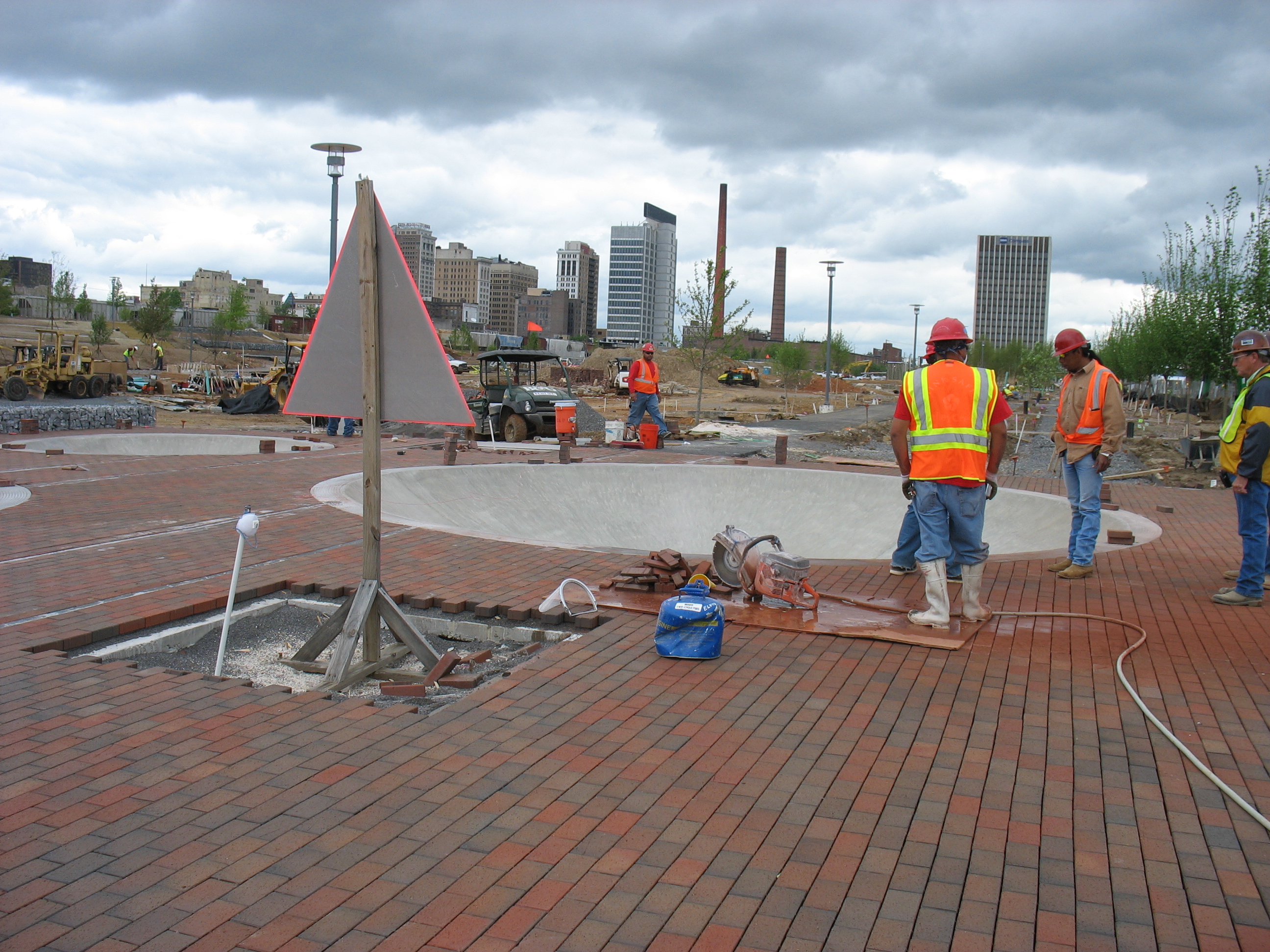
On a cool, cloudy Monday, Katherine Billmeier of the Railroad Park Foundation gave me a tour of the soon-to-be-completed park (Katherine says July). As many times as I’ve seen the plans, and biked past the park to view progress from the street, entering the park itself was an entirely different experience. It felt bigger than I had thought, and more diverse. The details, whether salvaged cobbles and train tracks from the site transformed into paths and ledges, or the light standards and bridges—it all felt first class. It’s all too rare in this city to see a major public project done right. This feels like that sort of project.

The quality shows

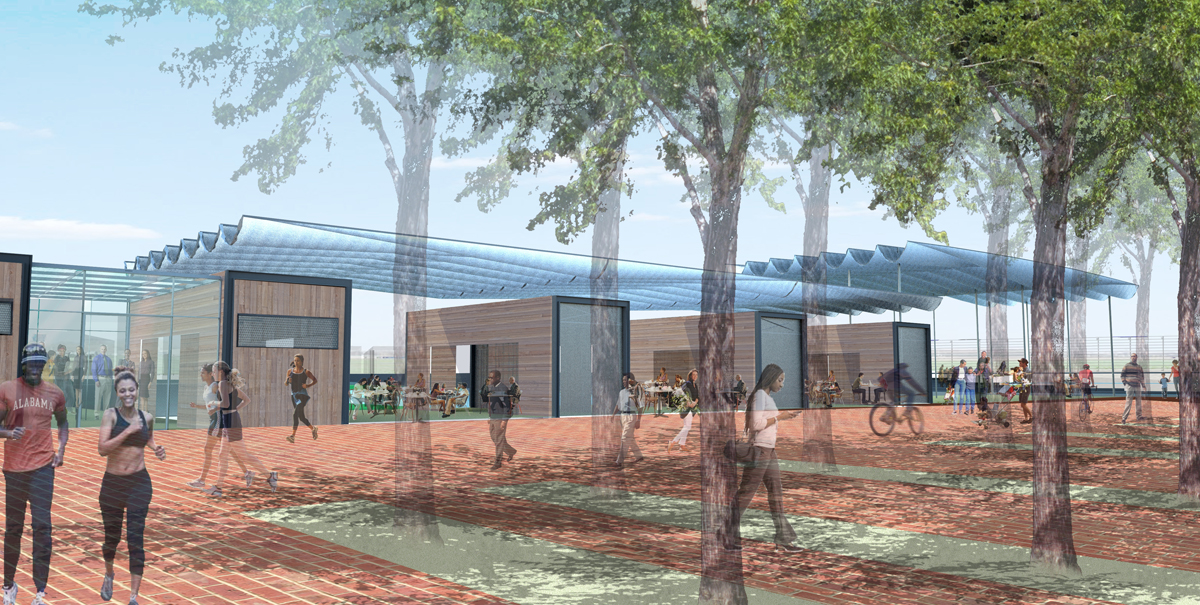
Katherine explained the concessions service: it will be contracted out (they don’t know to whom yet); it will be “upscale” sandwiches and snacks, but at an affordable price point so students can comfortably eat here. There will also be beer and wine on sale–the very idea seems so New Orleans and so not Birmingham, it seems too good to be true. The concessions and other amenities will be housed in boxy pavillions designed to recall old-fashioned box cars, as seen in the below rendering:

Superior design

One item that may interest readers: a small area is being designed for skate boarding (you can read our earlier post on this subject here). I was told that not only this area, but any paved area of the park would be open to skaters–as long as they share the space responsibly. Peter Karvonen, our friend at Faith Skate Supply, is cautiously optimistic that the park’s embrace of skaters will endure. He also realizes that it will be up to the skaters to coexist peacefully with joggers, pick-nickers, walkers, bikers, and all the others we hope use this park. We really think that this mini-skate area could demonstrate to area leaders that a full-size skate park is vital to this metro area.

Preparing for skaters

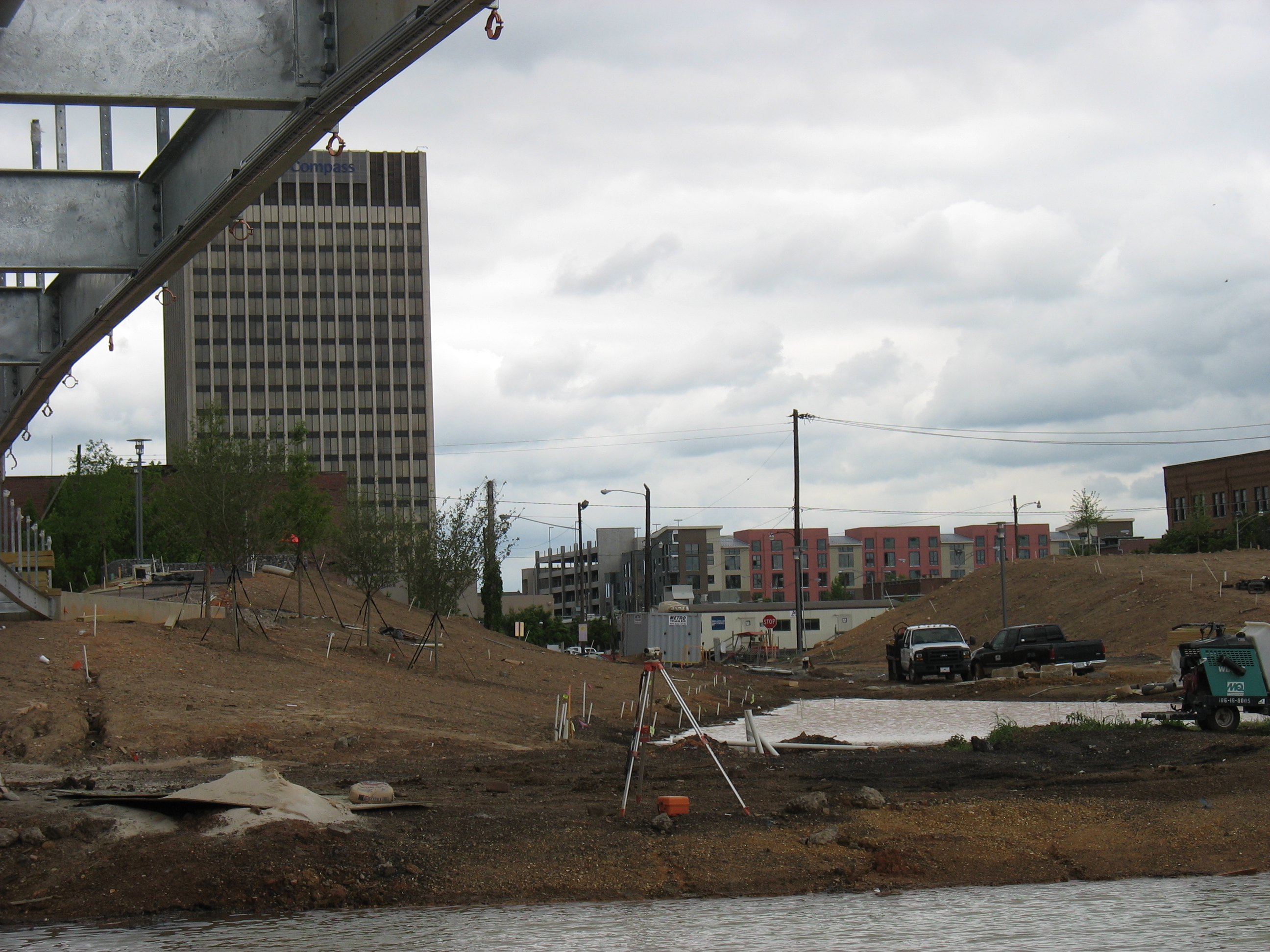
Finally, this last shot I think starts to capture how this new public space can transform how we see the City: we are all familiar with the Daniel Building, and some of us with Cityville housing whose construction is finishing in the next months. Both are a couple blocks away from the park, but just seeing an office building and apartments glimpsed from across undulating hills and trees helps us imagine the new projects that could line the park. There is really no other place in Birmingham that has this sort of potential private-public synergy. This could be the big win we all really need right now.

Seeing the city in a whole new way

PS–Katherine is already looking ahead, beyond the park just connecting UAB to the northside; it will also connect with new bike trails and green space from Sloss to I-65, and from there on to the new Red Mountain Park and beyond. Now that’s thinking big, and then thinking even bigger. After the recent gut-punches of Chick-Fil-A and Walgreens, I hope this post let’s us all hang in there and realize we do have some things to be proud of here. Keep it coming!

4-Alarm Shock

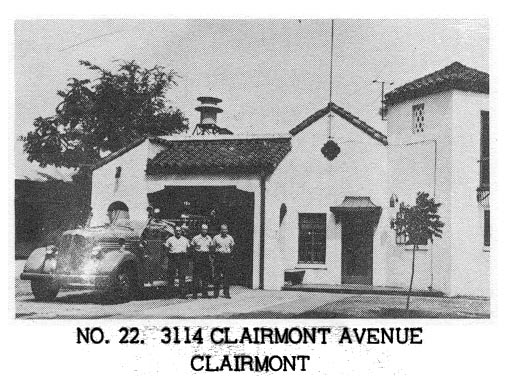
An architectural gem

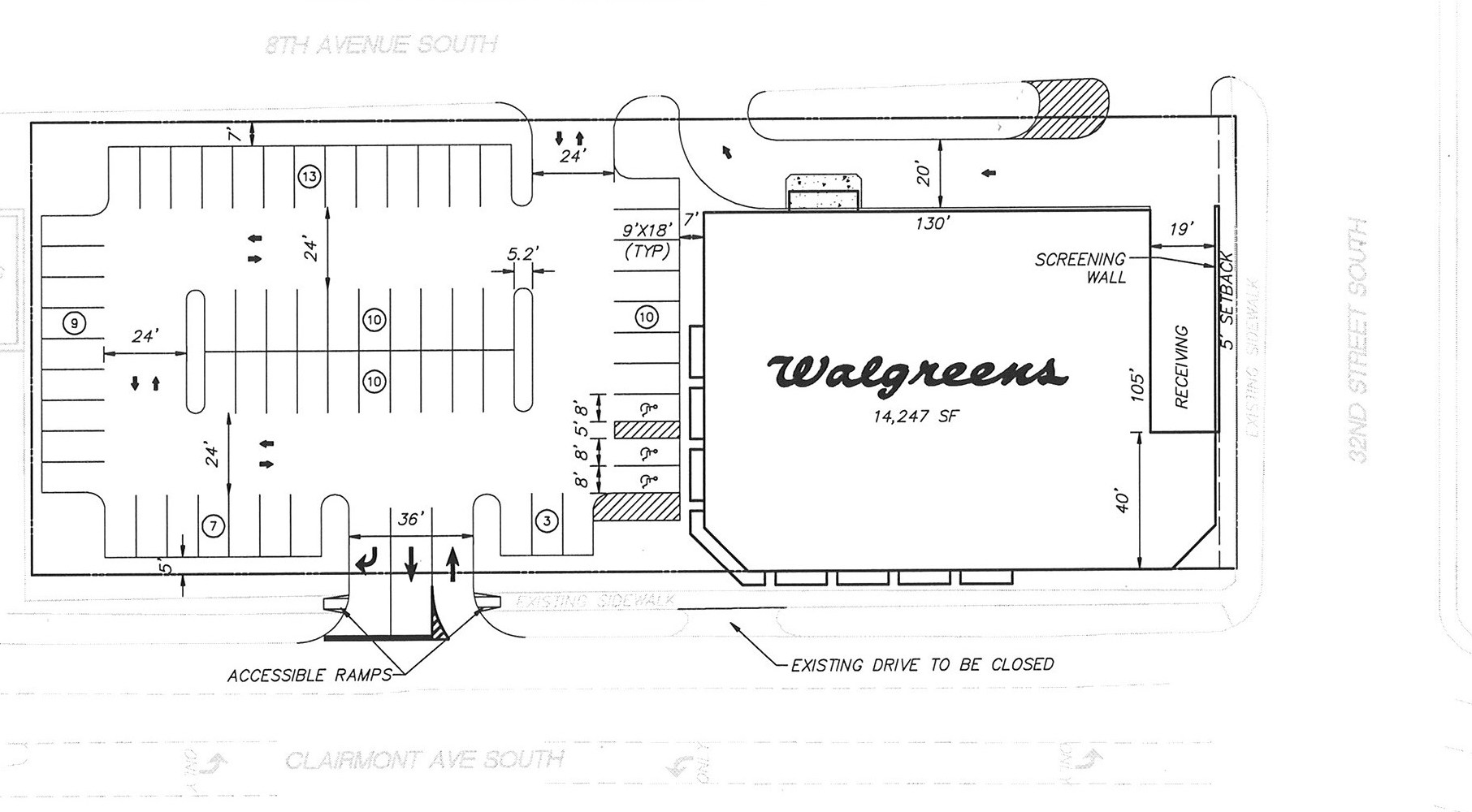
Just when we had our hands full with a proposed drive-through Chick-Fil-A in Five Points, along comes this punch in the jaw at Design Review this morning: the historic Fire Station No. 22, recently vacated, is on the table for demolition. It would be replaced with a Walgreen’s drugstore and parking lot. And a drive-through. On yet another important, gateway corner (Clairmont Avenue and 32nd Street).

Except this time the owner isn’t proposing tearing down a Ruby Tuesday’s built in the 1990s, but a wonderful Spanish-style fire station built in the 1920s. And the owner just happens to be the City of Birmingham, which is perhaps the most shocking part of this. Hasn’t this City learned enough about tearing down historic structures and what that does to a neighborhood fabric? And to a sense of place?

A dismal idea

To their credit, the Design Review Committee refused to approve this conceptual site plan, and insisted Walgreen’s return with exterior elevations suitable for an urban environment, including pedestrian-friendly storefront and sidewalk entries (no exteriors were presented today). Alison Glascock, Highland Park neighborhood president, stood to commend the Committee for its stance.

City of Birmingham–you need to be actively seeking creative redevelopment of the historic fire station, not tearing down another piece of our history to replace with banal, suburban-style architecture! And if you need an architect to help figure that out, I know where to find one.

(thanks to Birmingham Firefighters Local 117 for the historic photo, and to LAI engineering for the Walgreen’s plan)

UPDATE: INSPIRATIONS

Not that there is one right way to go here, but I feel strongly about the historic structure and the accessible nature of its scale.  Just a few pieces of eye candy to get the creative juices flowing here:

Let’s think outdoor seating — bridging Lakeview and Forest Park:

stopping in for pizza...

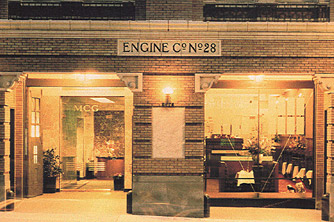
Love this restaurant concept in an old fire house in LA:

Firehouse themed restaurant!

And this is just for fun but to live in a firehouse!!

note the fire pole hole!

(thanks to Engine Co. No. 28, insidetheperimeter, and designpublic for the above images)

UPDATE #2: BOGUE”S RESTAURANT TO BE DEMOLISHED UNDER THIS PLAN

The Walgreen’s plan would not just take out the neighboring service station, but also Bogue’s Restaurant, an historic fixture on Birmingham’s Southside for many decades.

The end of an era?

Dine Out for Life!

Tempted?

Next Thursday April 29, Birmingham joins major cities across the US for a really cool event–Dining Out for Life, where participating local restaurants donate at least 25% of your lunch or dinner bill to AIDS related charities, in our case AIDS Alabama, a fantastic non-profit at the forefront of combatting AIDS in Alabama. Please consider having lunch or dinner (or both) that day at one of the participating eateries around town! It’s an easy and fun way to help a very important cause.

[thanks to ralph and jenny for the pic of the cheesecake pancakes at Avo, one of the many local restaurants participating!)