Category Archives: Uncategorized

Design Review Agenda

After some confusion, I got a confirmation with the agenda: the date for the next Design Review Committee meeting is indeed April 28 (scroll down a couple posts for more info). The agenda:

1. renovations to a house in Highland Park;

2. the new Performing Arts Center at Alabama School of Fine Arts;

3. a new residence in Redmont;

4. A restoration of an historic sign at the Lyric Theatre.

As of today, that’s the entire agenda–much shorter than usual. I am learning more about the Chick-Fil-A situation daily, and will post on that issue when I have more info, and/or when it again appears on a Design Review agenda. Stay tuned!

Playdate at the Highway?

Play all Day

What if….sad forgotten corners next to our interstates were transformed for play!  All day!  I get tired of all of our parks being the same old, tired metal structures.  Variety I say! Israel gets all the fun…

link to full article here

Design Review Alert (Correction)

This is to alert everyone that the next meeting of the Design Review Committee will be Wednesday April 28 at 7:30 AM, 3rd Floor Young and Vann Building, 1731 First Avenue North. I expect both the Chick-Fil-A proposal and the new Performing Arts center for Alabama School of the Fine Arts to be on the agenda, but will confirm this as soon as I get the final agenda. The public is always welcomed to this meeting to express comments and opinions. I’ll be there!

Chick-Fil-A: Meet Frank Stitt

An impassioned defense of an urban neighborhood

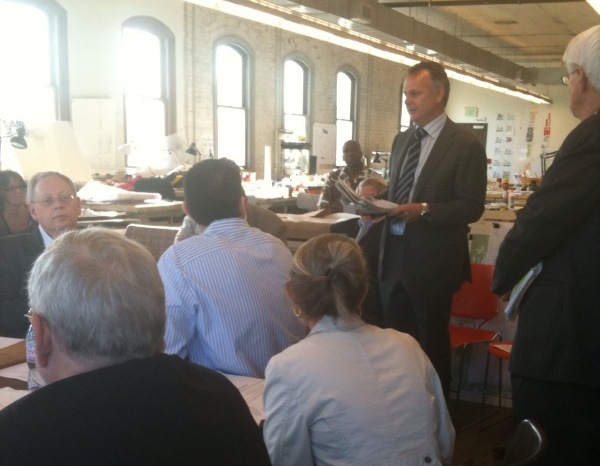
What happens when you put Poulet Rouge on the same platter next to Chick-n-Strips? Well, we learned the answer this past Wednesday when Frank Stitt, chef/owner of Highlands Bar and Grill, Chez FonFon, and Bottega Restaurant and Cafe, spoke eloquently against a proposed redevelopment of the corner of Highland Avenue and 20th Street into a drive-through Chick-Fil-A Restaurant (he’s pictured above addressing the City’s Design Review Committee). His reasoning (echoed by other merchants present as well as the president of the Five Points Merchants’ Group): 1. The alley which accesses the drive-through queue is an active alley used for deliveries for his restaurants; 2.  Car traffic will increase, possibly dangerously, at an already busy intersection; 3. The fumes of idling cars and the noise from the “squawk box” will affect not only his diners at the patio across the alley but the elderly lady who lives in one of the last remaining Victorian mansions on Highland Avenue next door; and 4. A drive-through is incompatible to an historic, vibrantly pedestrian neighborhood. Of course Number 4 is the most important reason for everyone to be concerned about this sort of proposal, regardless of whether you plan to dig into Moules-Frites across the alley or not.

I’d like to set the record straight here. Over on the al.com blog there’s been a lively discussion about Frank Stitt and his opposition to the development (you can see it here). First, Frank was only the most famous of other merchants and neighbors who all stood to speak against the idea of a drive-through. Second, Jim Little, who heads the Five Points South Merchants Group, also stood to express his organization’s disapproval. Third, I’ve spoken personally with Frank Stitt and he is clear: he, and his fellow merchants and neighbors, are not opposing Chick-Fil-A. They are opposing a drive-through.

The argument is not about haute cuisine vs. the mass market

This in fact is a rather populist protest against an Atlanta-based corporation wanting to impose a suburban design on a neighborhood that’s one of the most urban we have. So charges of elitism/arrogance, in my opinion, are best directed at the corporation–not at the neighborhood.

The argument is about preserving urban character against a suburban-style assault

Now let me try to briefly explain the options available to resolve the situation. This property is located in an official Commercial Revitalization District, as well as in an Historic District listed on the National Register. Any proposed alteration or change to property in such districts must come before the Design Review Committee. The DRC, however, must abide by City zoning law in making its approvals. In Birmingham’s zoning code, drive-through facilities are allowed in all commercial areas without restriction. Therefore, the DRC, while its members appeared unanimous in their opposition to a drive-through, cannot in the end stop it. They have to follow the current zoning rules.

What could be done to help this situation? Three things come to mind:

1. The City amends its zoning code (as other cities have done recently) to restrict new drive-through facilities in certain areas (grandfathering extant facilities).

2 The City adopts a Form-Based Code. Such a code provides regulations beyond the normal zoning code, to help better shape development especially in key areas of a city. Part of this new code could restrict drive-throughs in certain areas. (The town of Seaside, Fl. was the first example of a modern form-based code. See this interesting illustration of  form-based code principles here, from the new code adopted recently in Miami).

3. The City creates a Redevelopment Authority. Such an authority typically has the ability to develop urban design plans, acquire and/or promote key properties for redevelopment in accordance with the plans, and act as the developer in certain instances, sometimes in conjunction with private investors or developers.

4. The Five Points Historic District organizing papers are amended to specifically prevent drive-throughs within the district.

Based on discussions I have had with people familiar with the above options, our City lacks the political will to implement either a Form-Based Code, a zoning change, or a Redevelopment Authority (in part due to opposition from local developers who imagine such changes would be bad for business). Such lack of political will, matched with opposition from the development community, keeps our city from progressing like other cities which have one or more of those tools at their disposal.

And in the meantime, drive-through or not, a very prominent corner in the heart of a diverse, pedestrian-friendly district is getting a free-standing, suburban-style building surrounded by a sea of parking. As Cheryl Morgan of Auburn’s Urban Studio put it, “parking spaces don’t produce revenue.” The neighborhood, visitors, and the City would be much better served if a higher and better use were contemplated for this site, one that included multiple tenants opening directly on the sidewalks, with limited parking in the rear. This is one rare part of town where people get out of their car and walk, as Frank Stitt pointed out. Here’s hoping Chick-Fil-A will listen hard to this community and reconsider this plan.

Let's keep it urban!

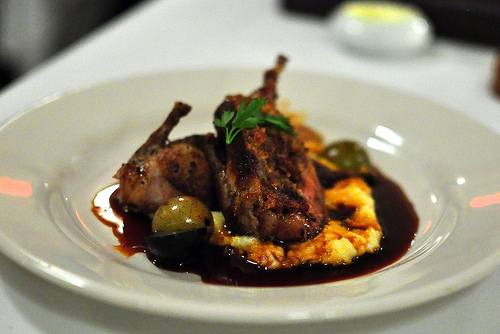
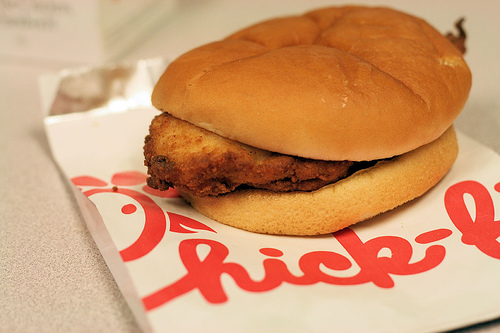
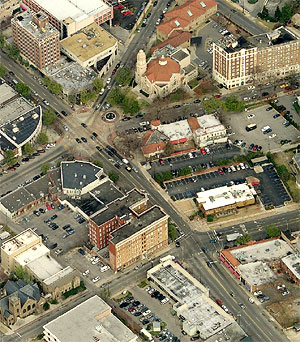
[thanks to cathydanh for the Highlands dinner plate,  jreed for the Chick-Fil-A sandwich, and Five Points South Merchant’s Group for the overhead view of the site and surroundings]

Design Review Alert

For those who are interested and able, the City’s Design Review Committee meets tomorrow (Wednesday April 14) at 7:30 AM at the Third Floor of the Center for Regional Planning and Design, 1731 First Avenue North.

On the agenda are the Five Points South Chick-Fil-A site plan, addition to the School of the Fine Arts, and other, mainly smaller items. These meetings are nominally open to the public, although there is not really any time allotted for public comment. And, the Committee is bound to follow City regulations: if a drive-through is allowed, as much as the Committee, the public, or anyone else may disagree–until the City changes this regulation, the DRC is relatively impotent to stop it (they can delay if they have reason to believe the regulation is ambiguous, etc).

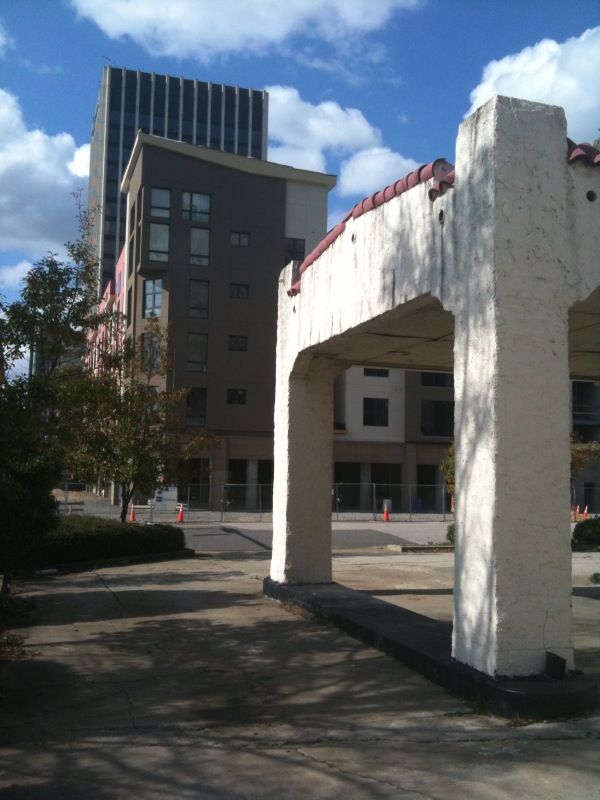
It’s an imperfect setting, but a allows a small window into some of the things being proposed around the city proper. I will plan on being there myself and will report back on anything interesting that transpires. Until then, I’ll leave you with a snapshot I took the other day showing the Cityville Block 121 apartments well underway on 20th Street South across Second Avenue South, where an old, Spanish-style stucco former service station still stands.

Old greeting the new

Fire Station No. 4

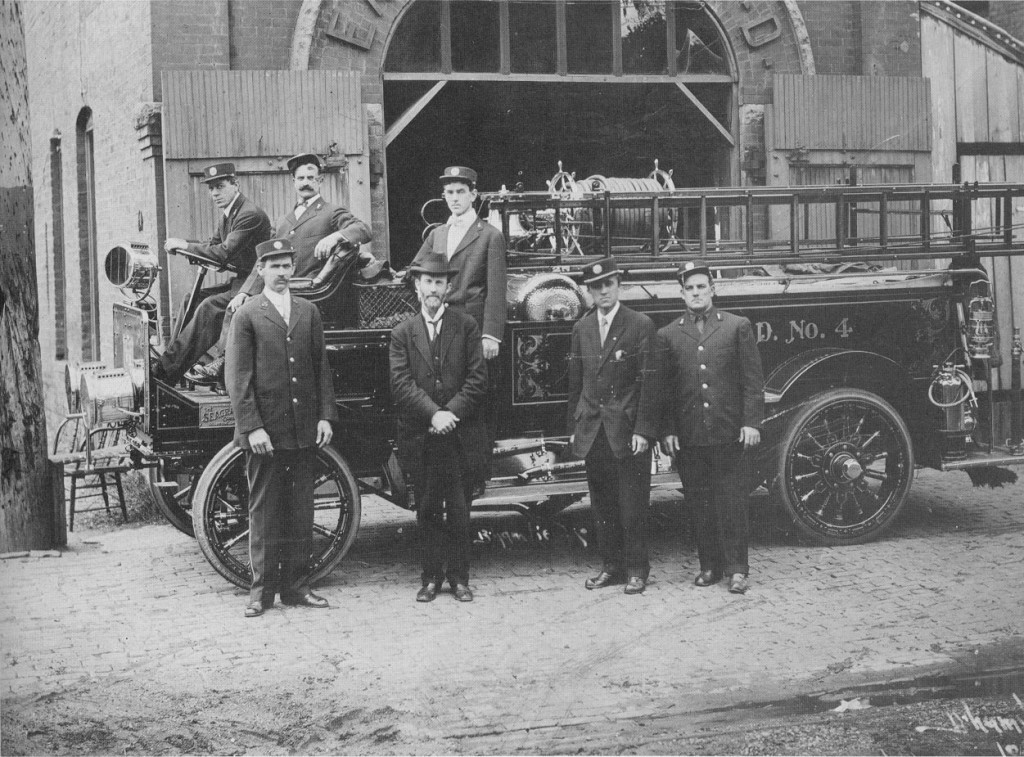
Manning the engine for No. 4

Just a couple months before Birmingham was incorporated in December of 1871, Chicago experienced one of the worst fires in US history. Fire departments were created and modernized all over the country as a result, and the new city of Birmingham was no exception. As the city grew, numerous new fire stations were built to serve the expanding population and geography.

Last days as a station

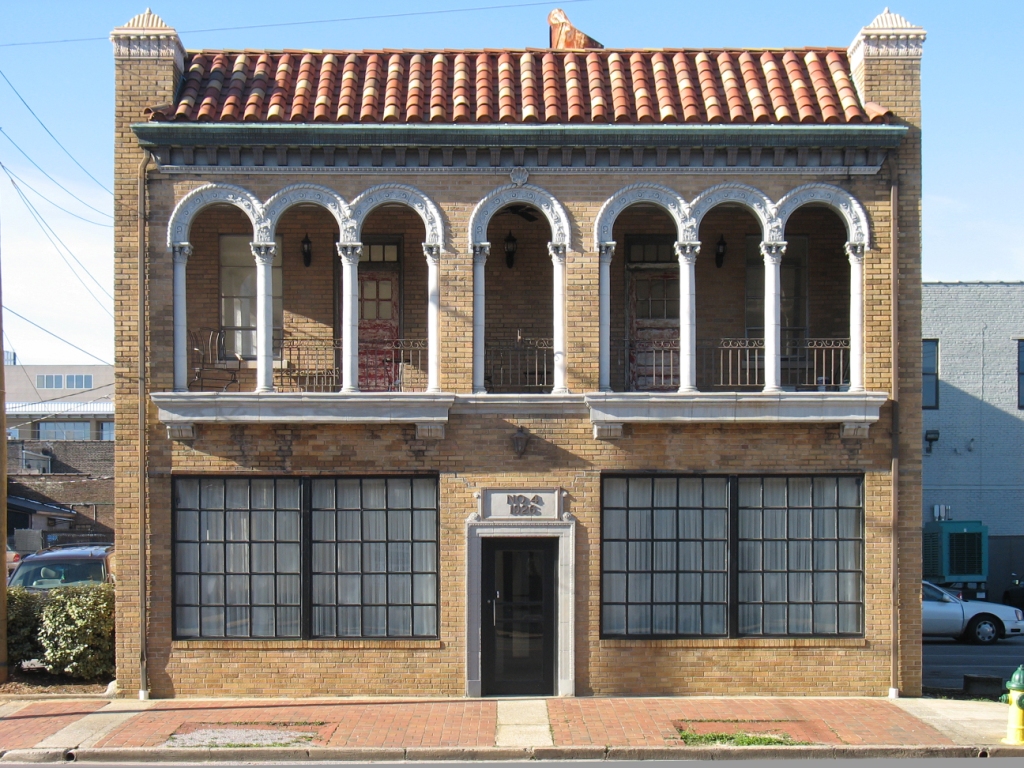
Fire Station No.4 (seen here in 2 historic photos courtesy of Birmingham Firefighters Local 117; click on their link to visit a fascinating site) is located right up 24th Street behind my office, between 2nd and 3rd Avenues North. The older photo with the engine shows the original station designed to serve the “East End” of Birmingham; the newer and current version, pictured in 1976, was built in 1926 and decommissioned around 1980. Renovated as architectural offices in the early 1980’s, it was recently sold and the new owner, Sheppard-Harris and Associates, has moved a small accounting firm into the building.

The exciting news is that Connie Harris, principal of the firm, is committed to a thorough exterior renovation. We have designed this renovation, and it should be starting any day now. The brick will be cleaned; the 1960’s replacement windows will come out and new, double-hung windows will come in; all trim will be repainted; an illuminated projecting sign will be hung; and doors will be refinished. Oh, and bright red awnings will hang over the front windows, to recall the bright red engines that used to be visible inside.

Current facade in need of some TLC

Now, the even better news: Connie only needs a small portion of the space for her company. She is open to renovating the rest of the interior into…retail? Apartments? More office space? The sky’s the limit, as long as it makes sense. As part of that Phase 2 renovation, we’d love to take out the front windows and replace them with overhead doors reminiscent of the original Fire House doors–do I see a sidewalk cafe, or a garden shop, or a sculpture gallery? Perhaps.

By the way, those are actually window boxes under the gorgeous arches, and my friend Randy McDaniel, landscape architect, is selecting some new plants.

I will post some “after” pics now that we’ve all seen the “before.” One last note–fire stations have traditionally been focal points of civic pride. There’s a reason Birmingham spent the money on Station No. 4 with its Italian Renaissance detailing and classic proportions. Unfortunately, that same sense of civic pride is missing in many recent public buildings, and fire stations are no exception. One of the most baffling buildings erected recently here is Fire Station No. 10/22 in Avondale (on Fifth Avenue South) that, despite its location in an old neighborhood filled with great architecture, is a very, very bad suburban-ranch-style mess. Hopefully the renovation of No. 4 will take a little of the sting out of the affront over at No. 10/22.

Affront in Avondale

In the meantime, here’s hoping the firemen in all our stations have quiet days playing cards and saving cats from trees!

It takes a village

A pioneering twist on the past

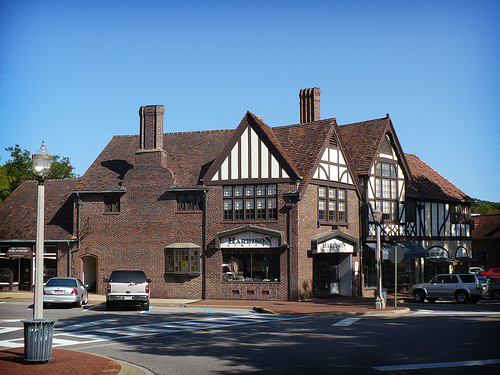
Today we’re travelling over the mountain to one of the metro’s most interesting assets: Mountain Brook Village. Designed in 1929 to complement the new Mountain Brook Estates residential section, it was (like the rest of the new neighborhood) modeled after traditional English architecture and landscape, to convey an aura of timeless, old-moneyed, leisure-class privilege. Of course, such design is also just plain pretty to look at. Unfortunately, the Depression killed most of the planned development both residentially and commercially, and the Village we know today is part 1920’s English Tudor, part 1940’s commercial storefronts, part 1950’s shopping center, and part neo-Tudor from the 1980’s and beyond (thanks to Dystopos for the pic above of one of the original buildings).

The Village has had its ups and downs (I highly recommend the Birmingham Historical Society‘s recent publication Mountain Brook Then & Now for learning more). When Bromberg’s jeweler became the first major downtown retailer to open a suburban branch in 1959, they chose the Village. This opened the floodgates, and soon the Village was home to branches of numerous downtown retailers, along with neighborhood shops. However, this trend soon turned against the Village, as new shopping malls were built; Brookwood Mall, less than a mile away, poached many stores. In recent years, despite some success stories,  the Village continues to not live up to its potential and is struggling with some empty storefronts and under-producing spaces.
Controversial expansion

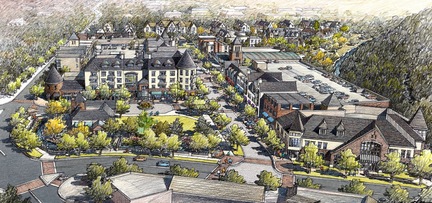
Enter the proposal for Lane Parke, a preliminary rendering of which is shown here (courtesy Birmingham News). The developer originally built the Mountain Brook Shopping Center in the 1950s, as well as the Park Lane Apartments. Considered part of the Village, these properties lie a block from the historic core. Under the proposal these are replaced with a new, pedestrian-oriented mixed-use development with housing, shops, boutique hotel, parking garage, and retail.

Just as cities must be open to new ideas (and newcomers) in order to survive, so do commercial centers like the Village. Mountain Brook Village is filled with charm–why not take the architecturally undistinguished post-war apartments and shopping center, and extend the charm into a vibrant new development that’s dense, friendlier to pedestrians, and helps create the type of “buzz” that would attract retailers, restaurants, and residents to enliven the streets at night?
Modern was fine in 1955

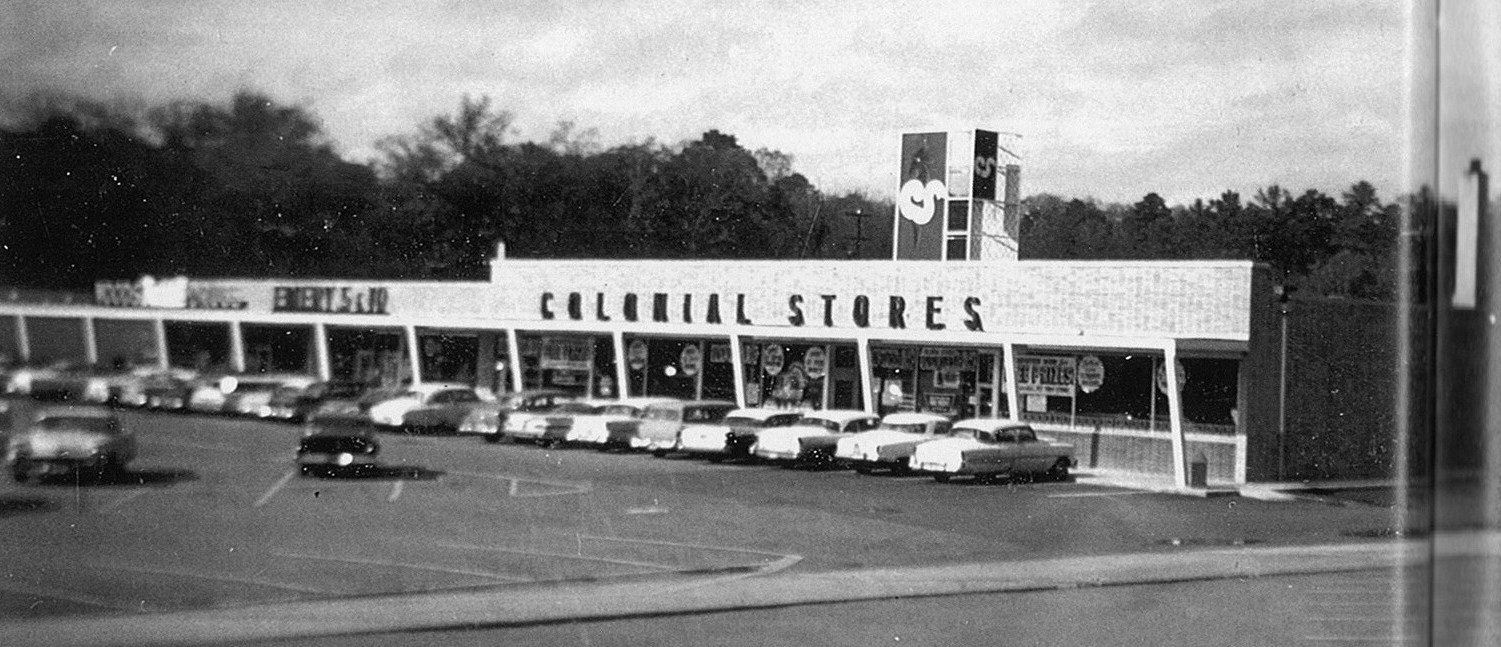
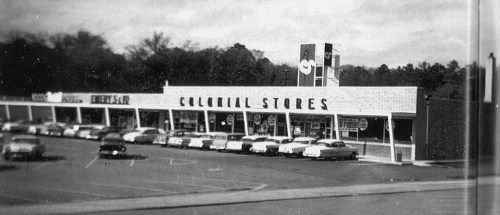
The black and white shot here illustrates the original shopping center in 1955 (courtesy Birmingham Historical Society), which has since suffered a dismal renovation. The auto-oriented strip mall would be replaced with multi-story buildings in a “traditional” style of architecture, with streets, sidewalks, and hidden parking garages.

The development plan has spurred a lot of local protest, and the zoning change necessary to implement the plan has been put on hold while the designers retool their plan.  A lot of the opposition comes from residents who do not want the Village to either expand or change in character. A group called Friends of  Mountain Brook Village has helped mobilize the protest. In essence, the group argues that the Village is indeed in need of rejuvenation, but the proposed development is too big, too tall, too dense, and too out-of-keeping with the existing historic Village.

In my view, there must be a compromise. Not only does Mountain Brook need new tax revenue and new energy in the village, but the strip mall–and Lane Park apartments behind it–offer very little to the Village in terms of ambience, architectural beauty, or attraction to retailers. They should be redeveloped. And a mix of residences, hotel, and shops–if done properly–could be a natural extension to the original plan for the Village. This extension could in turn breathe new life into the older core of the Village. Looking at downtown Homewood, another older suburban center a few minutes’ bike-ride from the Village,  SoHo Square serves as an interesting precedent. Unlike the Village, downtown Homewood is not known for landmark historic structures, but the new, mixed-use development of city hall, condos, retail, and restaurants is still a huge change to the urban fabric. Its scale (especially City Hall and its plaza) often seems a little arbitrary; its retail mix has been, well, a mixed bag; its design intent hurt by downgraded materials and details. On the other hand, its creation has made downtown Homewood a destination in a way it never was, and the original core seems to have thrived adjacent to the new development. This example shows us the positive side of this type of development, while also showing there’s room for improvement. And room for very thoughtful planning.
Mixed-use in Dallas is OK

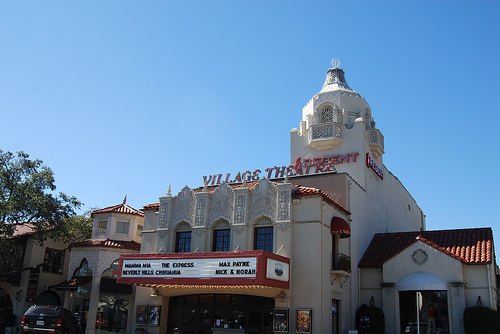
The Village was one of the nation’s first planned suburban shopping districts–similar to Highland Park Village in Dallas, built at the same time (and unlike Mountain Brook, completely finished out, Depression not withstanding).  Rather than English Tudor, it’s designed in a Spanish Revival style. It has a lively mix of shops, restaurants, local and national boutiques, and a movie theater. It is incredibly successful, demanding rental rates higher than just about anywhere in North Texas. Two advantages: 1. it was completely built out to begin with, so no strip malls were shoehorned in the 1950’s, and 2. it is owned and managed by a single entity (similar to a shopping mall), which allows for coordinated marketing, retail strategies, etc. etc. (thanks to Ray Rafidi for the picture of the beautiful Highland Park Village Theatre).

This city–and I mean metro Birmingham–is excellent at opposing things. It’s much worse at promoting good plans and implementing them. I have no doubt that, done right, an extension to Mountain Brook Village could be a plus for all involved. A parking lot, strip mall, and undistinguished low-density apartments are worth re-visioning. Yes, the developers should be sensitive to the historic core, traffic, and architectural integrity. We don’t want some generic district that could be anywhere. But don’t oppose progress just for the sake of opposing it either–because in the end, even a village dies if it doesn’t adapt itself to change.

One last thought–lurking beneath the surface of any discussion of the new development is the fantasy that, if we extend the Village, we should extend it in the original English Tudor style. Unfortunately the cost of replicating the details that craftsmen assembled in the 1920’s would be astronomical on such a scale, unless perhaps we lived in China. How do we design an extension that complements the original without replicating it? It’s always a tough question.

Discuss amongst yourselves. And then post your thoughts!

Staging a comeback

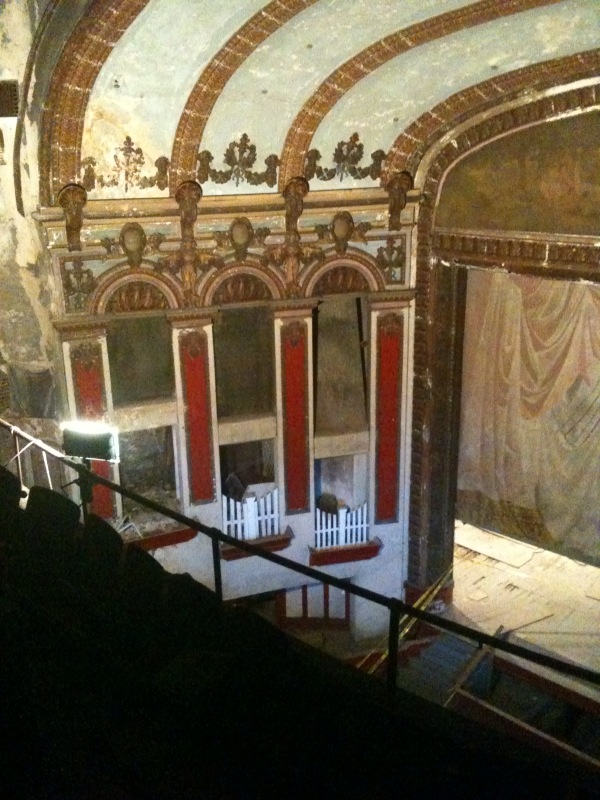
On a glorious spring post-Passover pre-Easter Friday, I’m thinking about the fantastic tour I had of the Lyric Theatre earlier this week. For those that don’t know, the Lyric is one of the few surviving Vaudeville theatres in the South, and one of only three intact historic theatres remaining in Birmingham (the Alabama and Carver being the other two). In order for us to have a real Theatre District, we must get this beautiful theatre renovated. Birmingham Landmarks, which owns and operates the Alabama, is getting ready to launch this renovation effort;  the community must get behind it.

Amazing historic architecture

I was also able to tour the office building connected to the theatre. Almost 100 years old, the 6-story building is amazing: original doors with glass transoms above, terrazzo floors, original wood moldings. It has been vacant for 30 years along with the theatre, and will hopefully be brought back to life as well.

Theatres are essential to any city’s cultural life. To me personally, the Lyric is the ideal size not just for special concerts and plays, but as a regular home for the symphony, the ballet, and the opera–all of which perform currently in less-than-ideal venues.

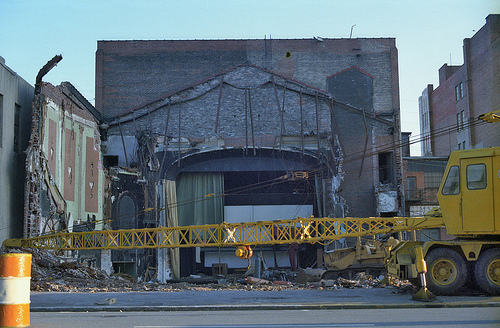
One thing is for sure: we don’t want the Lyric to end up like the many other historic theatres nearby that were demolished by the 1980s. As a sober reminder of this sad history, I present this shot below of the Ritz Theatre under demolition one block away on 2nd Avenue in 1982. Birmingham, this time let’s preserve a much-needed venue (the Alabama has to turn away hundreds of events a year and this would help).

Oh by the way, where the Ritz used to stand? It’s a parking lot now.

Incredibly sad.

The Sheltering Sky

Before there were shelters, there was excellent transit

Our opening photo takes us back to the late 1940s (courtesy Birmingham Public Library) where we see people queuing to board a streetcar on Third Avenue North downtown. While most of us are aware of the ghastly state of our city’s current transit system, today I’m focused on a smaller but important issue: bus shelters.

Where's the design in Birmingham?

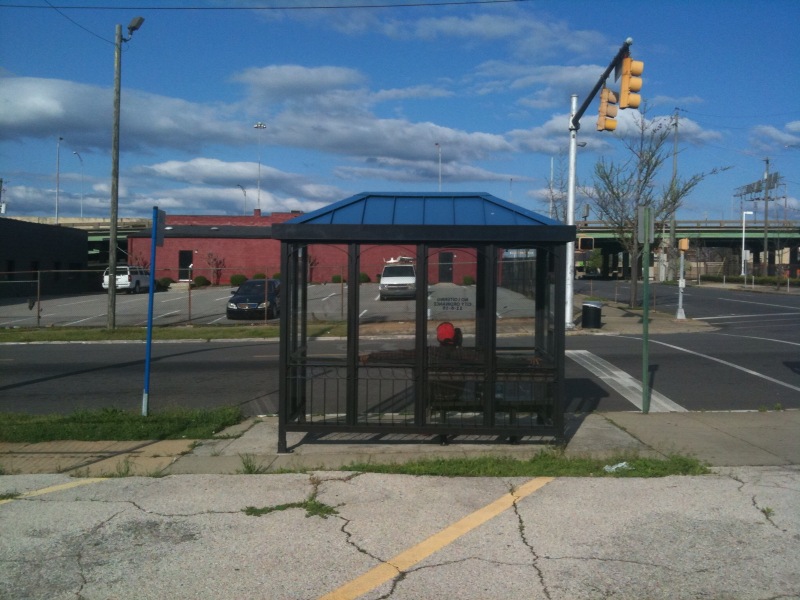
A relatively recent invention, the bus shelter has become an important piece of street furniture: a well-designed bus shelter can enhance the pedestrian’s (and transit-user’s) experience of the sidewalk and street environment. It can also convey the city’s attitude about urban design. Perhaps 8 years ago, the Birmingham Jefferson County Transit Authority (BJCTA) announced they were replacing old bus shelters across the city. There was talk about holding a competition among local designers for the new shelter. Instead, as illustrated here, what we got was something so banal and un-urban, it boggles the mind. And many, many dozens of these were constructed. The metal members form a claustrophobic, prison-like enclosure, with no panels for signage, advertising, or route information. All normally basics for a bus shelter.

Forward design in San Fran

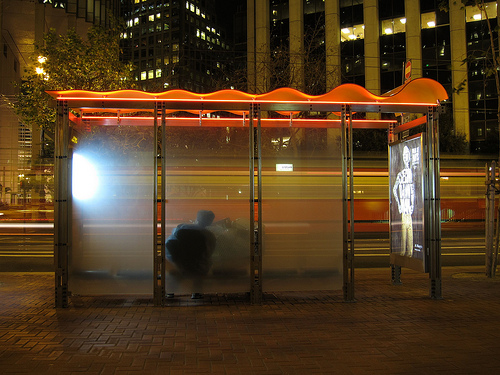
As a counter example, consider the new prototype shelters going up in San Francisco. Simple and elegant, one side contains space for advertisements (an important source of revenue for most transit systems) and the other side has info panels, maps, and in most cases updated electronic MUNI schedules. I love the design of these shelters–not only do they have red, translucent undulating tops (created out of recycled resin by 3-form), but there are solar panels embedded in these roofs that power the illumination of the shelter at night. Note also the large, graffiti-proof and shatter-proof resin panels at the rear, unencumbered by fussy, prison-like metal bars. It’s all very open, airy, and inviting.

Solar power at work

User-friendly and inviting in Chattanooga

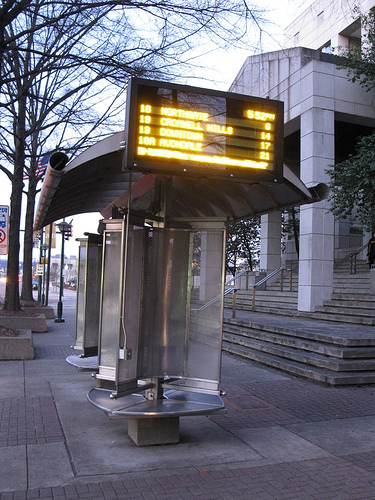
And lest we think it’s silly to expect the same sort of thoughtful design here as they get in a big city like San Francisco, turn to Chattanooga, a metro half our size to the north. The shot below shows a shelter on Market Street. Not quite as integrated in design as SF, but still good. And not only does it have electronic schedule info, but it conveys to users and visitors that the city cares about design and the urban experience. There’s thought behind it.

If you gave me a choice between good bus shelters and a good transit system, of course I’d take the latter. It’s a pressing need for our region. But part of making a transit system attractive is making its accessories attractive. I earnestly hope that when we do get the long-overdue overhaul of our transit system, we’ll also find the best designers to develop graphics, way-finding, and bus shelters. It’s one more piece of the urban puzzle we shouldn’t overlook.

Just like there’s a synergy between good transit and good shelters, the opposite is true. Our poorly conceived shelters are predictable given our poor transit. I mentioned earlier there is no panel on our standard shelter for signage, graphics, or info displays. However, as an afterthought, the BJCTA slapped some vinyl stickers on certain shelters warning “NO LOITERING”. That’s the only message conveyed in writing on the entire shelter. Here you see someone doing just that–loitering in a shelter. How do I know he’s loitering? Well, it’s just a good guess, because it’s Sunday afternoon. And a quick check of the BJCTA schedule shows no Sunday routes except the DART. If you look closely you can see the warning printed over his head…(thanks to richmondsfblog, almonroth, and zekumedo for the SF and Chatta. pics)

Emblematic of a culture of neglect

California Dreaming

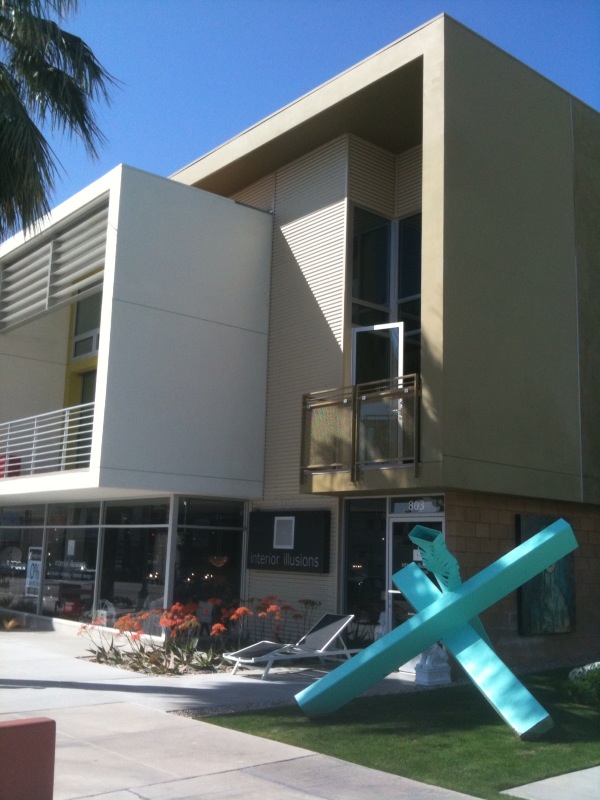
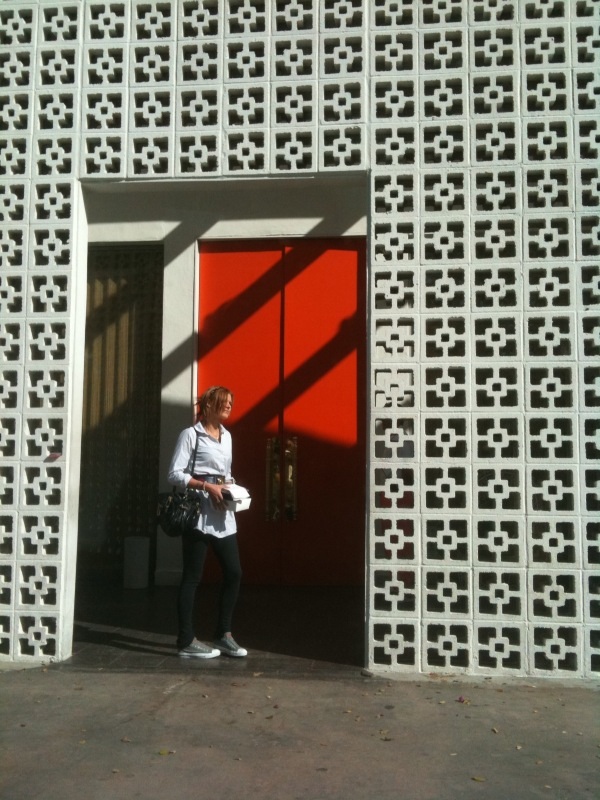
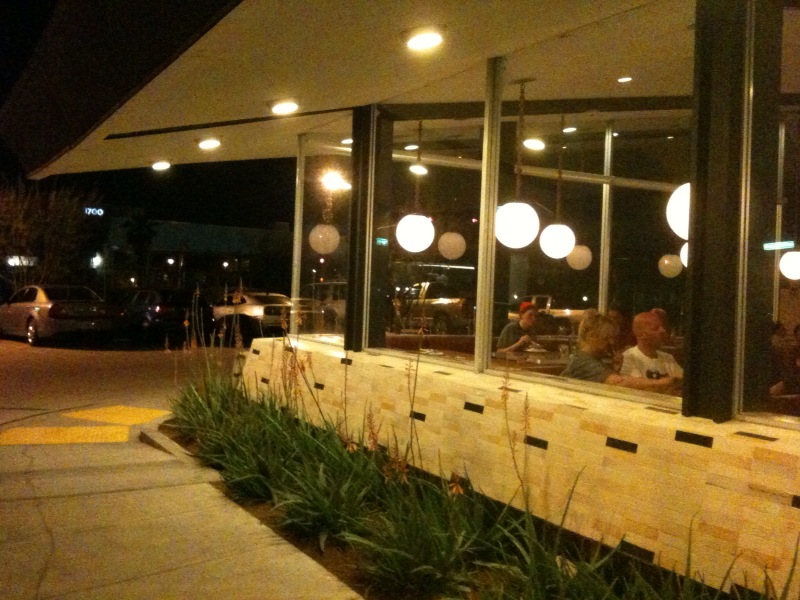
Like a lot of others this week, I have been trying to enjoy a little time off for “spring break.” My friend Jim invited us to his birthday party in Palm Springs, a resort town east of Los Angeles. It’s known for its collection of mid-century modern architecture, as well as its fantastic weather. As Birmingham finally seems to warm up, here are a couple shots from the long weekend so far. We’ll be back to Birmingham and more pressing issues soon enough, but for now, enjoy the sun.

New mixed-use downtown with housing above and retail below. Note the public sculpture adjacent.

Entrance to the Parker Hotel--how to make a stunning backdrop with decorative concrete tiles

Old Howard Johnson's motel (now the Ace) with a super-cool retro-50s diner. And not the Johnny Rockets variety.