Tag Archives: Design Review Committee

Mixed bag

A victory for adaptive reuse

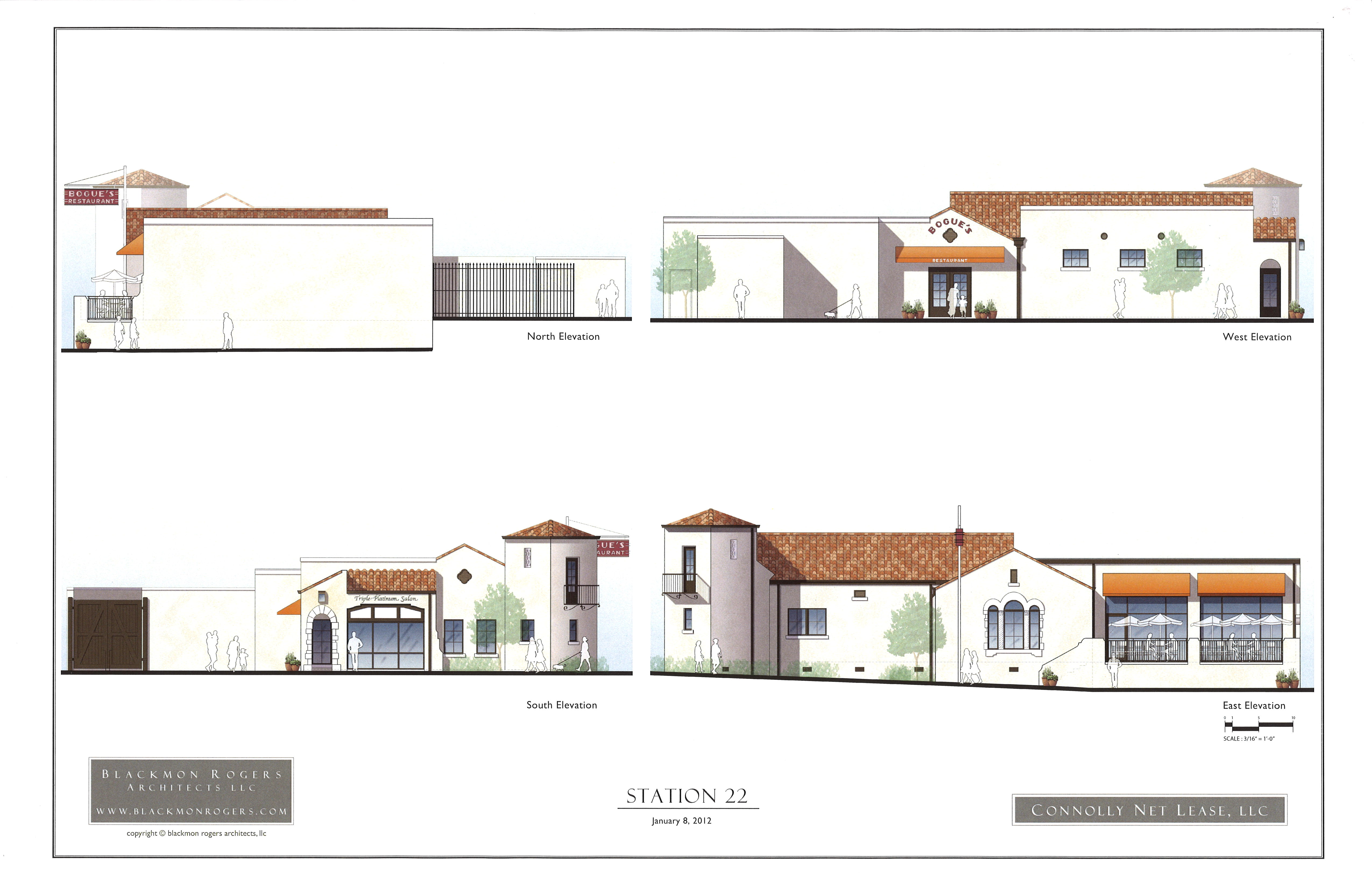
Birmingham’s Design Review Committee had a broad spectrum of design issues on the agenda today. Universally commended and approved was the signage package for the new Walgreens complex on Clairmont Avenue and 32nd Street South, where the historic Fire Station #22 is being restored with a hair salon and Bogue’s Restaurant as tenants (above). A new Walgreens building and parking lot are displacing these two businesses directly to the west of the Fire Station. We first broke the story of Walgreens’ original plan to demolish much of the block including the Fire Station. We are thrilled the Fire Station and the historic Bogue’s neon sign are being reused, and that a very old local restaurant isn’t disappearing. We are still concerned about the relationship of the new Walgreens to its western neighbor, Henry Sprott Long and Associates. But the salvation of the Fire Station is a win for the neighborhood, and an example of how a large, national chain can work with grassroots activists to achieve a better, more urban solution for retail developments.
Not again...

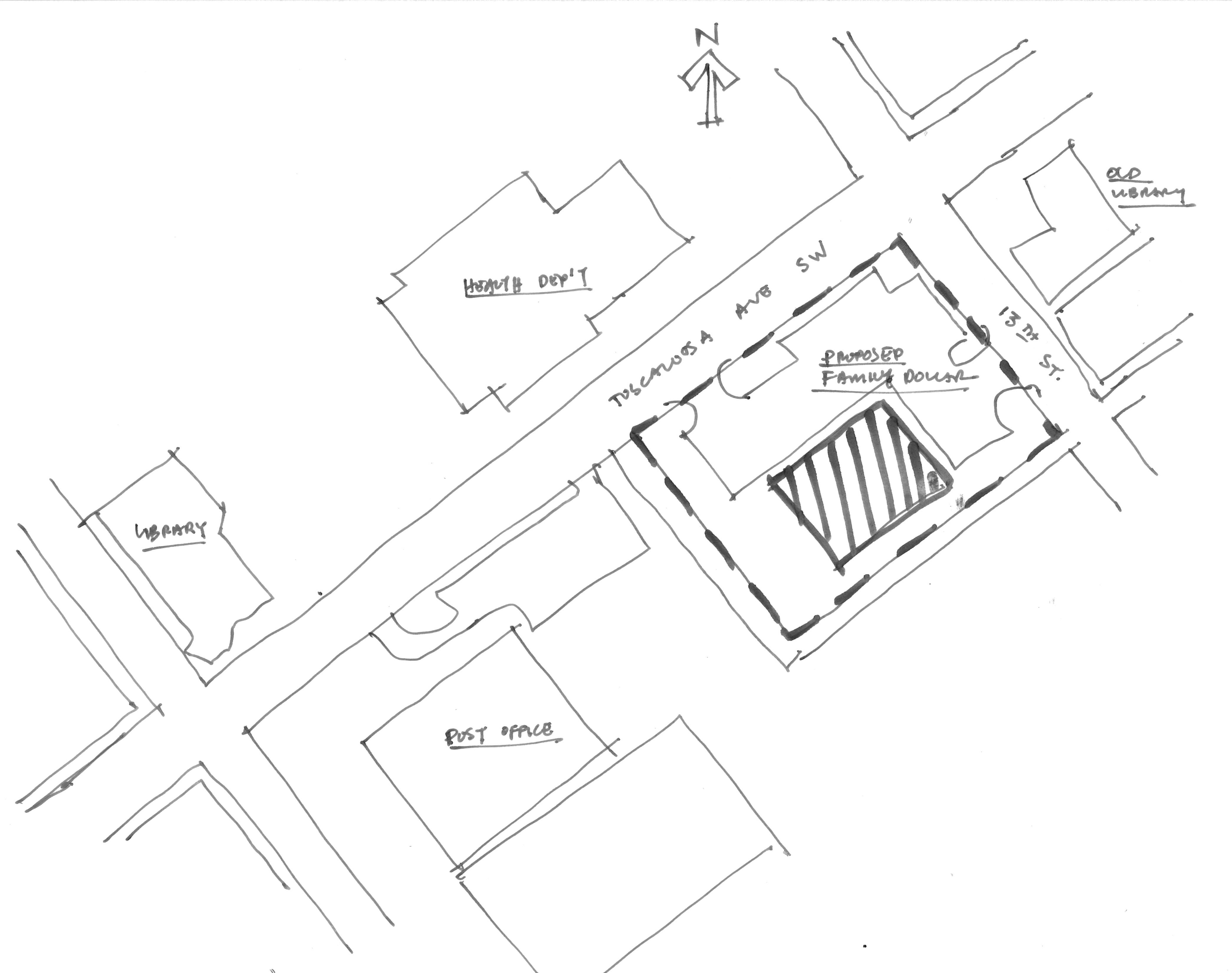
In an eerie replay of the earlier Walgreens controversy, Family Dollar presented a proposal for a suburban-style store at the corner of Tuscaloosa Avenue SW and 13th Street, in West End (my own quick sketch above). Just a few blocks from the thriving Princeton Medical complex, and surrounded by a relatively dense, historic fabric, the developer (Boos Development of Clearwater, FL) insisted that he’d followed the zoning guidelines (which he had), and that Family Dollar’s commitment to the neighborhood was predicated on this site plan–where a generic, blank-box Family Dollar is situated behind a swath of asphalt parking. The Committee was not pleased.
The context is urban, not suburban

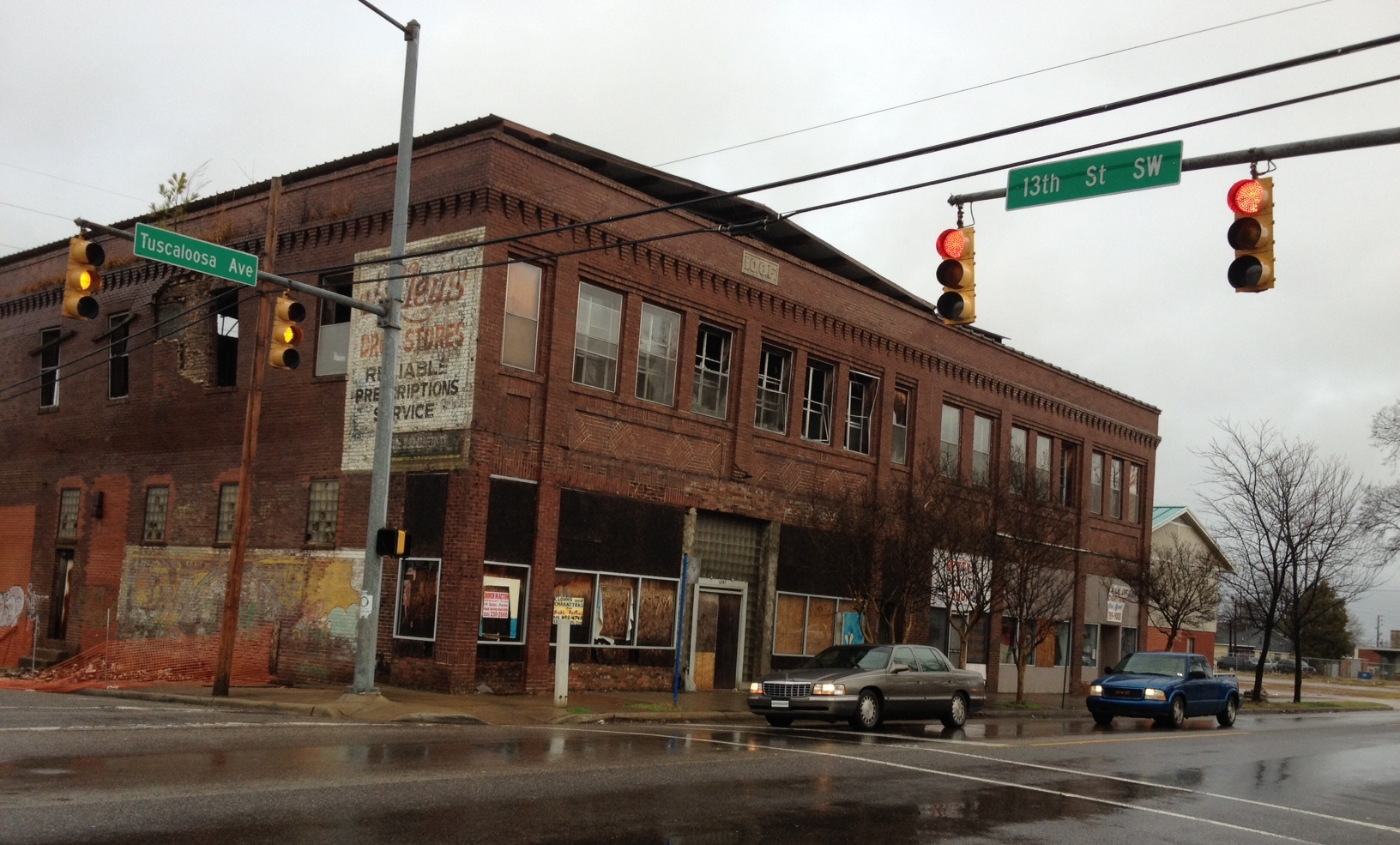
Directly across from the currently vacant site is a reminder of the historic importance of this West End neighborhood–a two-story, commercial structure now sadly deteriorated, but illustrative of the urban, pedestrian character of the streets. The rest of the block has newer buildings–a post office, a county health clinic, a library–which speak of the continued civic importance of this area.

It's already a pedestrian neighborhood

In objecting to the proposal’s suburban, car-centric design, a couple Committee members mentioned they’d either grown up in this neighborhood or have family here–and that people walk. And that many will be walking to the Family Dollar. Above is the relatively new library across the street which, despite an awkward architecture, does  form a pedestrian-friendly street edge. Parking is concealed to the side and rear. Even on a very rainy morning, a number of pedestrians were out walking between the post office and library, and from the surrounding neighborhood–a visual confirmation of the Committee’s point.
More street edge in West End

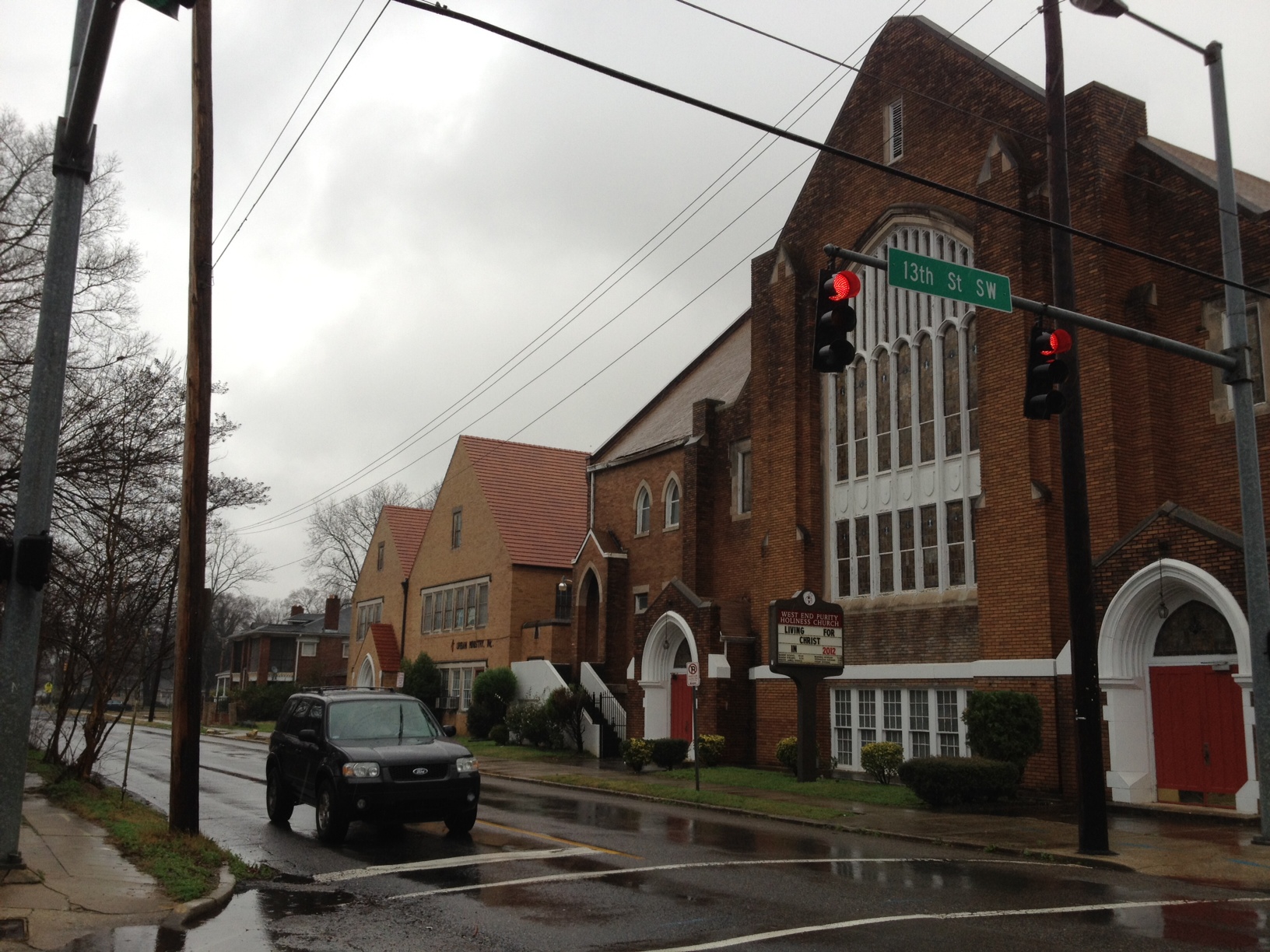
Right down the street from the site are these fine church and residential buildings (above), another indicator of how out of character the proposal is with its surroundings.

Lots of potential here

More than many other neighborhoods on this part of town, West End shows promise (house across 13th Street above). Recent investments in the area–including this possible Family Dollar–show a stability that can be a strong base for future improvements. Committee member Marc Fugnitto was passionate about treating West End no differently from Five Points South or South Avondale, where large national chains wanting to invest in urban neighborhoods were required to redesign their proposals to be pedestrian-friendly and appropriate to local context. Others agreed, and hoped that the City Comprehensive Plan, currently in the works, will address the lack of Smart Code and other tools that would tell the developer up front what’s expected, from a form-based standpoint. Or, at the very least, that the Plan will consider this part of West End as an important urban node in the City, which needs clearer design guidelines to help steer development.

A harbinger of things to come?

The Committee asked the developer to meet again, informally, to discuss solutions for the site; the proposal as presented was not approved. On a brighter note, a few blocks further west at 48th Street and Court “V” in Five Points West, Hoskins Architecture presented the above plan for revitalizing a small park adjacent to the Five Points West library. A thoughtful palette of varied trees and plantings, elevation changes, and modern furnishings bodes well for the type of design we all hope will occur around the new Birmingham Crossplex (which is a block north). A bland piece of grass with a few desultory plantings will be transformed into a real place. This one passed the Committee with flying colors.

More potential, slowly getting realized

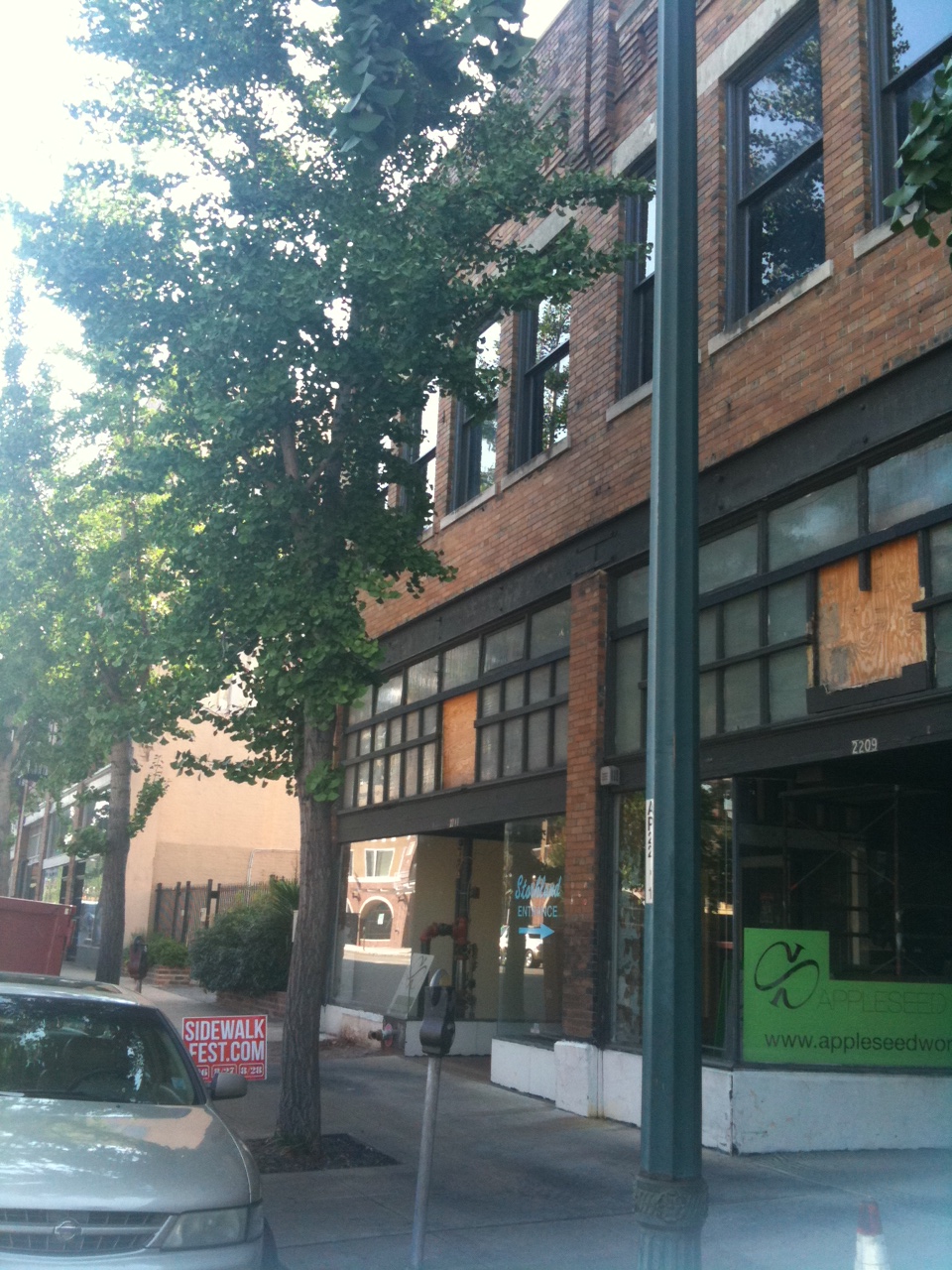
Back downtown on the 1700 block of Third Avenue North, a small, vacant two-story commercial structure (brown brick, above), was approved for renovation into a law firm downstairs, and the lawyer’s loft apartment upstairs. The simple, historically sensitive design is by NHB Group. Just one block west of the Alabama and Lyric Theaters, this side of the street is full of potential but, in the absence of a coordinated plan for the Theater District, has been slow to revitalize. Besides the renovation of the lower building in the right of the photo (private residence), and the mixed-use tailor shop and loft (below), both of which we designed, this block has been pretty stagnant. With the planned renovation of the Lyric Theatre, a strategic focus on this district, and more investors, this row could be a real downtown jewel. City, onwards!

Retail on the street. We need more

[Thanks to Blackmon Rogers Architects for the Fire Station elevations and Hoskins Architecture for the park plan]

Hopeful

Re-purposing an old neighborhood

Central Woodlawn — a few minutes’ drive (or future tram ride!) east of downtown Birmingham — is a superb example of urban place: well-scaled commercial storefronts, memorable historic architecture, a mixture of wider and narrower streets, and short blocks. This once-busy retail and business center has lost tenants and foot traffic over the years, but the fabric  largely remains. Main Street Birmingham, a non-profit dedicated to revitalizing neighborhoods, has recently renovated a row of one-story storefronts into 55th Place Arts, with low rents targeted to artists (above, on 55th Place North). This city has been too slow to recognize the key role artists can play in urban revitalization; the Phoenix Building downtown (which we developed and designed), with its 74 live-work units of which 60 are subsidized and targeted to artists, is perhaps the only other comparable project in town.

It's all about the fabric

The corner of the project at 55th Place and First Avenue South is seen above, with the entrance to the new City Arts Boutique. Note the fine texture of the buildings along 55th Place, and the easy pedestrian scale of the environment.

Adding color can be literal too

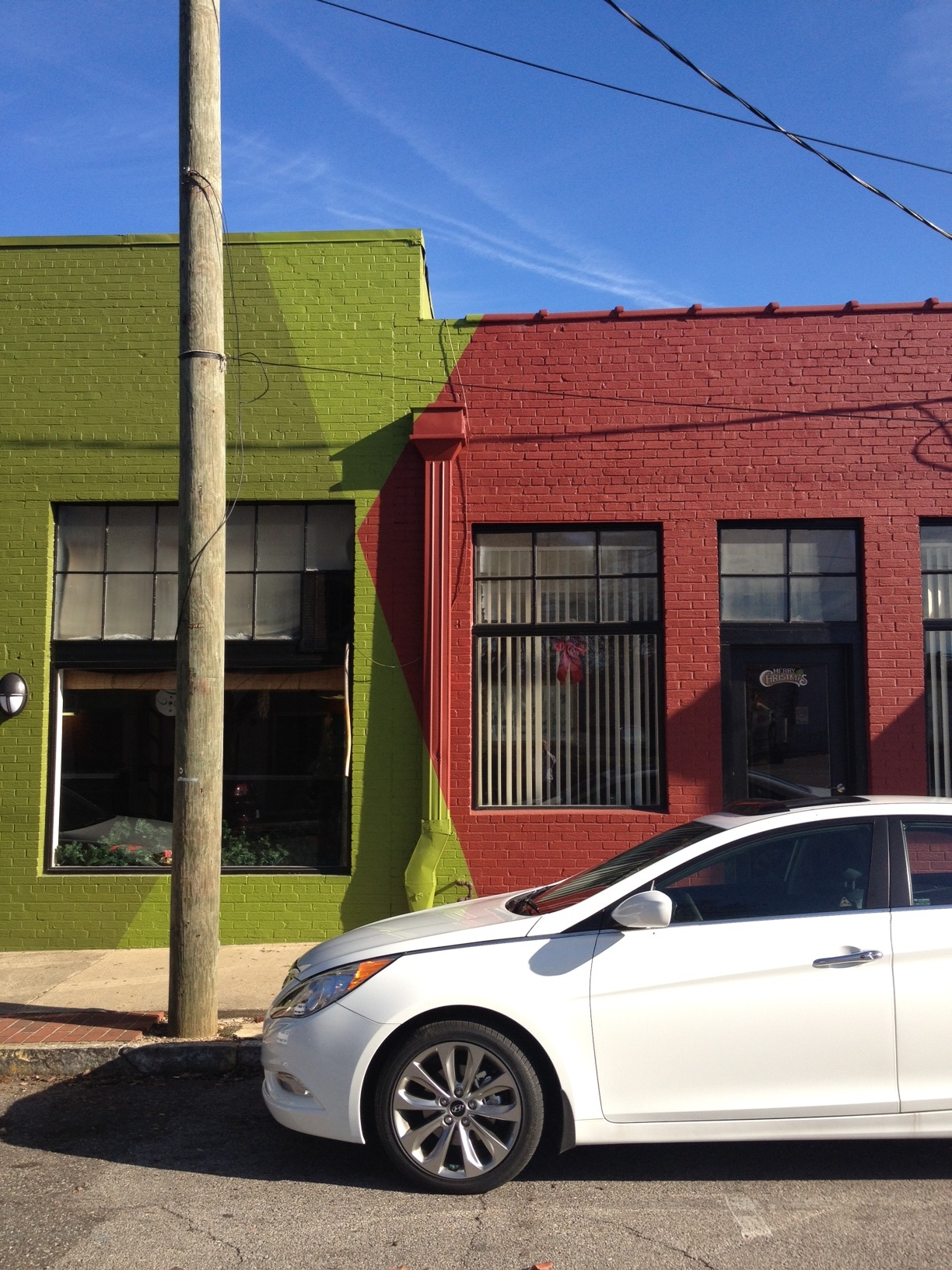
Besides reactivating the street with new businesses and artistic energy, we really appreciate the paint job on the facade, illustrated above. Rather than the standard, conservative browns and grays painted evenly across a surface that you tend to see around town, playful angles and varied tones suit the reconstitution of these storefronts into artist workspace. Kudos to Main Street (and to the Design Review Committee, which today approved new signage and door treatments for the project) for allowing color to be used creatively here. It looks super.

If only the corner had been handled more sensitively

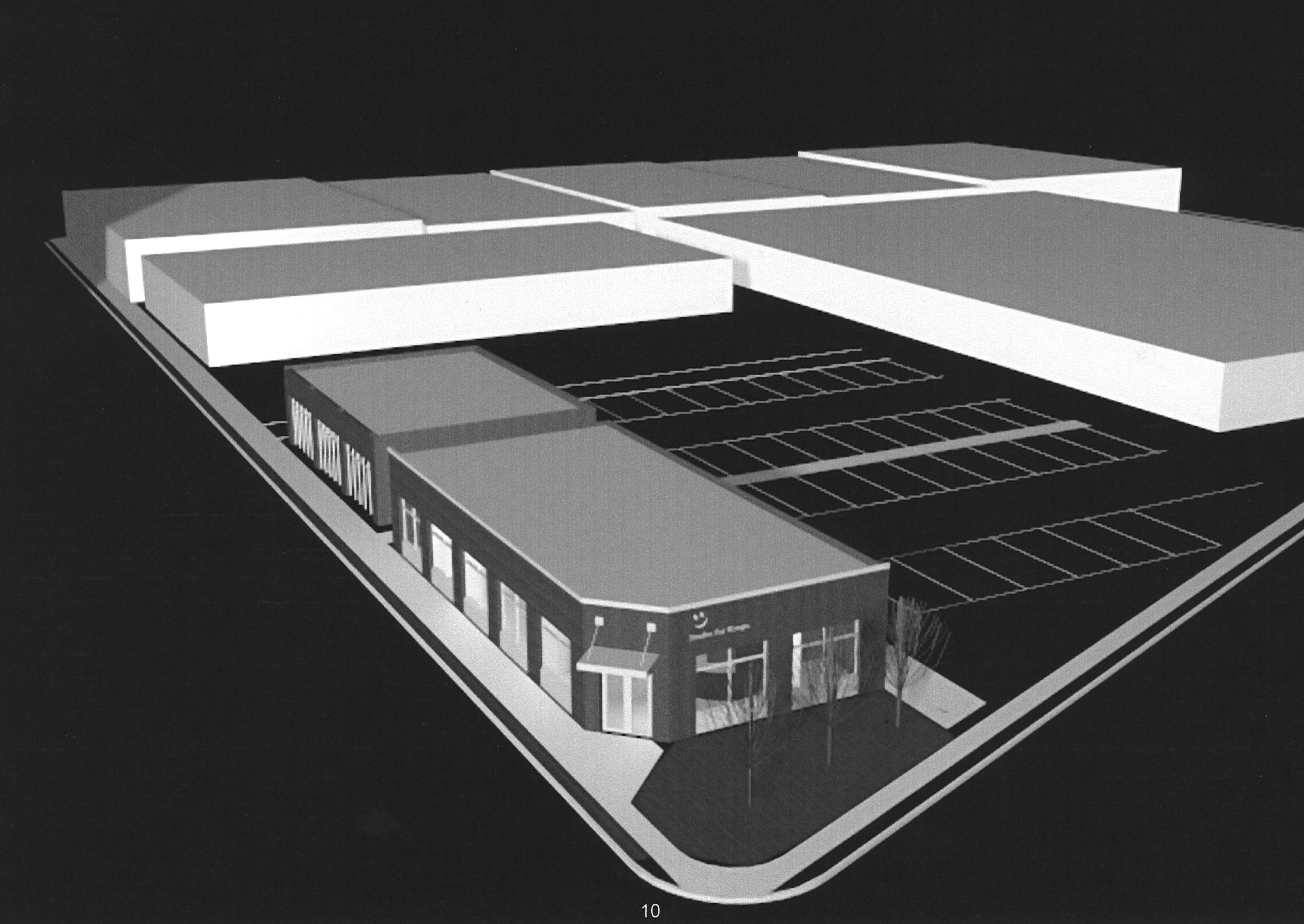
Just down the street (at First Avenue South and 55th Street North), Smiles for Keeps–a dental clinic for children and teens–is building a new facility on a prominent corner site, currently asphalt parking. Above is a rendering (architect: John Holmes), showing the new building with a landscaped area at the corner, and a proposed future building just beyond. A good deal of parking will remain at the rear. Clearly, reclaiming any piece of asphalt parking for a new building is a good thing; on a corner it’s even better. It’s good these buildings have relatively generous storefronts to allow transparency, and that they come to the sidewalk line along 55th Street. What’s less satisfactory is the resolution of the corner itself; while the intent was to mimic the corner entrance at the building currently leased by the clinic around the corner, in this case the “corner entrance” isn’t actually at the corner of the lot. The left-over green space feels just that–left over–and one wishes there were some way to extend the mass of the building out to that corner.

Back on First Avenue North, the corner feels resolved

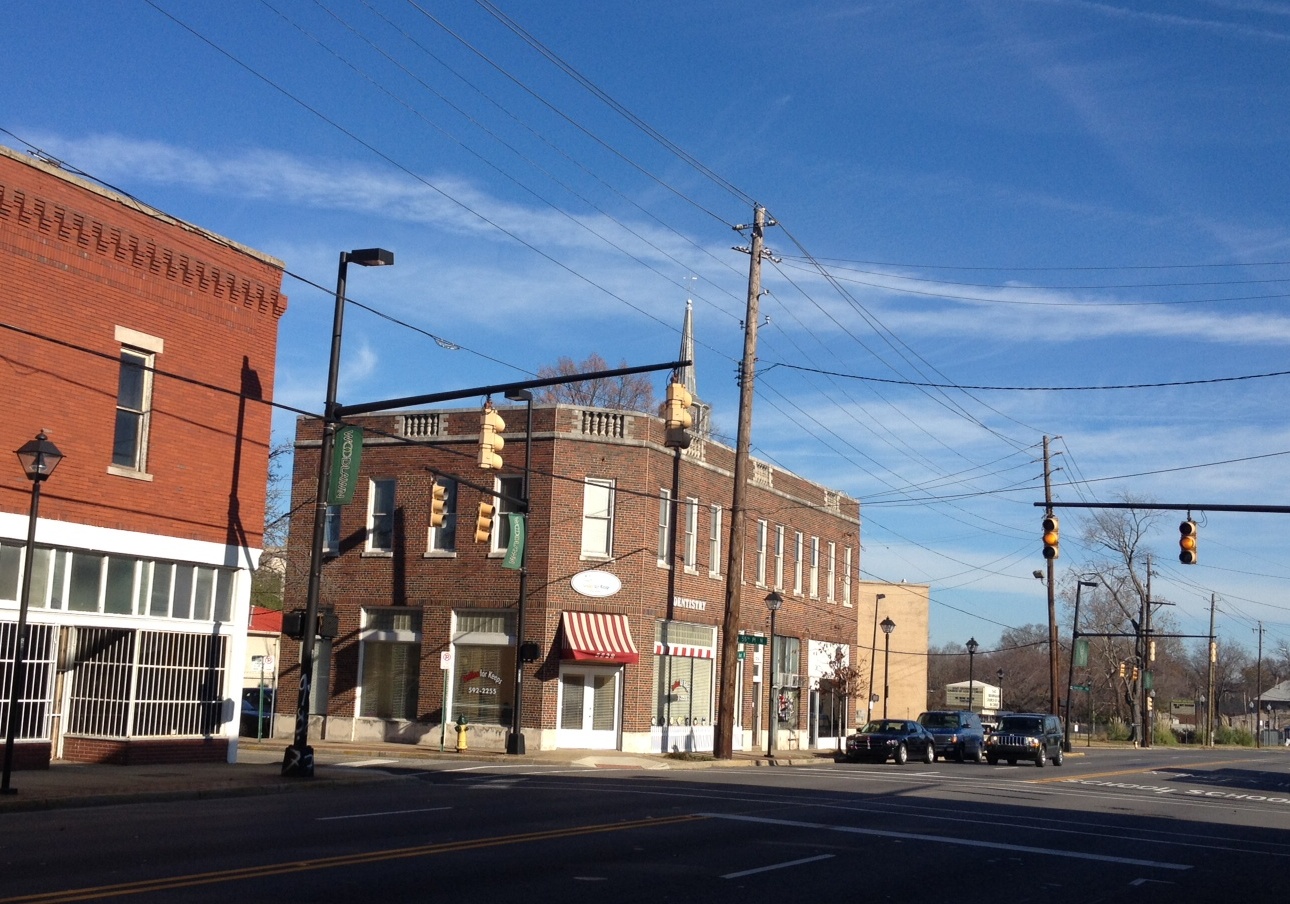
Above is the historic Woodlawn building currently occupied by the clinic, with that original corner entrance that works seamlessly with the site. Despite this gripe, overall it’s great to see what Main Street Birmingham has been able to encourage in terms of neighborhood investment and even “buzz” about the cool factor represented by the potential in this neighborhood. Working with minimal staff and very tight budgets, this non-profit is on to something here. We wish them, and Woodlawn, much success in the future.

[thanks to John Holmes for the rendering]

Play ball (2)

And it's happening

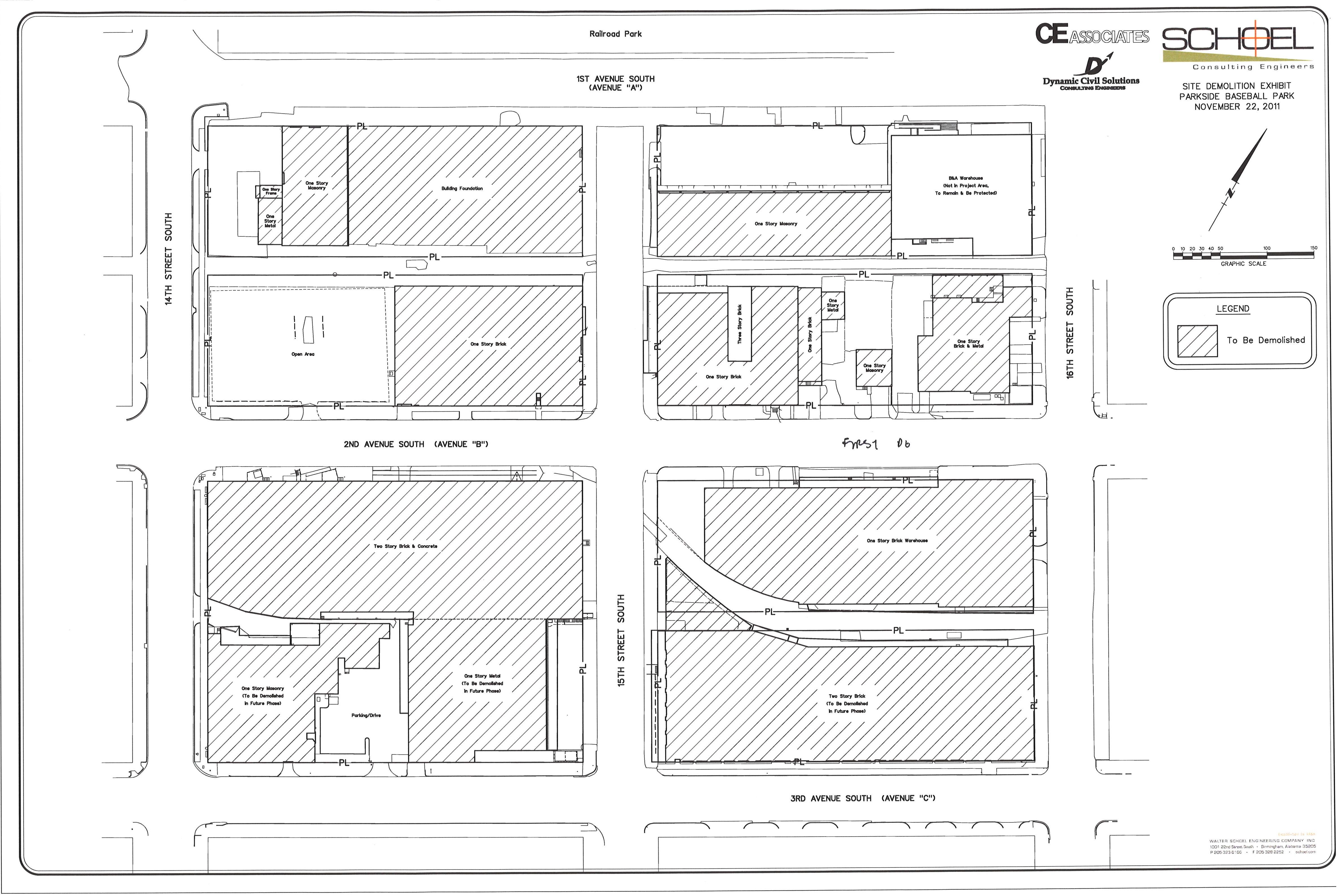
The City’s Design Review Committee conditionally approved demolition of an area just south of Railroad Park to prepare for construction of the new ball park of the Birmingham Barons. The area, pictured above, is four square blocks bounded by First Avenue South (facing the park) and Third Avenue South, and 14th and 16th Streets. The hatched buildings will be taken down; noticeably unhatched is the B&A Warehouse building at the corner of 16th and First Avenue, no longer part of the project.

Conceptual--with the hope of solid urban edges

Brian Wolf of Corporate Realty presented the 2 simple documents–the demo plan and the concept ball park plan, above. The Committee’s main objection was the lack of even schematic drawings illustrating the nature of the street edges of the project. Committee member Cheryl Morgan stated her concern about the importance of the 14th Street corner, and the need for parks to have active, vibrant edges. The rest of the Committee had similar concerns. Mr. Wolf assured the Committee that much time and effort has been put into creating an active street edge, and that he’d come back in January with completed schematics showing this. In the end, given the fast-track schedule and the scale of the project, the vote was to allow only partial demolition to occur, with the remainder waiting until schematics are presented in January. The main concern of this blog has been similar to the Committee’s–having a backside of a ball park fronting a major public park is not good urban planning. That we will get even a small buffer of pedestrian-scaled architecture between sidewalk and ball park is hopeful.

Big improvement

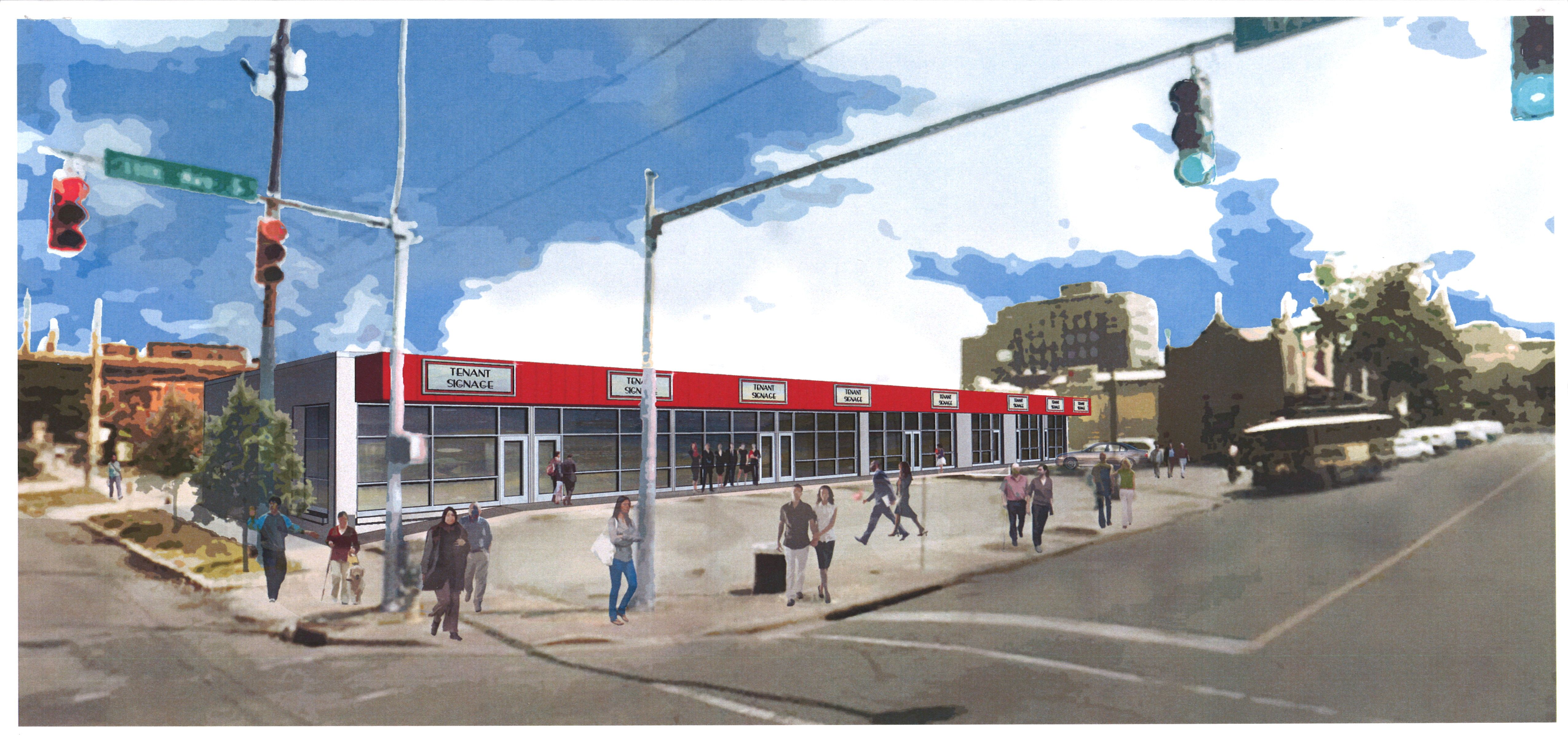
About a year ago we posted on the unfortunate deterioration of an aging strip center in Five Points South at the corner of 19th Street and 11th Avenue South. A massive “Bail Bonds” sign that had gone up without Design Review permission seemed to symbolize the challenges of this historic commercial area’s struggle to rejuvenate. This morning, the above proposal was unanimously passed by the Committee. All existing (and mainly non-conforming) signage will be removed, and a new red sign band created to provide a unified appearance. Needless to say, there was practically cheering in the aisles. (Cohen, Carnaggio, Reynolds are the architects).

More urban amenities = good

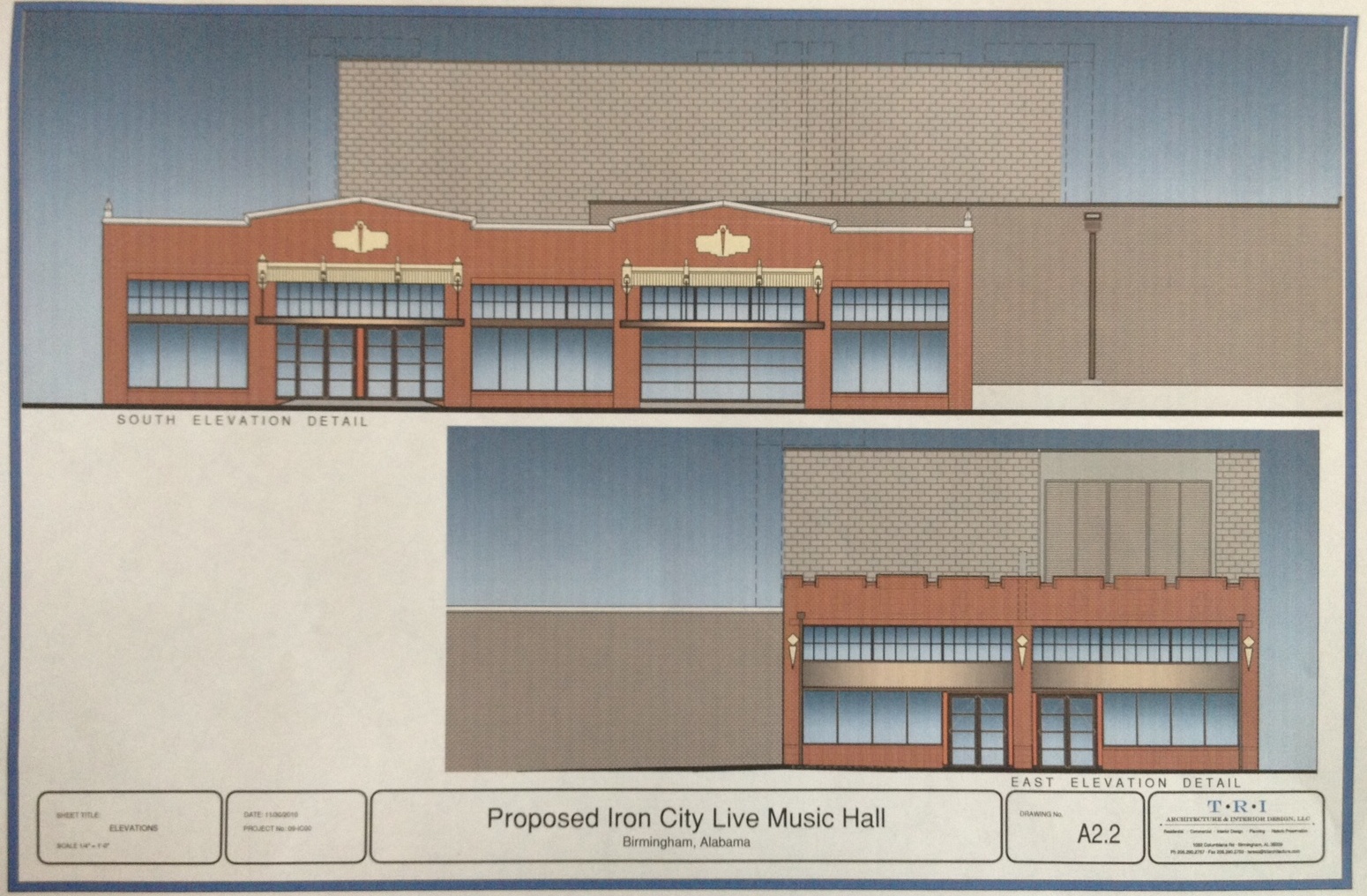
Last but not least, the above shows a major renovation of historic structures at the corner of 6th Avenue South and 22nd Street South into a music performance space and lounge, able to hold up to 1000 patrons (design by TRI Architecture and Interior Design). Located within the same block as Workplay, across the street from the Fish Market, and adjacent to the Liv on Fifth lofts, this is a major investment in downtown entertainment. Healthy cities have lots of entertainment options that make urban places attractive to the coveted younger demographic of people in their 20’s and 30’s. We wish Iron City Live Music Hall much success, and hope it inspires additional development in the area.

[thanks to Corporate Realty for the ball park plans; Cohen Carnaggio Reynolds for the Five Points rendering; and TRI for the Iron City Music Hall elevations]

A little history (2)

Design worth preserving

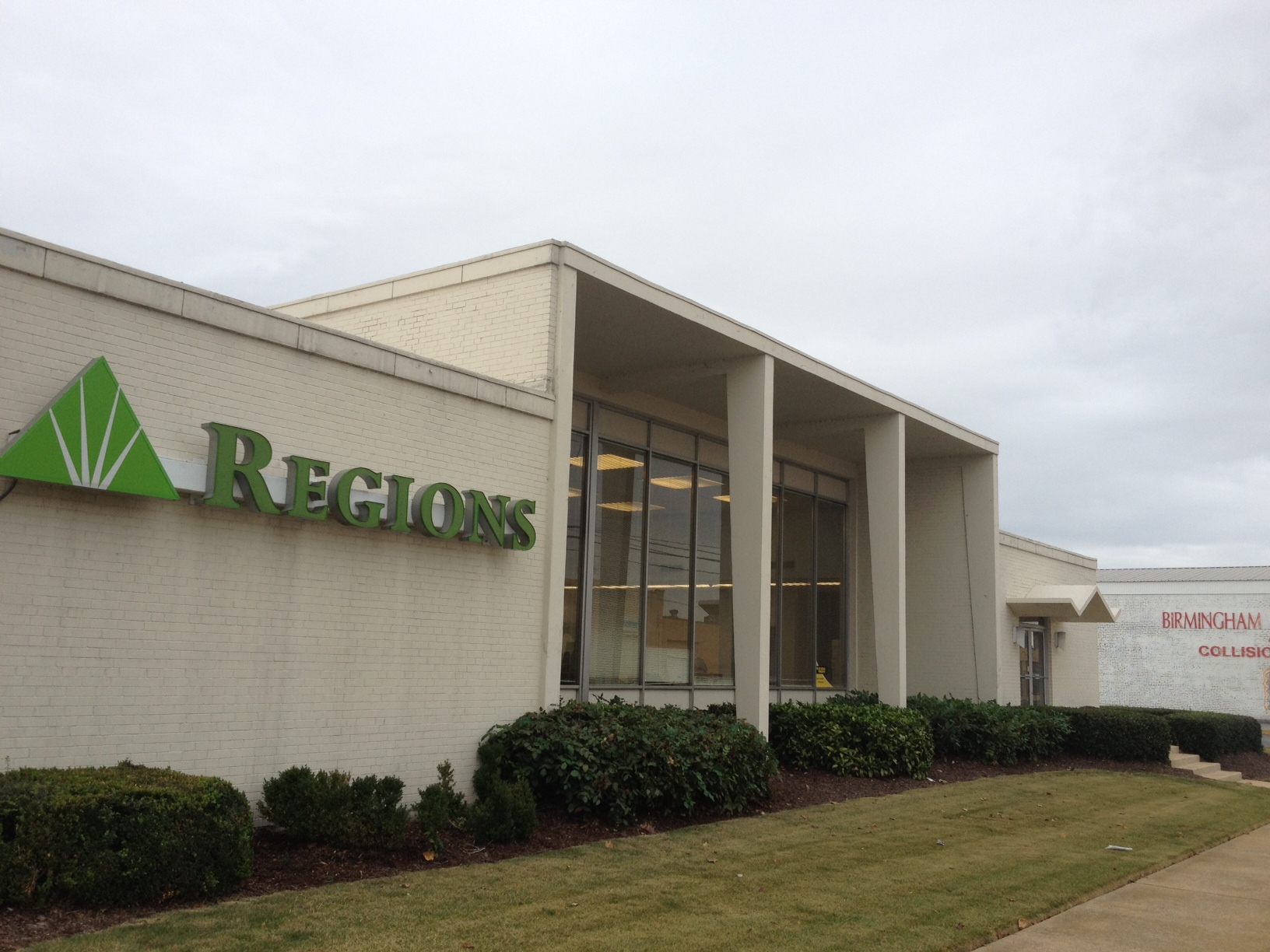
In an earlier post, we discussed the colorful history of the area around the current Regions Bank in the Lakeview District (3rd Avenue South and 32nd Street, above). At the time Barber Companies was regrading vacant land across the street into parking; they have since started construction on a new office building, a hopeful sign this urban neighborhood will continue to see investment and revitalization. The start of the new building is seen below, across 32nd Street from the bank.

Underway courtesy of Barber

This morning at the City’s Design Review Committee, Regions presented a request to demolish the existing drive-through canopy at the rear of their building, and replace it with a new one. The existing canopy is very visible, since it faces the bank parking lot which extends to the alley; in effect the rear facade is almost as important as the front given its high level of exposure. The Committee denied the request, and asked for Regions to return with a revised proposal. Why?

It's all about proportion

As seen above, the existing drive-through canopies (to the right) mimic the thin, light effect of other canopies on the building. You can observe this characteristic at the angled canopy to the right on the front facade, or at the back entrance to the left of the drive-through. That lightweight quality in projecting architectural elements is typical of this sort of “Miami Modern” architecture.

The proposal removed the existing staggered canopy system and replaced it with a singular, heavy-set canopy that’s identical to what one sees at a typical gas station. Instead of the perhaps 8-9 inch height of the current canopy, the new one was to be 36 inches high, ostensibly to hide the pneumatic tubes that are currently exposed. Committee member Mark Fugnitto eloquently defended the architectural merits of the building, and asked that Regions put some thought into designing a canopy that’s consistent with those merits.

Hard to win anyone over with this

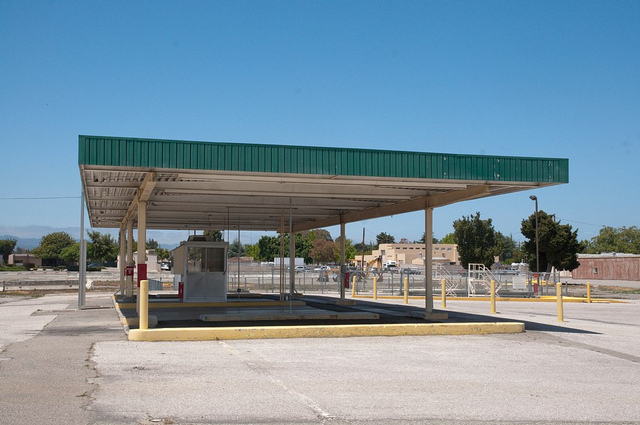
The other issue with the presentation was the lack of basic presentation materials. Rather than a set of good, illustrative drawings and (preferably) a rendering, only a photo (similar to the above) was presented of a generic, gas-station-like canopy from some other location. The Regions building does not rise to the level of being iconic, but it still serves as a very good example of this period of commercial architectural history. The Committee was absolutely right to insist on a more professional, and thoughtful, effort from the bank.

[thanks to rocketdogphoto for the gas station canopy]

Eclecticism approved

At 3 AM it's hard to resist

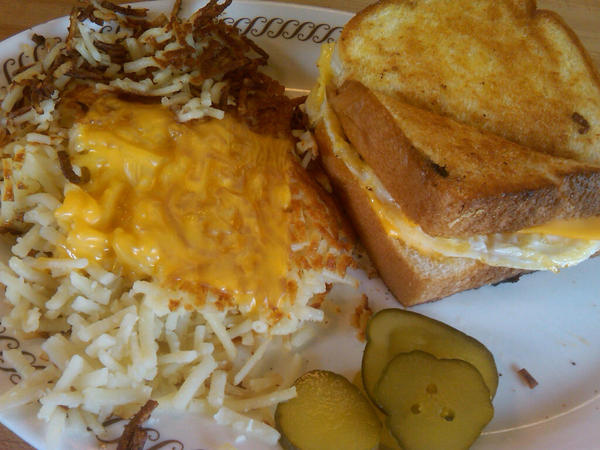
Birmingham’s Design Review Committee approved a new urban storefront Waffle House in Five Points South, in the Studio Arts Building facing the traffic circle. [Strictly prohibited by the committee was any additional signage/posters beyond the main illuminated “Waffle House” sign above the storefront.] Also approved was exterior projecting signage for El Barrio, the long-anticipated latin-inspired restaurant in the 2200 block of 2nd Avenue North.

One is a national greasy spoon chain open 24/7; the other should prove to be a hotspot for foodies and hipster-ish urbanites. A vibrant city center caters to all tastes, so we welcome the opening of both of these restaurants in the upcoming few months! Dig in.

[thanks to taopauly for the scrumptious WH selection pic]

Design review alert

A sad end is in the works

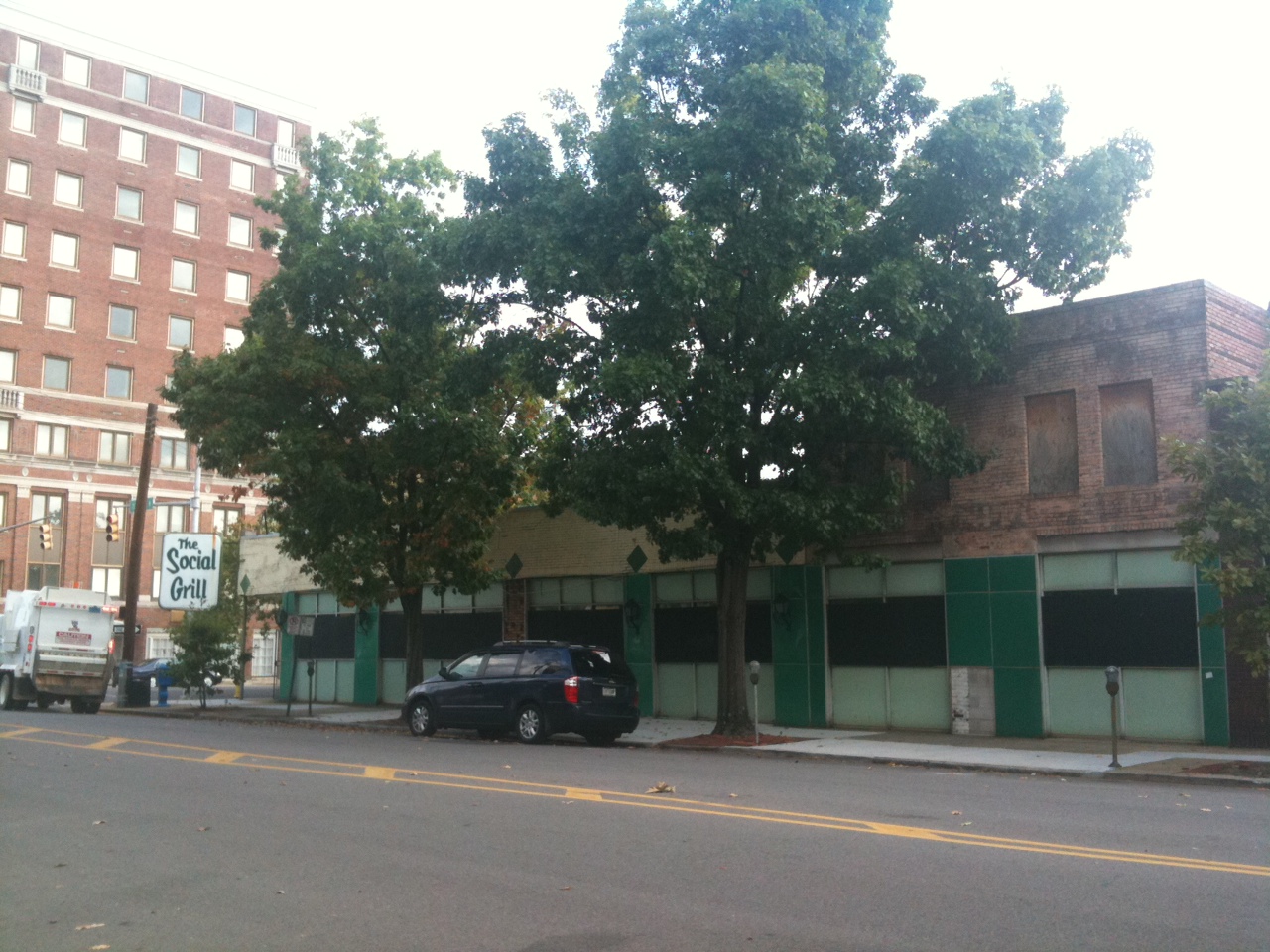
We have learned that the owners of the building that for many years (1945-2004) housed The Social Grill, plan to sell to downtown landowner Bobby Crook, who in turn plans to tear the building down for surface parking.

The historic building (distressed after years of deferred maintenance and showing the remains of 1960’s-era metal insert panels at the storefronts) holds the SE corner of Third Avenue North and 23rd Street, and is notable for its large projecting sign. While in an official Historic District downtown, and subject to Design Review Committee approval, unfortunately the Committee is limited in its ability to prevent owners from tearing down buildings for surface parking. Once again, Form Based Code would be helpful in setting guidelines that, for instance, would state that corner buildings in particular districts must remain; and conversely corner parking lots should be turned back into buildings.

As of yet, there is not a date set for when this proposal goes before Design Review.

Waffle House across from...the Pancake House?

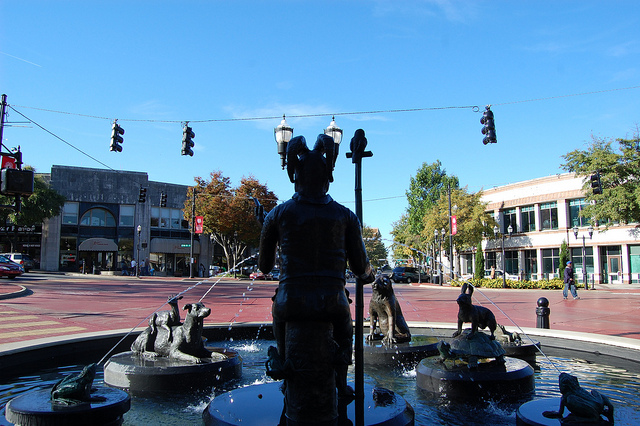
We do know that this Wednesday morning one of the Design Review items will be a new Waffle House in the Studio Arts building (pictured above right) which faces the circle at Five Points South. The Original Pancake House has occupied the opposite building (pictured above left) for many years and is a local institution for breakfast (although it’s part of a national chain). Waffle House, evicted from its current location just west of the UAB campus to make way for university development, already plans a new storefront location a few blocks west of Five Points in the heart of the university medical district (recently approved at Design Review). Despite the roughly similar menus, Pancake House is only open for breakfast/brunch daily, while Waffle House is a 24-hour, 365-day/year diner.

Finally, on Wednesday the  wonderful guys (from Trattoria Centrale) opening El Barrio in the 2200 block of 2nd Avenue North will reapply to the Committee for approval of a tasteful projecting sign [see our previous post here]. Our verdict: the Committee needs to approve this sign!!!

[thanks to bhydro for the Five Points pic]

Five points possibilities

A big change

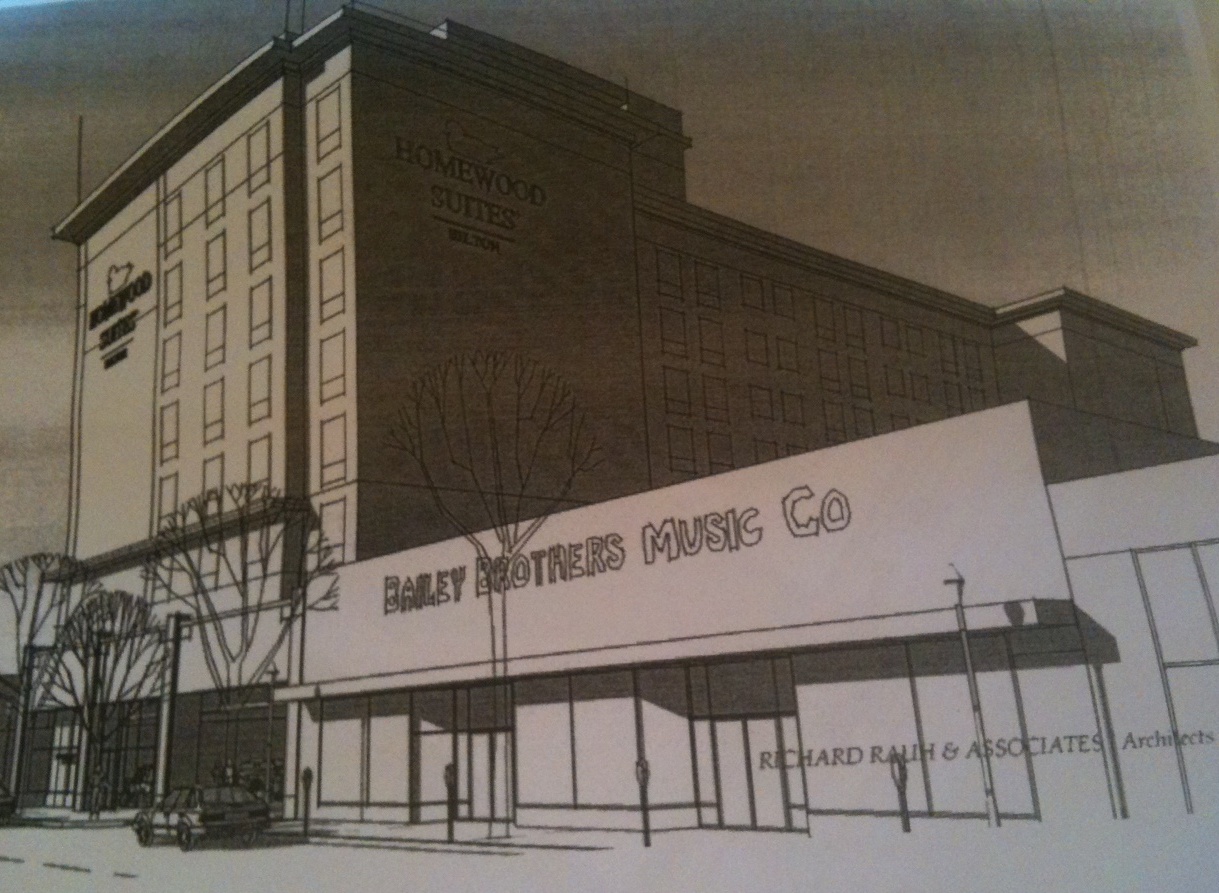
This morning at Design Review Committee conceptual approval was given to a plan for a new 7-story hotel to be constructed where the former Five Points Music Hall sits on 20th Street in Five Points South (older readers may remember this art deco building as a Piggly Wiggly grocery store, directly to the south of Woolworth’s, itself now Bailey Brothers Music). Richard Rauh, an Atlanta architect, presented early sketches of an imitation stucco tower rising above the original facade, whose glass has been removed and whose storefronts now serve as  a porte-cochere for auto traffic.  Please note this design is in very early stages, and the applicant will return probably several times to the Committee as the design progresses (concept sketch shown above).

From show windows to exhaust fumes?

The current facade, pictured above, has streamlined limestone detailing. While it’s commendable that the facade is being retained, in this instance it’s a shame that one of our most pedestrian-friendly streets would lose storefronts and gain a car-oriented use (and a curb-cut). The tower itself, in the early sketch, is a typical Homewood Suites you’d see out on the interstate somewhere. The Committee, while giving preliminary approval, stressed they’d want to see more urbanity/finesse in the new structure. It’s exciting (and perhaps surprising given the economy) that there’s demand for more hotel rooms here, given the new hotels that have already opened in the last few years in this area. It’s less exciting that a hotel can’t use a storefront for lobby and bar (like the indie Hotel Highland across the street), but instead turns inward and feels very auto-oriented.

Getting closer

Approval was also given to new steel and wood awnings which will shelter outdoor seating at El Barrio, the new restaurant opening in November to be run by the same guys who turn out the excellent food at Trattoria Centrale (pic above shows the exterior space for the new restaurant in the 2200 block of 2nd Avenue North). However, a request for exterior signage was sadly tabled. More on this in our next post.

[thanks to Richard Rauh for the conceptual rendering]

Modernist redux

New life coming soon

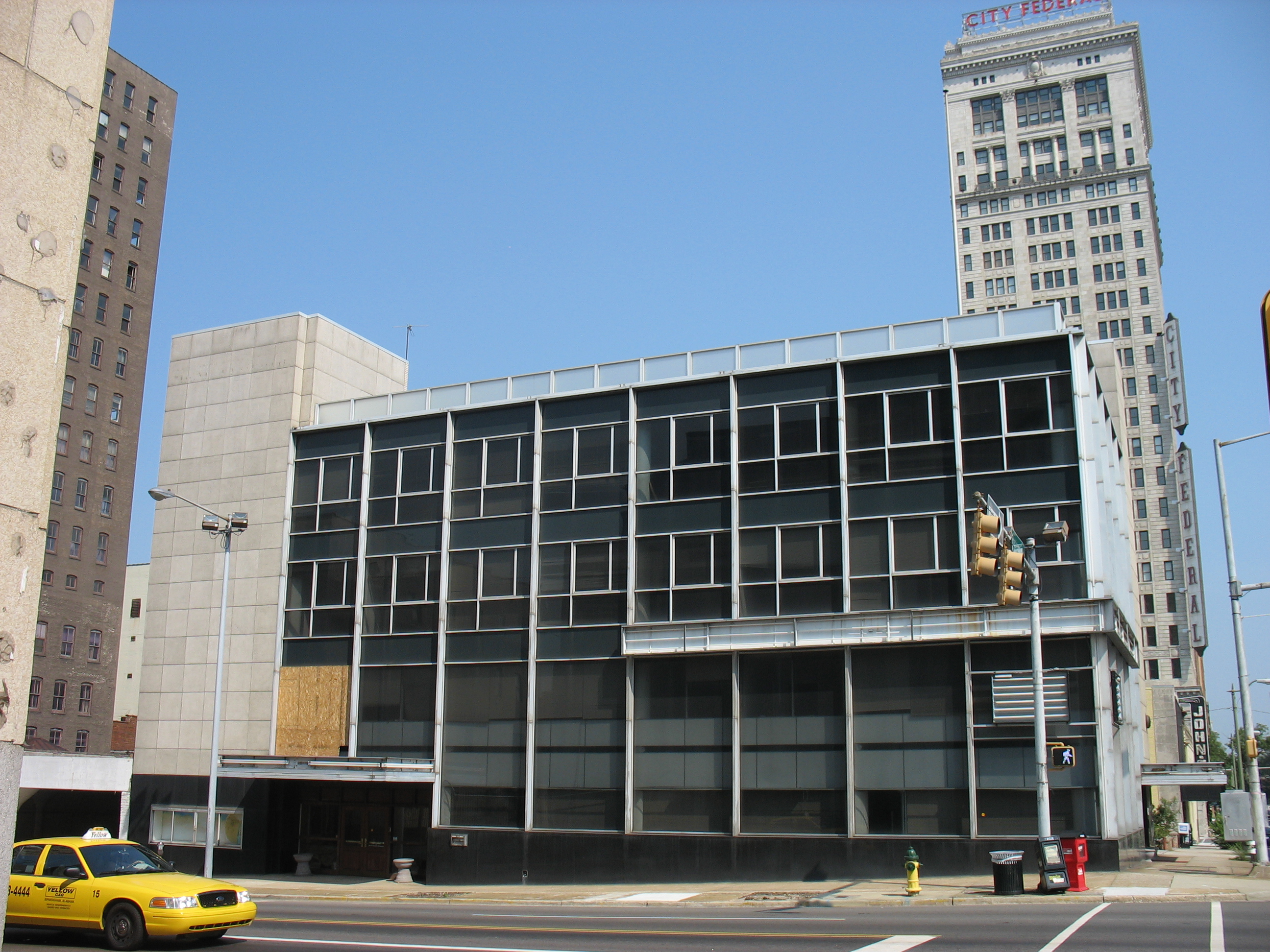
This morning at Design Review Committee, conceptual approval was given to a proposed renovation of the international-style modernist building (above), originally designed as First Federal Savings and Loan headquarters by architect Charles McCauley. The new owner (Synergy Real Estate, LLC) plans a restaurant and bar on the ground floor, including a large outdoor patio with a stage for music. A small corner patio is carved out of the front of the building as well. The owner must return with more detail, and must separately satisfy the Central City neighborhood that noise from any outdoor stage won’t affect nearby residents. The owner’s representative stated that while they have not inked a lease yet, they are in serious discussions with two potential restaurateurs. The Columbus, GA design firm of 2WR prepared the preliminary renderings. The building is at the NW corner of Richard Arrington Blvd. and First Avenue North.

Additionally, the Committee approved the Walgreens concept for their new Clairmont Avenue location, with conditions–meaning the developer must return with revised plans. Among the conditions:

1. Create a more animated facade along Clairmont, relieving the expanse of blank brick currently shown;

2. Provide a main pedestrian entrance on Clairmont, in addition to the side parking lot entrance currently shown;

3. Reconsider the size of signage;

4. Show street context, including the modernist jewel of Henry Sprott Long, which would be overshadowed by the much larger drugstore. The current plan has the drugstore coming to within just a few feet of the side property line, leaving a total of perhaps 6 feet between the two buildings.

Stay tuned for more on both of these projects.

UPDATE: the Walgreens developer Connolly Net Lease and the local architect Blackmon Rogers have sent us the current site plan and Clairmont Avenue renderings (note Henry Sprott Long is located about 6′ to the left, or west, of the drugstore and about halfway back).

Site plan--subject to change

Clairmont Elevation also subject to change

Design Review Alert

It’s historic too

Tomorrow morning at Design Review Committee, the conceptual design for the proposed Walgreens drugstore on Clairmont Avenue South will be presented. The most recent plan, informally shown to neighbors and community stakeholders, was discussed in a previous post here.

The meeting will be at 7:30 AM, Young and Vann building, 1731 First Avenue North, 3rd Floor.

This proposal is important because it accommodates the historic Fire Station No. 22, while demolishing several structures in-between the Fire Station and the mid-century modern office of Henry Sprott Long Architects (in continuous operation at this location for about 50 years), shown in the photo above. The drugstore’s relationship to both historic buildings, its new parking lot and drive-through, and its formal character along Clairmont should be discussed in the morning.

The public is invited to attend.

More for Lakeview

Coming to a college town near you

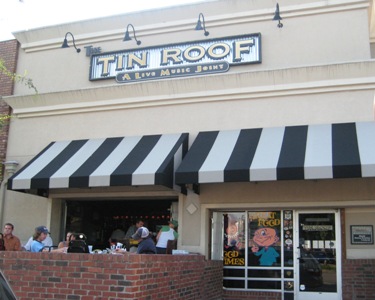
The Tin Roof Bar franchise is opening it’s latest branch in Birmingham’s Lakeview District, in the 2700 block of 7th Avenue South (location of former dive bar T.C.’s). The venue will have live music and a menu that claims to be a step above “bar food”. Originally from Atlanta, the chain markets to college students/recent grads and has locations in Nashville, TN (pictured above); Lexington, KY; Columbia, SC; and Knoxville, TN.

The storefront space in this historic district has been vacant for some time since T.C’s closed; the Design Review Committee gave its approval to facade improvements and signage this morning. With Slice opening soon around the corner, and Huey’s  planned right down the street, there will be fewer vacancies and more evening choices in this center city district. Cheers.