Category Archives: Uncategorized

Questioning density

Did they get it right?

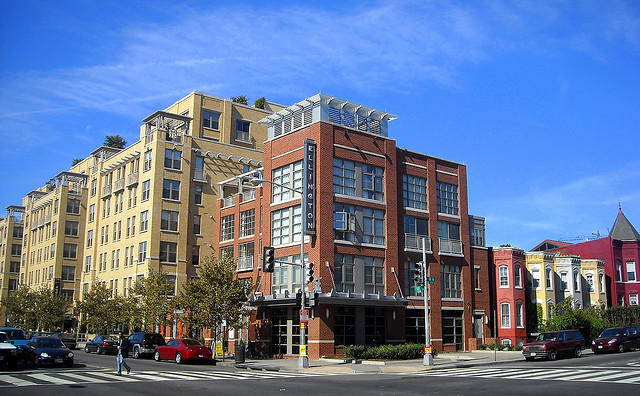
This blog tends to applaud urban density, deeming it essential to healthy, sustainable neighborhoods. Density is often defined by the amount of people occupying a square mile (or acre, or hectare). But what is the ideal level of density? How can that be objective rather than subjective? Is there a tipping point where you can have too much density? (Above is infill mixed-use construction at the corner of U Street and 13th Street in Washington, DC, a city with roughly 9500 people per square mile. Compare that to the City of Birmingham’s roughly 1500 people per square mile.)

We intuitively know that below certain levels of density, it’s hard to have adequate transit systems, walk-able streets, successful commercial areas, adequate greenways and natural areas, wise conservation of resources, etc. A fascinating article written by Lloyd Alter over on treehugger attempts to objectively analyze urban density, and arrives at some interesting conclusions.
So is NYC the best we have?

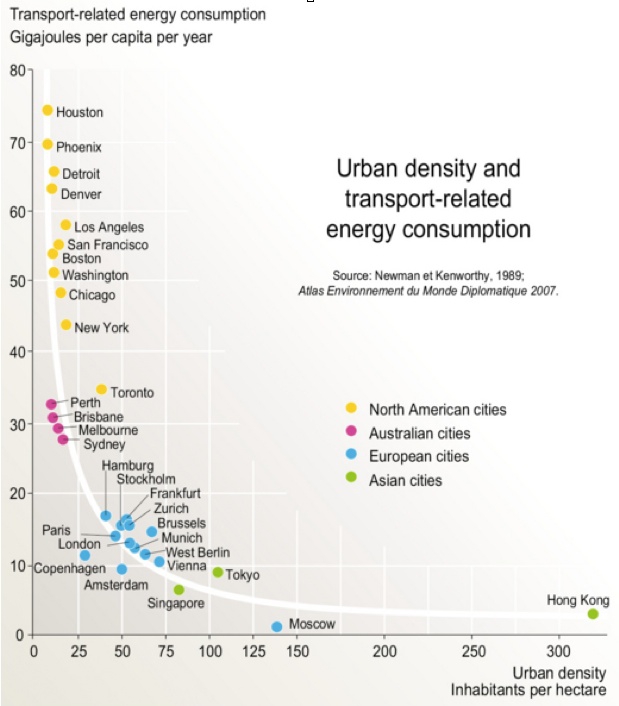
One of the article’s illustrations is the above map (courtesy UNEP) that shows urban density along the horizonal axis, and transport costs along the vertical. Note that transport costs include private and public transportation. At first glance this graph shows that New York City has the highest US density of major cities, and the lowest transport costs–validating the theory that the denser you get, the cheaper the transportation costs. But looking closer, you notice that Los Angeles, while having higher transport costs (all that freeway driving and limited public transit) has a HIGHER density as a city than New York (which includes very-dense Manhattan but also less dense boroughs). Also, much less dense Australian cities like Perth or Sydney have considerably lower transport costs than New York. So, at least in the middle of the graph, density and transport costs don’t necessarily correlate. And neither do our assumptions about the sprawl of LA vs. the tidy density of NYC.
Maybe this is it

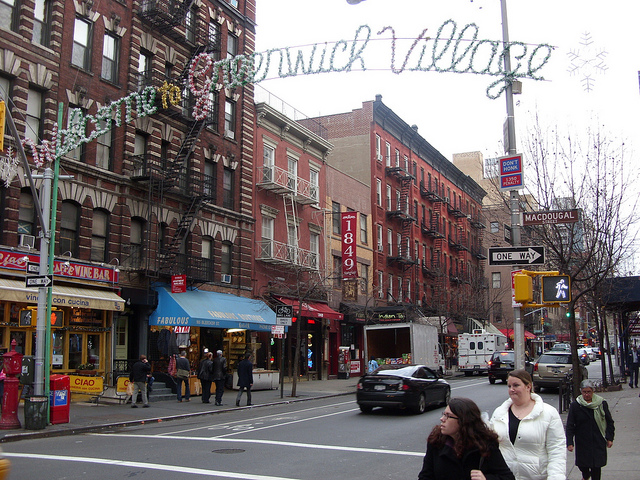
Alter decides after examining the evidence that Greenwich Village (above) or central Paris–with their low-to-medium height buildings and small blocks–represent the ideal densities which support good transit, street life, and a sense of community without tipping over into the need for hugely expensive (and energy-intensive) mega-towers, vast parking garages, etc. Paris was largely rebuilt in its current form by imperial fiat; Greenwich Village is a 19th-century layering of former tenements and townhouses. Neither is necessarily possible to “replicate” today. But the issues surrounding urban density in these models and elsewhere are worth pondering as we decide how the Birmingham of the future will look.

[thanks to ncindc for the U Street pic; UNEP for the graph;  frankeggen for the Greenwich Village pic]
Good graphics herald progress

Good quote, good mission

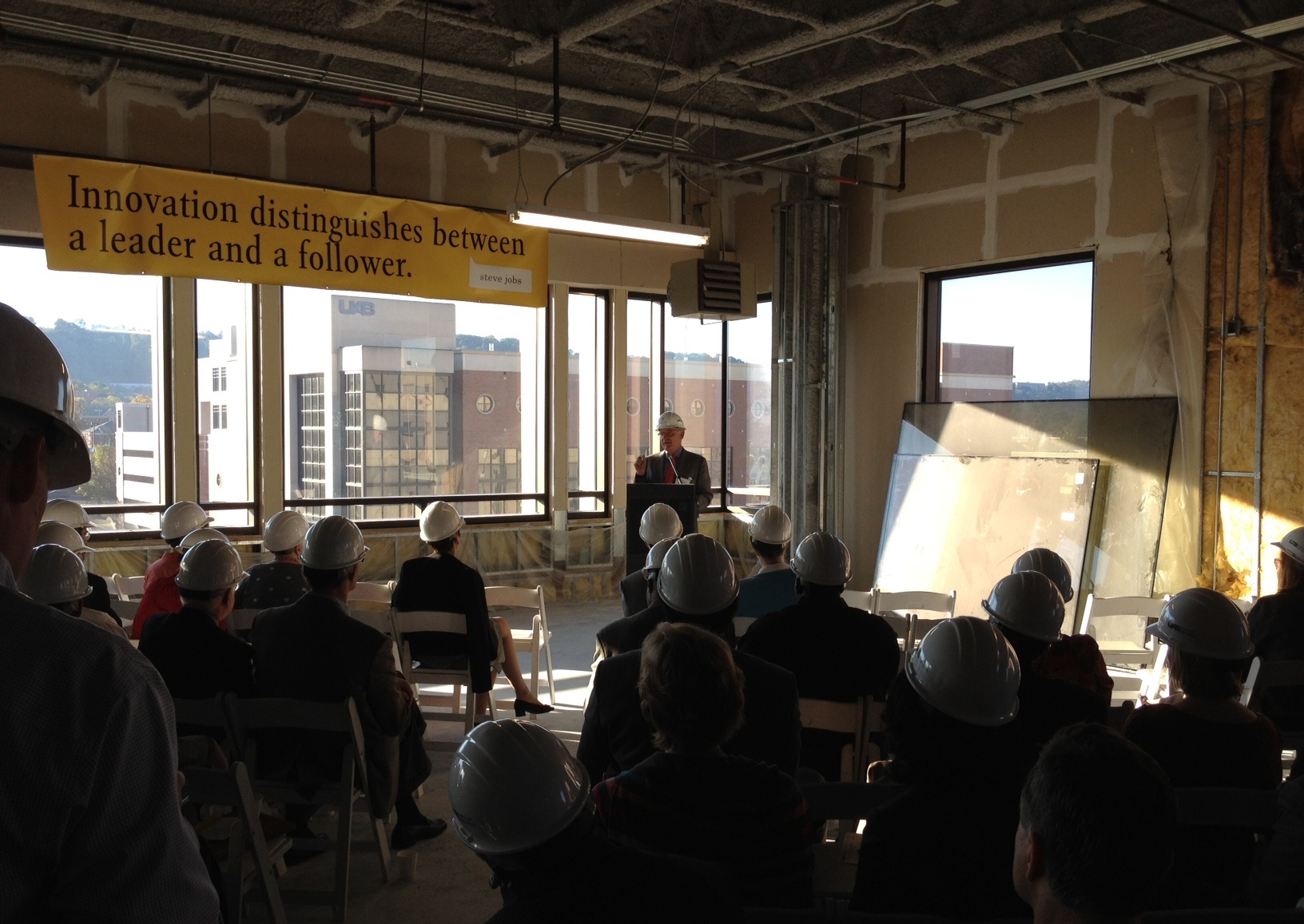
A couple days ago UAB School of Public Health hosted a breakfast to introduce  a new space under construction called Edge of Chaos (hard-hat presentation shown above). Conceived as a unique collaborative space where interdisciplinary faculty, students, and the community at large can gather informally to hash out ideas and develop solutions, when it opens next year the hope is it will generate innovation and entrepreneurship. Other universities have started similar ventures with much success. This could be one great way to leverage the huge brainpower of UAB to enhance both the university and the local economy. [the space is on the top floor of the Lister Hill Library]

Piquing curiosity

The invite to the event (above) startled me upon first glance. Not only were the bright yellow and bold, modern font visually arresting, but the whole layout seemed attuned to the “out of the box” nature of the new venture. Choosing a non-standard format for the invite helped intrigue invitees, and made the statement: “UAB is doing something different”. Simple yellow banners with great quotes decorated the half-finished space, relating back to the initial invite. It’s exciting when graphic design is used well in the service of new ideas.

Good graphics of another sort

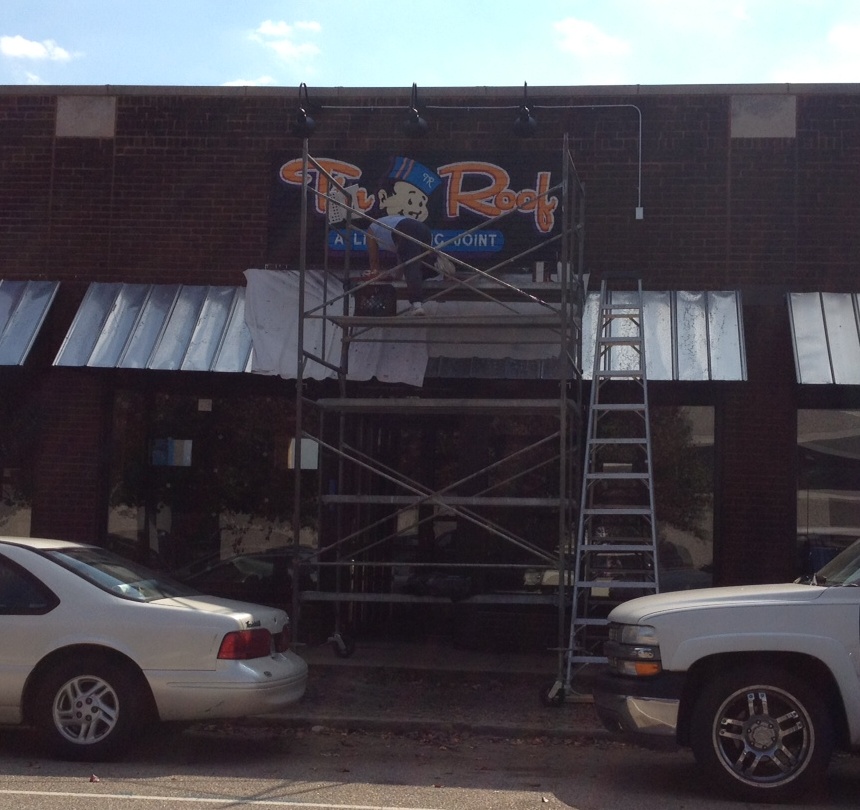
Getting close to opening in the Lakeview District is the Tin Roof, part of a small southern chain of bars (pic above at the new location in the 2700 block of 7th Avenue South). The retro signage, inspired by American roadside pop culture of the 1950’s, is fun, stylish, and welcome in a city where exterior signage is often dull, an afterthought, or both. A good example of how signage can lift up the visual character of the public realm.


Reality of perception

Madam, may I escort you to your vehicle?

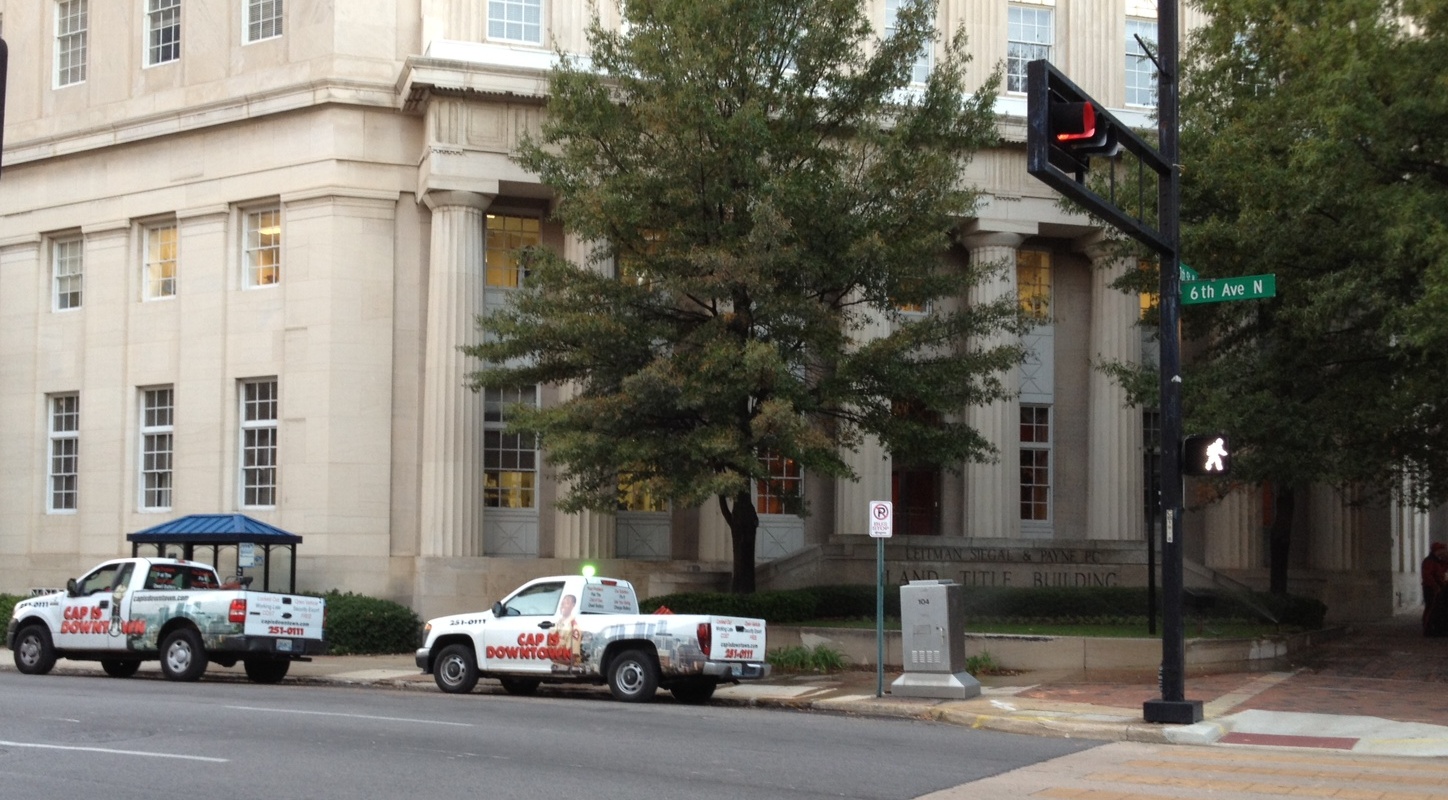
The City Action Partnership (CAP) is the uniformed security force which patrols a section of downtown Birmingham, in cooperation with the Police Department. Due in large part to their effort, crime within their service area is down 67% compared to 1995 (when CAP was formed); their area is safer (in terms of violent crimes) than the wealthy suburbs of Vestavia Hills or Mountain Brook. Property owners within the CAP district pay $1 for every $1000 of assessed value to fund the non-profit organization; besides security patrols, the CAP guys provide escort, tire-changing, left-the-key-in-the-car door opening, and other  great services to any worker, resident, or visitor in the district–free of charge. Modeled on similar security forces in other US cities (pretty much every major city has this sort of thing), CAP feels like a win-win for everyone downtown. Levels of security have not only objectively increased, but the perception of security (often even more important than the reality) has increased dramatically in surveys of people’s opinion of downtown.

Smart move to expand the range of these handy trucks

When CAP was formed, its district was aligned with major corporate and governmental entities to primarily serve a 9-5 business community (see the map of the current district). Downtown has changed in the last 15 years–and with thousands of new residents calling it home, CAP is proposing to increase its boundaries to better serve these new residents, and the businesses that have accompanied them. The new expansion would move east to add about 8 square blocks to the exiting 80-plus. Despite the relatively small size, it’s been hard to line up support because the effort involves obtaining consent of individual condo owners and small landholders, which is very time-consuming. At this point, CAP has collected support representing 60% of total expansion area land value, with the goal being 67% (as mandated by law). How to get the remaining 7%? There are 4 major holdouts, briefly examined below.

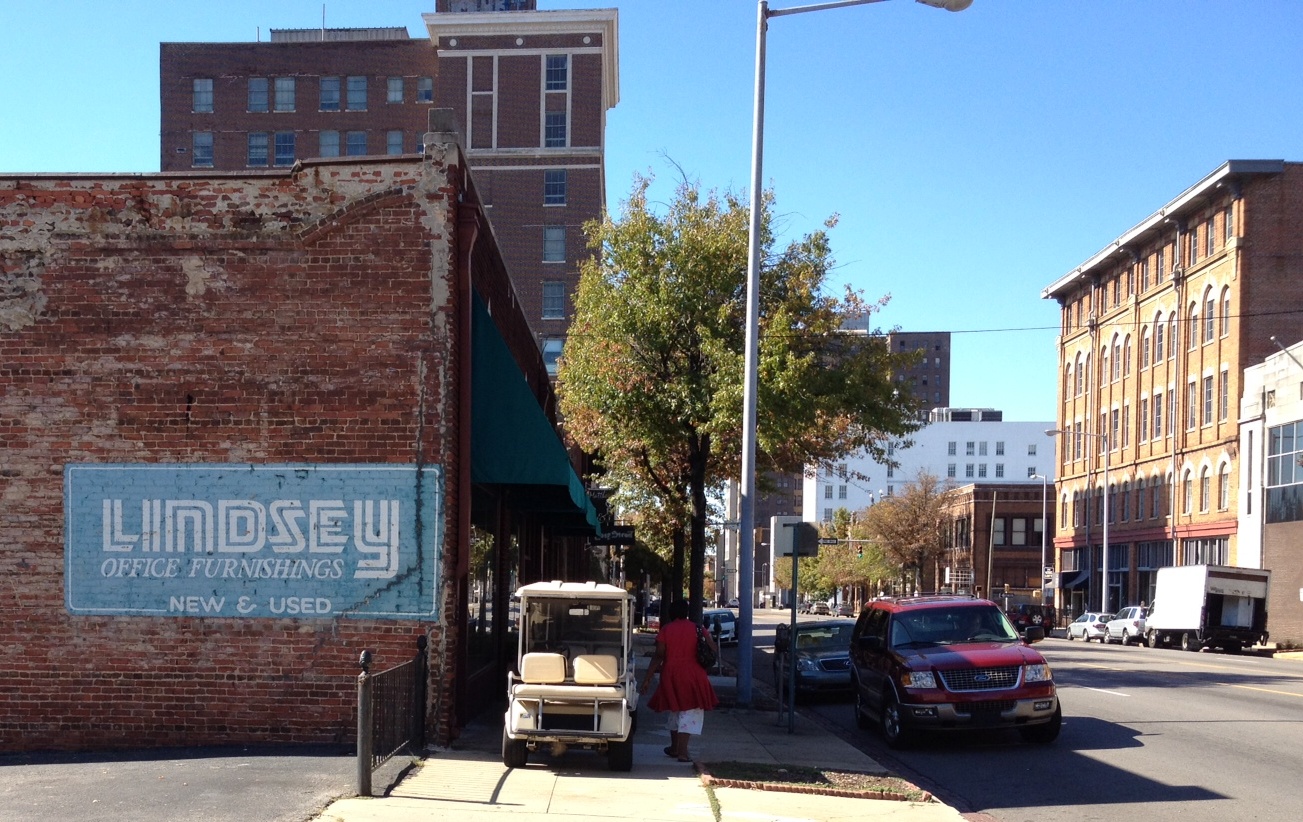
Sidebar: Is the use/parking of Lindsey golf carts really kosher on downtown sidewalks?

First, Lindsey Furniture, the office furniture business which owns numerous properties downtown, including in the 2200 block of First Avenue North, above. In one sense the most understandable of the holdouts–they are a conventional, 9-5 business–still, their employees and customers would benefit from CAP services.

The tenants say yes, but the owner says no

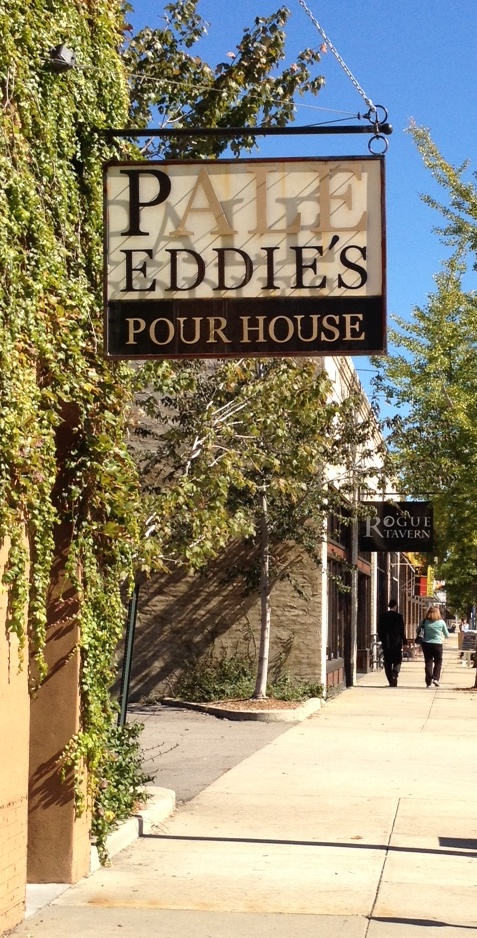
Next is Crook Realty, again the owner of numerous downtown properties which house popular destinations in the expansion district such as Pale Eddie’s and Rogue Tavern, above. While all of the tenants have said “yes” to wanting CAP service–a no-brainer for keeping their late-night patrons feeling secure and happy–thus far the landlord has said no.

Maybe the thinking will turn

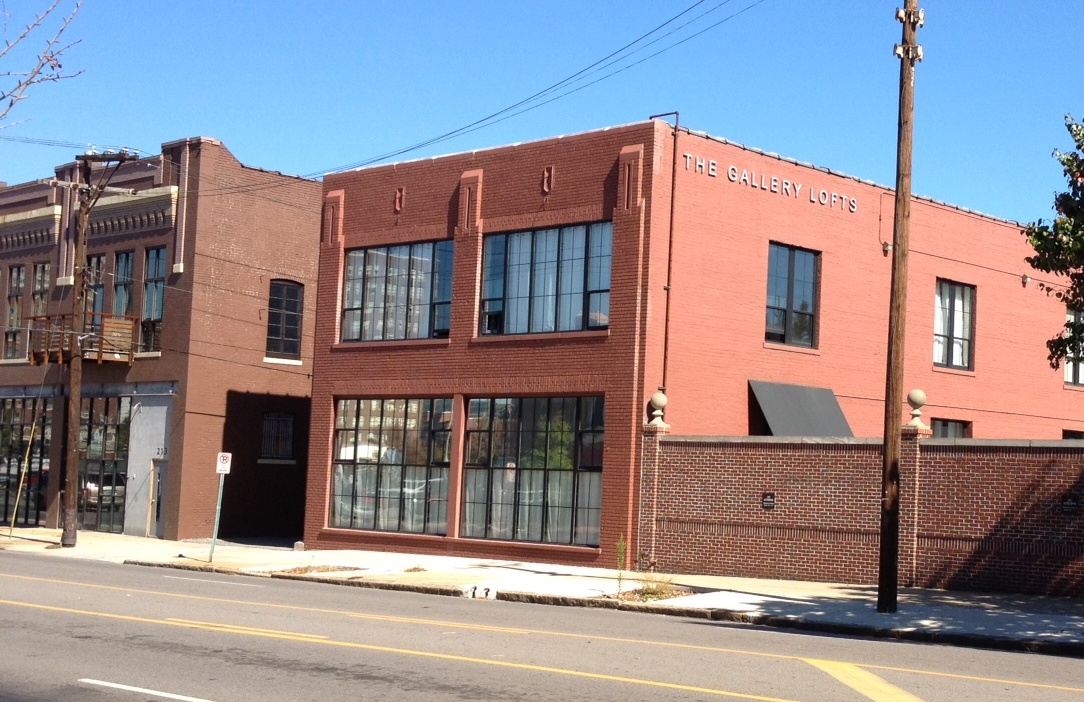
Residents would ostensibly benefit the most from CAP services–they are frequent users of streets and sidewalks in the area, they are walking their dogs in the evening, etc. Oddly, the final two major holdouts both have ties to the residential community–the first being the Ticheli family, which owns properties in the area, and developed the Gallery Lofts, above (seen in the 200 block of 24th Street North).

Bucking the tide, for now

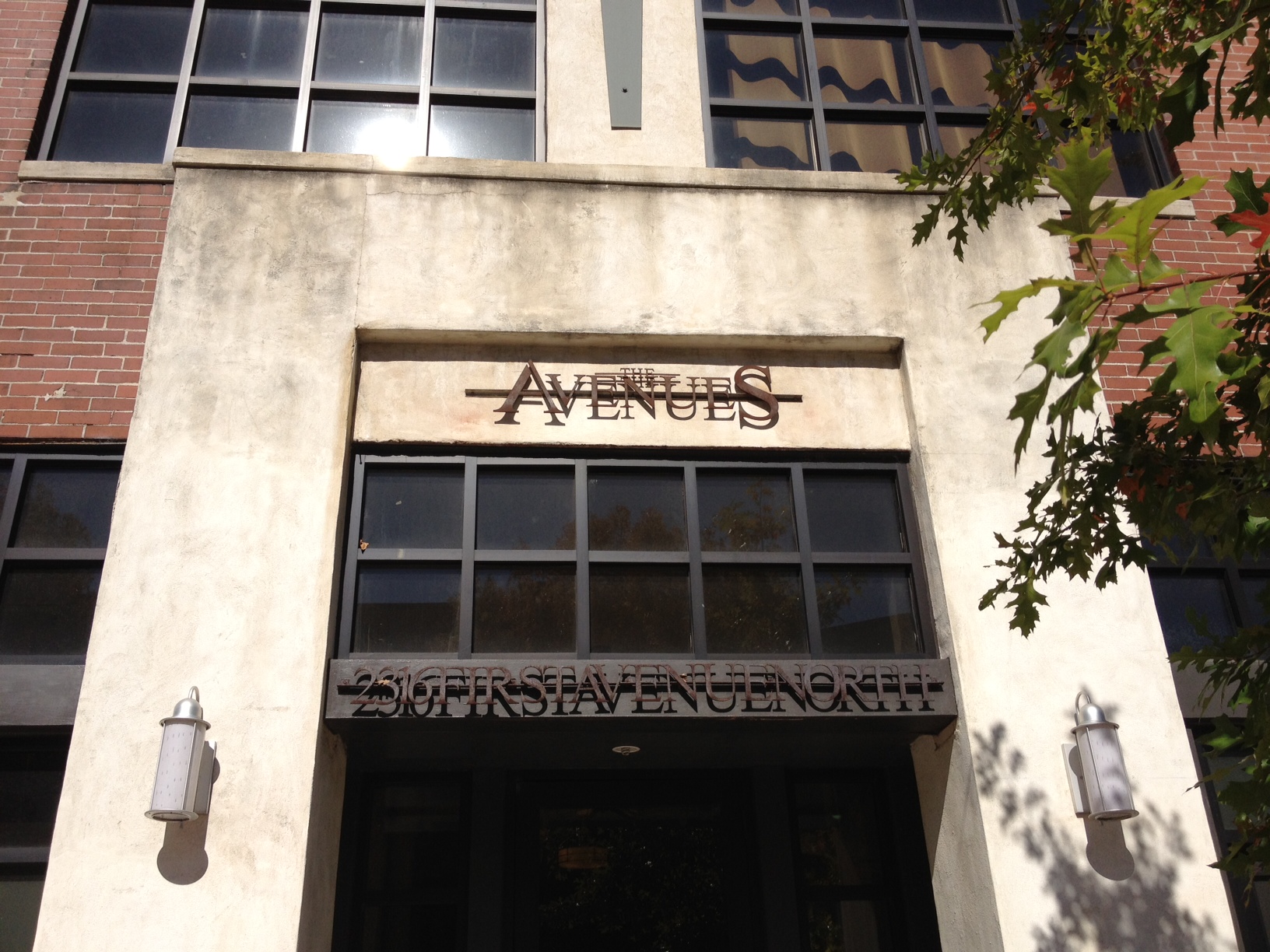
The Avenues, a rental apartment property shown above, was developed by the Morrow family (2300 block of First Avenue North). So far they’ve not supported a “yes” for expansion. Understanding all the benefits to their residents will hopefully change their minds.

A positive response from any two of the above four would put CAP over the 67% threshold. The relatively small amount of money required to fund the expansion is well worth the increase in security–real and perceived–as well as all the other services that come with it. CAP, and volunteers working with them, would be very appreciative if these major holdouts came around, as would the rest of us who’ve voted “yes” to support this great initiative (the other remaining holdouts are very small, often without published phone numbers or other info, so it would be much more difficult to reach the threshold that way). Onward and upward with increased CAP coverage–integral to a more vibrant city center!

[thanks to CAP for the escort image]

Shape your future

A lot of assets, a lot of challenges

Please consider coming to the first public citywide visioning forum to help determine a vision for Birmingham’s Comprehensive Plan:

Saturday, October 22 from 9 AM to 1 PM at the brand-new Birmingham Crossplex—2331 Bessemer Road.

You can find more info and lots of data (like the map of recent population loss in the City above) here.

Refreshments will be served; you’ll get to see the City’s newest sports facility; and you can participate in a potentially important process that will help guide our future. “Potentially” because a plan like this is only as strong as the community that shapes it and implements it. If we don’t participate, we won’t see the positive change this kind of plan can inspire.

Whether you live, work, or play in Birmingham–all who value our central city as crucial to the health of the region, please come and bring friends and neighbors. Yes, our future depends on all of us.

[Thanks to City of Birmingham for the map]

Grabbing some inspiration

Looking a bit like the future

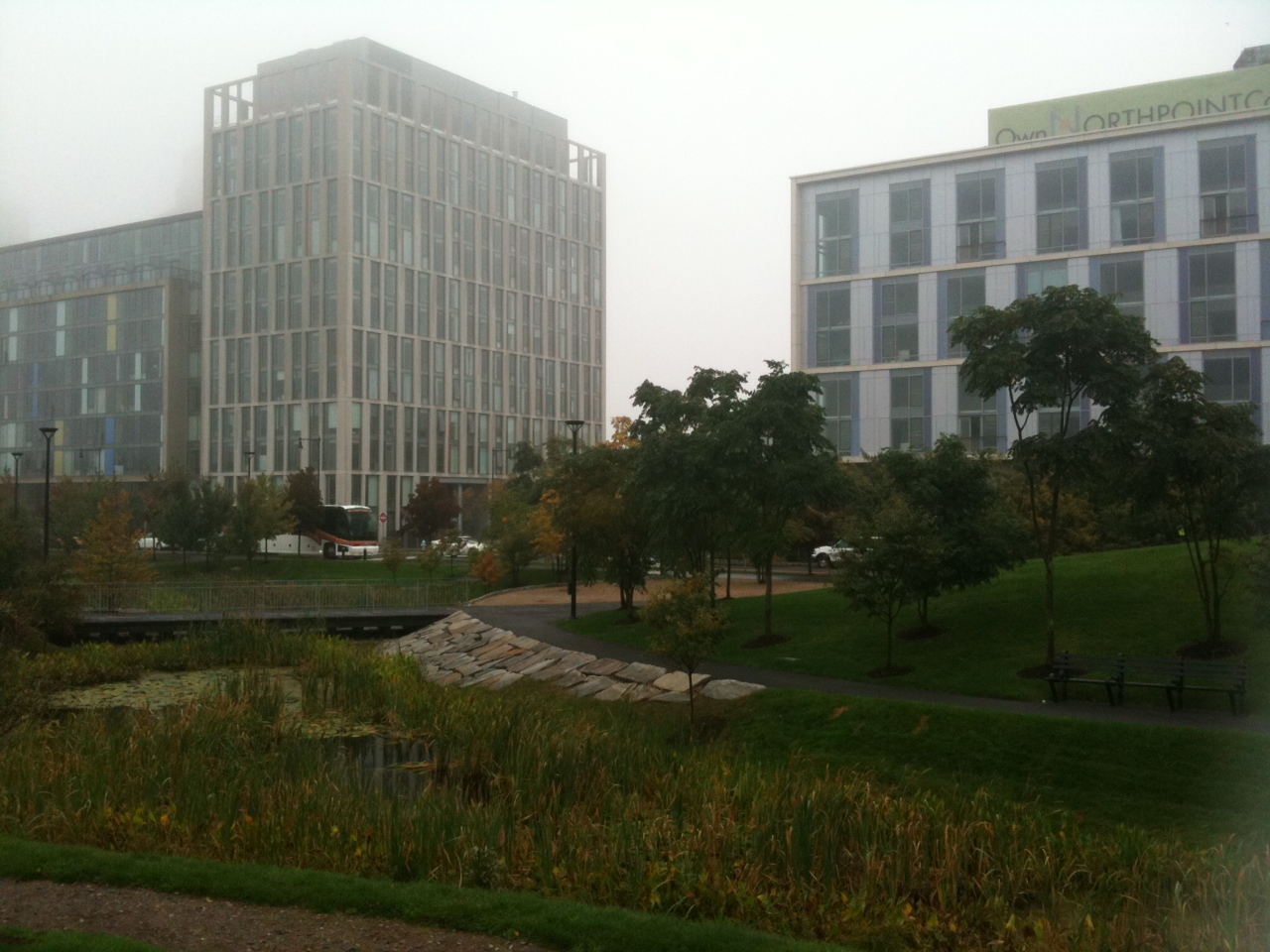
Trips to other cities are always inspirational; you can learn firsthand what others are doing to improve public space and to promote good design. First Cambridge, MA, where a huge part of North Cambridge is slated for redevelopment thanks in part to the booming biotech sector cropping up around MIT to the west. Above is the Northpoint development, with recently finished residential midrise buildings facing a park on reclaimed industrial land (designer: Michael Van Valkenburg Associates). While earlier office construction in the area has been criticized for being single-use, with relatively dead streets at night, Northpoint is conceived as a mixed-use neighborhood adjacent to a subway stop and served by bus and bike routes. The feel of the park, and the two buildings constructed thus far, reminded me of Railroad Park here and its own hoped-for future as the center of a mixed-use new neighborhood.

Big thinking

While Northpoint is an example of urban planning on a large scale (model of the proposed full development pictured above), you see results of smaller decisions around Cambridge that also help create a vibrant streetscape. For instance, the city funded the restoration of the sign below in Central Square, deeming it an important part of the urban fabric (the store owner couldn’t afford to do so on his own):

Unique illuminated projecting signs = good

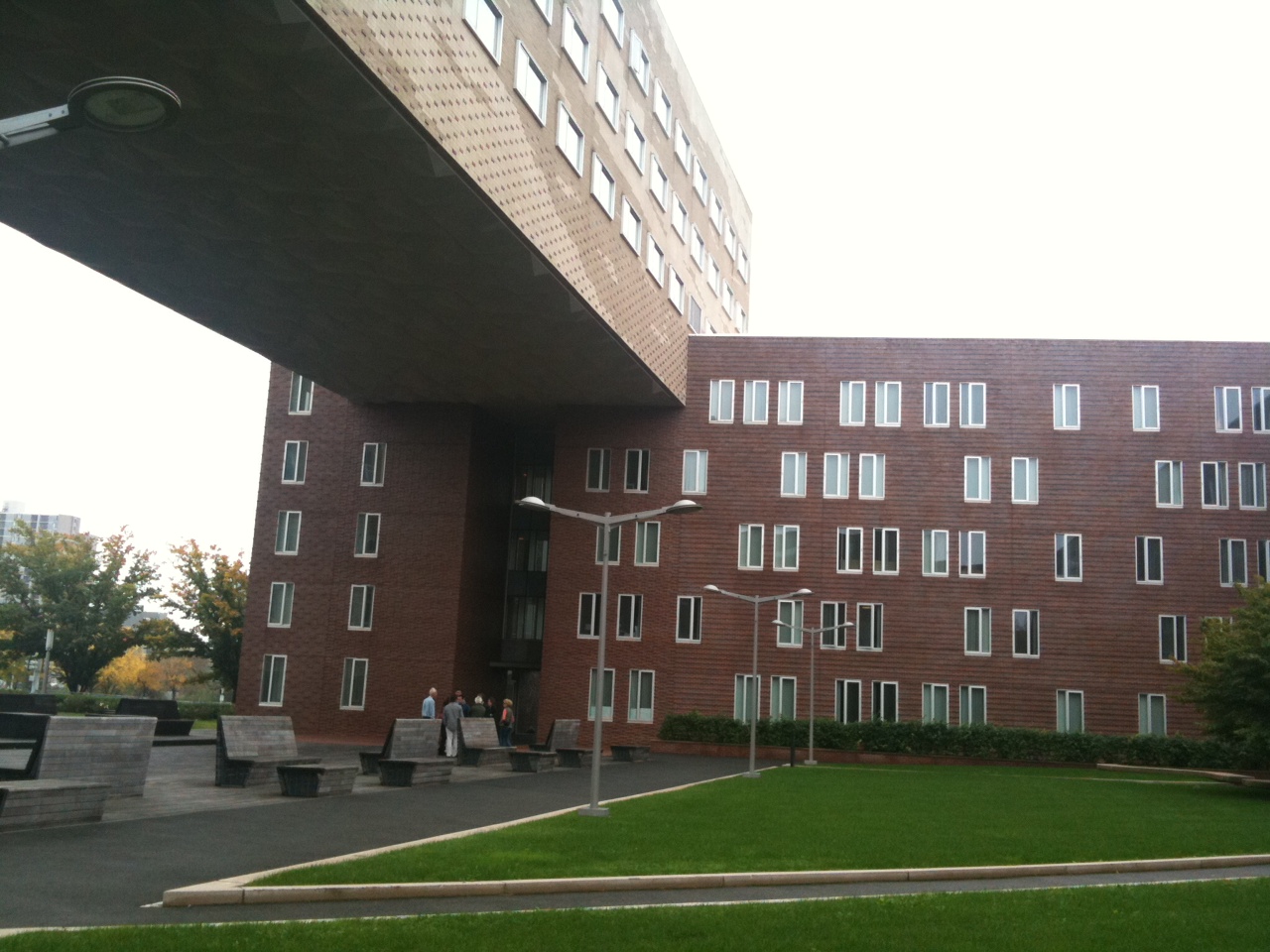
Over in Allston, a Boston neighborhood, Machado and Silvetti have designed new Harvard Graduate Student Housing, a witty reinterpretation of the traditional Harvard Georgian (and neo-Georgian) quad layout. Seen below, Harvard brick is used in a contemporary way, cladding different wings forming a courtyard facing the river. Not too shabby for dorm life.

Provocative architecture bolsters academic reputation

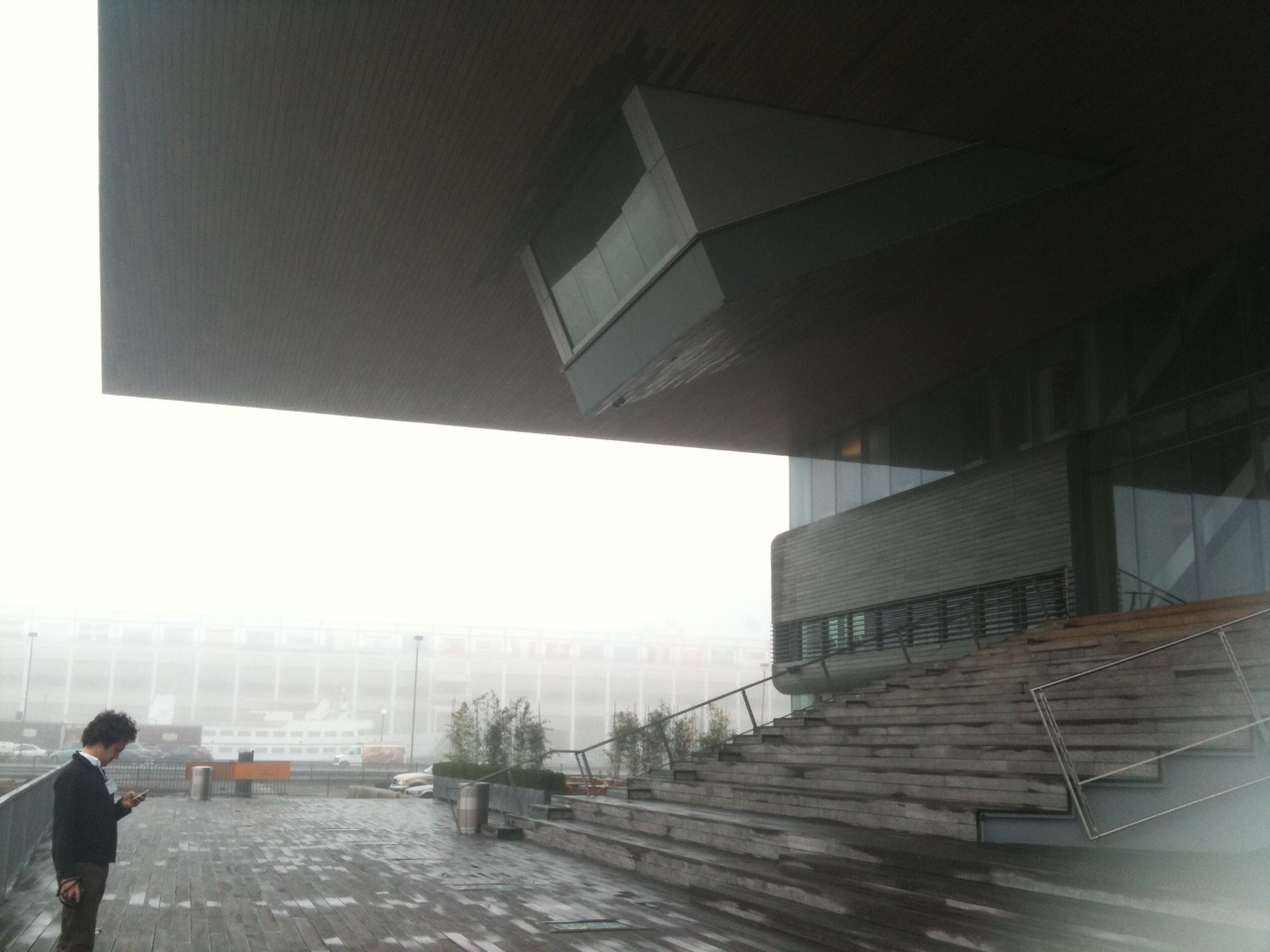
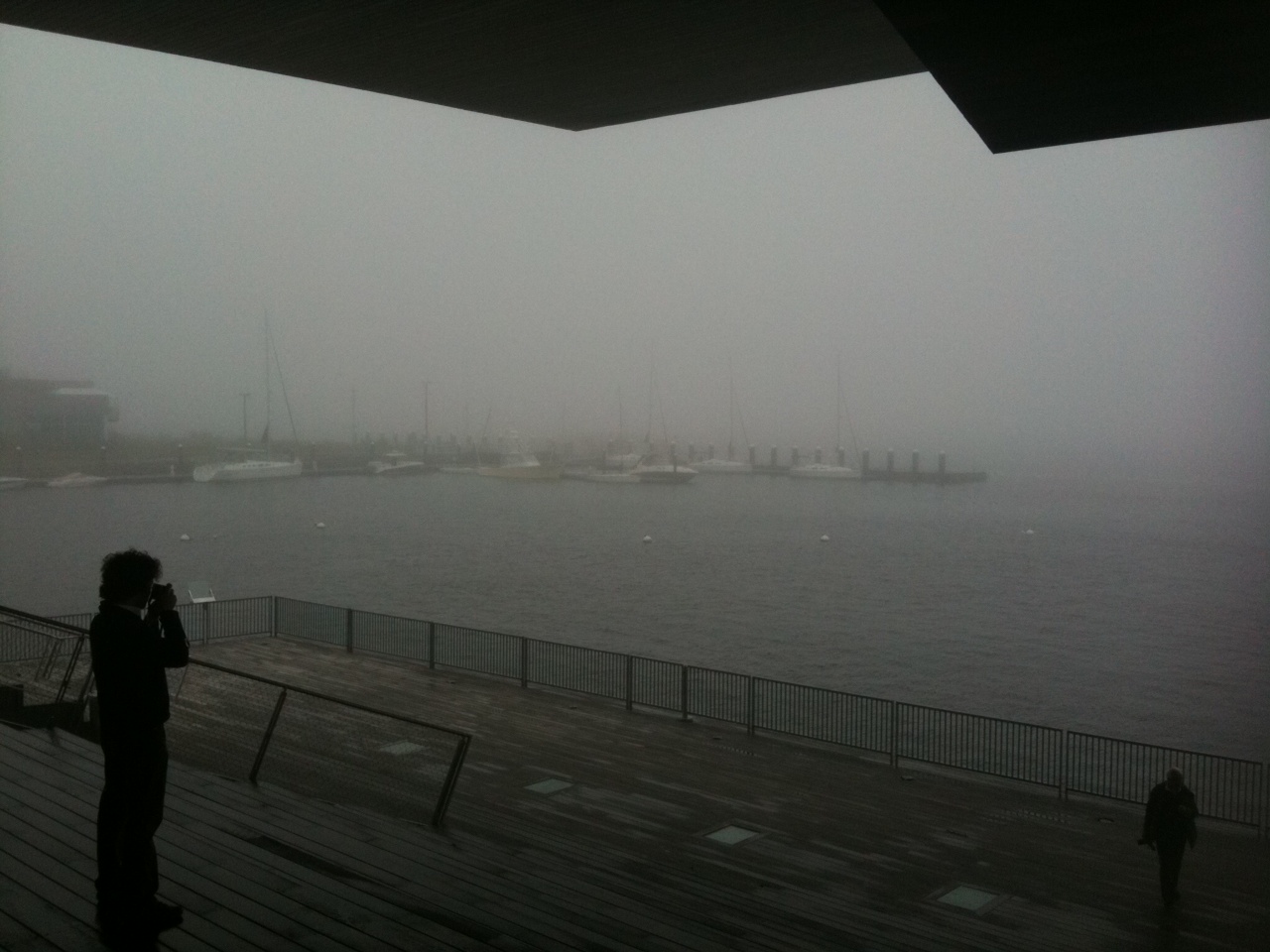
The Institute of Contemporary Art, facing Boston Harbor downtown, is seen in the two shots below. Designed by Diller Scofidio + Renfro, its relationship to a (foggy) Boston Harbor is pretty sublime.

Mass and light

Amazing view, even in the fog

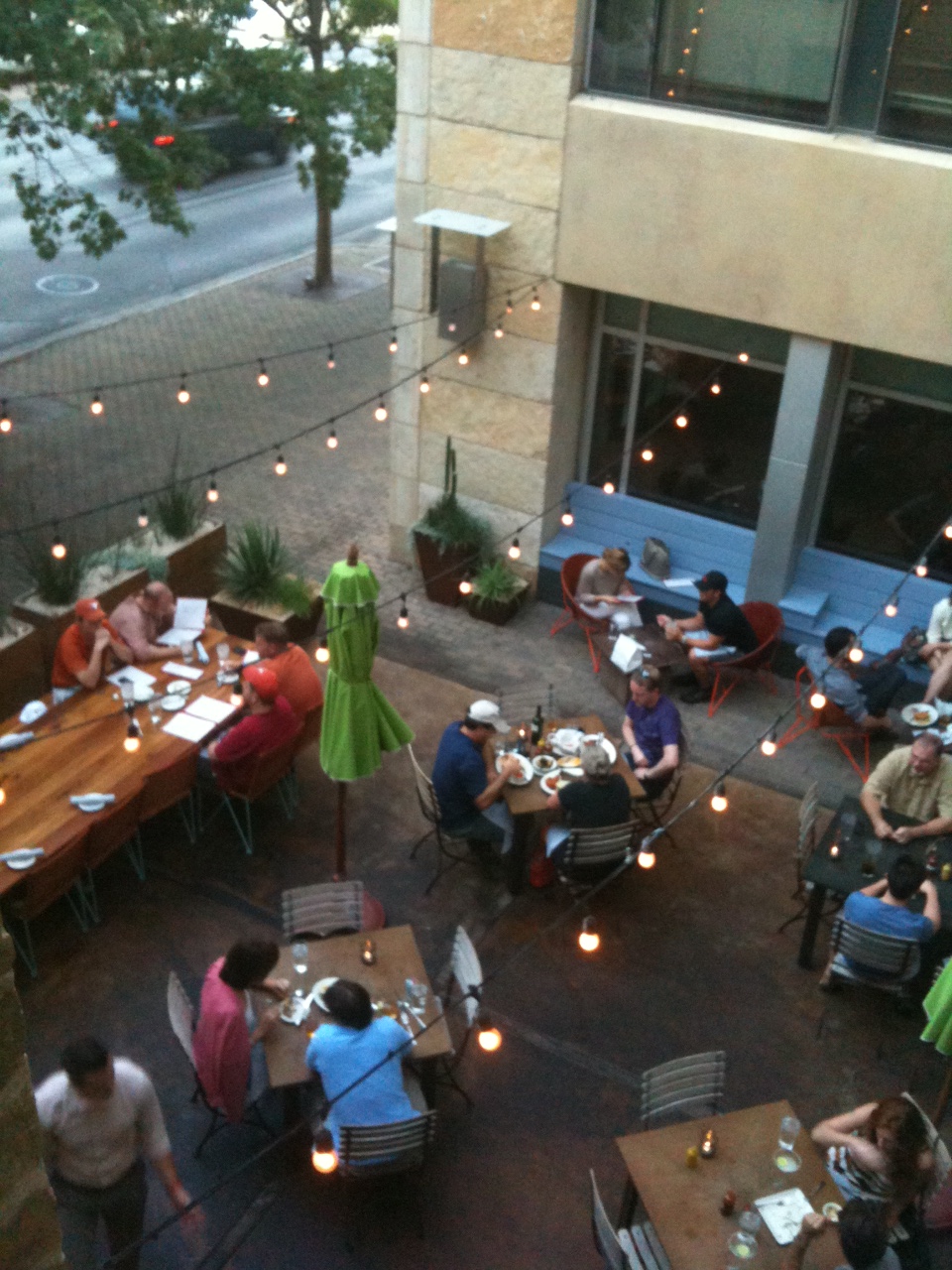
Finally, our trusted friend Austin, TX. Treated to a very tasty dinner at Lamberts downtown in the thriving 2nd Street District, below is a pic of the restaurant’s patio facing a downtown street. Charming, casual, and open–the patio’s design captures what Austin itself feels like. Next post–back to Birmingham!

Try the bread pudding

[thanks to iskunk for the Northpoint model pic]

Higher public standards

Public space will be key

As the Pratt City neighborhood charrette wrapped up last night with a public presentation, it’s clear that while the citizens and private property owners (including US Steel) should play a major role in rebuilding, the City itself owns or controls a lot of key property in the neighborhood, making its participation vital.  The neighborhood, while heavily damaged, still retains solid urban building blocks: historic bungalows, walkable commercial centers, interesting view corridors, large old trees. When you think of public buildings and spaces in this City, the last 50 years or so have been mainly disappointing. Reflecting a national trend, the public got used to government-sponsored projects as lowest-common-denominator affairs. Functional, but with little care given to creative, inspired design, these buildings are often fraught with ongoing maintenance issues, further diminishing their already ambiguous stature.

Now if someone could just bring back the streetcars

Above is the intersection of Carline Avenue and Avenue U in Pratt City, showing nicely scaled historic buildings that originally responded to a major streetcar line that connected the neighborhood to downtown. Any eye attuned to urban sense-of-place can see potential here. How can the City best direct planning and investment from a design standpoint here and elsewhere in the project area?

Creative design, human scale

There have been several recent articles discussing New York City’s recent renaissance in public architecture, including today’s New York Times (discussing the new children’s library in Queens, by 1100 architect, above) and Architectural Record (showcasing a series of mainly smaller scale, thoughtful public projects). A big part of this new direction for public buildings comes from the city’s Department of Design and Construction, which has revamped the way it does business. Gone are the days of just accepting low bids for projects. Now the city has a competitive fee structure that encourages younger, smaller firms to take on projects under a certain dollar limit; mandated standards of sustainability and design excellence have made public projects exciting to architects to bid on again.

Not your father's public housing in the Bronx

This commitment to design excellence is reflected in an affordable housing project in the Bronx, Via Verde (pictured above). Designed by Grimshaw Architects and Dattner Architects, the quality of the massing, detailing, and street engagement are refreshing and inspiring to see in a part of the City not normally on the receiving end of design “frills”. The thoughtful layout includes cross-ventilation, rooftop vegetable gardens, a large fitness center facing outdoor play space, and other “healthy design” items to encourage its population to lead healthier lifestyles.

Good design can inspire users and neighborhoods alike; it can also be a great way for cities to get national recognition. Birmingham would be wise to reconsider the design standards for public projects, and a more selective process tied to these standards. Maybe we need our own Department of Design and Construction, charged with setting a new tone for tax-payer investment in public projects. And Pratt City could maybe..become a national model for neighborhood rebirth through good design.

[thanks to the Birmingham News for the Pratt City pic;  Architectural Record for the Library pic; archdaily for the Via Verde pic]

Planning for progress

Hope rising from devastation

The April 27 tornado ravaged the Birmingham neighborhood of Pratt City (pictured above) and emptied out this historic, working-class community that was originally tied to mining and steel production in the area. Today and over the weekend, a national team of design, economic development, and planning consultants joins up with residents, local professionals, and Auburn architecture students, in an intensive “charrette” process to formulate initial recommendations for the rebuilding of the neighborhood. The American Institute of Architects Communities by Design program is sponsoring the event. I will be participating and hope to share some results next week.

Holistic planning in downtown Montgomery yields dividends

Another exciting event on the urban planning front, this time in Montogmery: their local Hampstead Institute is sponsoring the Congress for the New Urbanism’s annual Council meeting next week. Montgomery has aggressively implemented “new urbanist” principles recommended in their recent downtown master plan with some encouraging results (Alley Station is pictured above).

Having national and international designers in Birmingham and Montgomery engaged with local citizens and professionals bodes well for our future. We need to be more accepting of fresh, outside ideas which, when meshed with local expertise, can provide the best collaborative solutions we need to move our cities forward.

[thanks to alabamaema for the Pratt City pic; euby1 for the Alley Station pic]

Congrats Highland Park

Urbane and eclectic

Congratulations to the Highland Park neighborhood, just south of downtown Birmingham, which has won the 2011  American Planning Association’s Great Places award, one of 10 neighborhoods nationally to win the honor (see this morning’s Birmingham News piece ).

Highland Park, one of the city’s oldest planned neighborhoods, is also the densest populated neighborhood in the state of Alabama. It’s known for its diversity of income levels, architecture, and topography. It is also known for its pedestrian/transit/bike friendly streets, accessible parks, and independent businesses (such as Rojo restaurant, pictured above).

Other neighborhoods recognized this year are: Northbrae, Berkeley, CA; Ansley Park, Atlanta, GA; The Pullman Neighborhood, Chicago, IL; Gold Coast & Hamburg Historic District, Davenport, IA; Hattiesburg Historic Neighborhood, Hattiesburg, MS; Dundee-Memorial Park, Omaha, NE; German Village, Columbus, OH; Swan Lake, Tulsa, OK; and College Hill, Providence, RI.

Positive national recognition is what this City needs more of. Keep it coming!!

[thanks to maryvw for the pic]

Eclecticism approved

At 3 AM it's hard to resist

Birmingham’s Design Review Committee approved a new urban storefront Waffle House in Five Points South, in the Studio Arts Building facing the traffic circle. [Strictly prohibited by the committee was any additional signage/posters beyond the main illuminated “Waffle House” sign above the storefront.] Also approved was exterior projecting signage for El Barrio, the long-anticipated latin-inspired restaurant in the 2200 block of 2nd Avenue North.

One is a national greasy spoon chain open 24/7; the other should prove to be a hotspot for foodies and hipster-ish urbanites. A vibrant city center caters to all tastes, so we welcome the opening of both of these restaurants in the upcoming few months! Dig in.

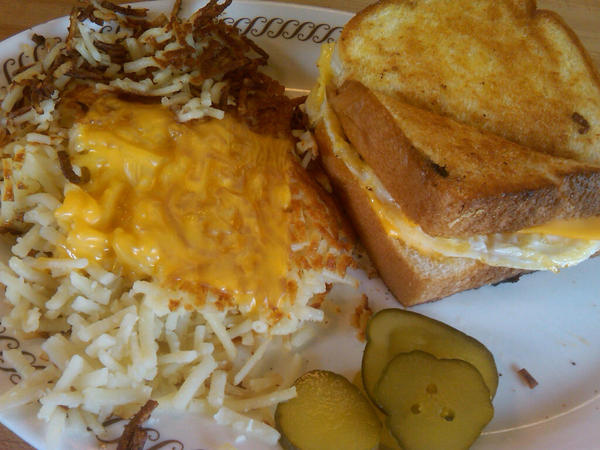
[thanks to taopauly for the scrumptious WH selection pic]

Design review alert

A sad end is in the works

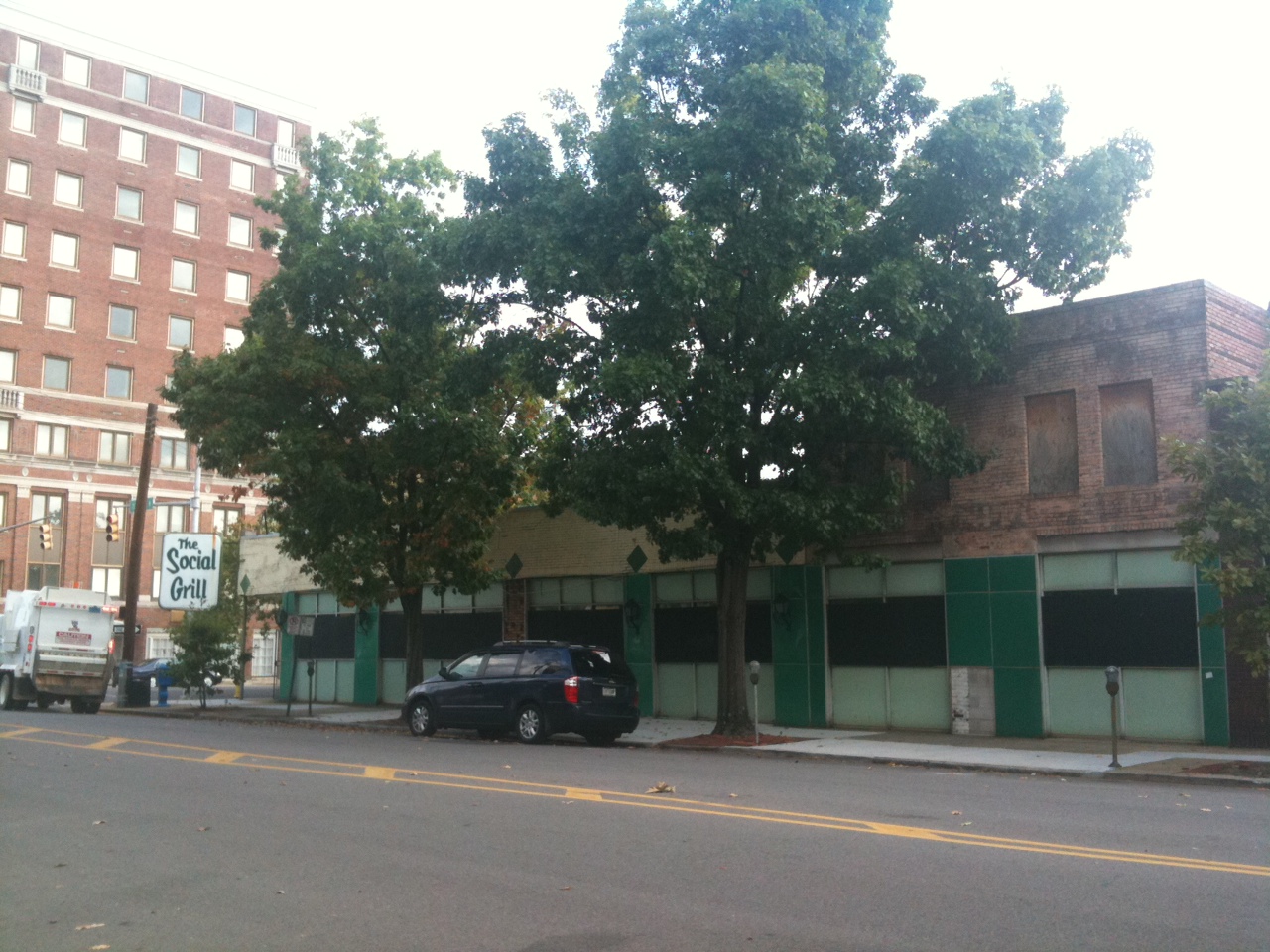
We have learned that the owners of the building that for many years (1945-2004) housed The Social Grill, plan to sell to downtown landowner Bobby Crook, who in turn plans to tear the building down for surface parking.

The historic building (distressed after years of deferred maintenance and showing the remains of 1960’s-era metal insert panels at the storefronts) holds the SE corner of Third Avenue North and 23rd Street, and is notable for its large projecting sign. While in an official Historic District downtown, and subject to Design Review Committee approval, unfortunately the Committee is limited in its ability to prevent owners from tearing down buildings for surface parking. Once again, Form Based Code would be helpful in setting guidelines that, for instance, would state that corner buildings in particular districts must remain; and conversely corner parking lots should be turned back into buildings.

As of yet, there is not a date set for when this proposal goes before Design Review.

Waffle House across from...the Pancake House?

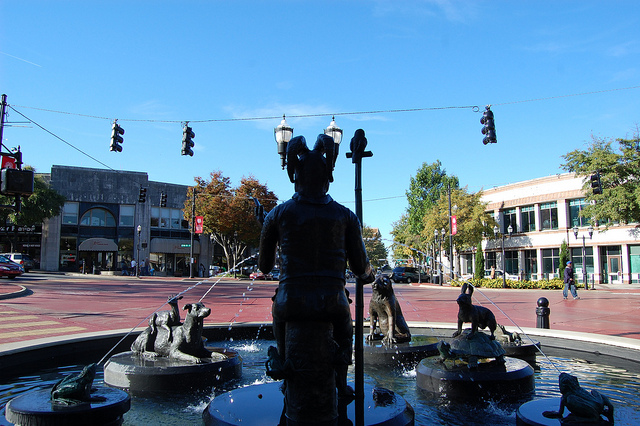
We do know that this Wednesday morning one of the Design Review items will be a new Waffle House in the Studio Arts building (pictured above right) which faces the circle at Five Points South. The Original Pancake House has occupied the opposite building (pictured above left) for many years and is a local institution for breakfast (although it’s part of a national chain). Waffle House, evicted from its current location just west of the UAB campus to make way for university development, already plans a new storefront location a few blocks west of Five Points in the heart of the university medical district (recently approved at Design Review). Despite the roughly similar menus, Pancake House is only open for breakfast/brunch daily, while Waffle House is a 24-hour, 365-day/year diner.

Finally, on Wednesday the  wonderful guys (from Trattoria Centrale) opening El Barrio in the 2200 block of 2nd Avenue North will reapply to the Committee for approval of a tasteful projecting sign [see our previous post here]. Our verdict: the Committee needs to approve this sign!!!

[thanks to bhydro for the Five Points pic]